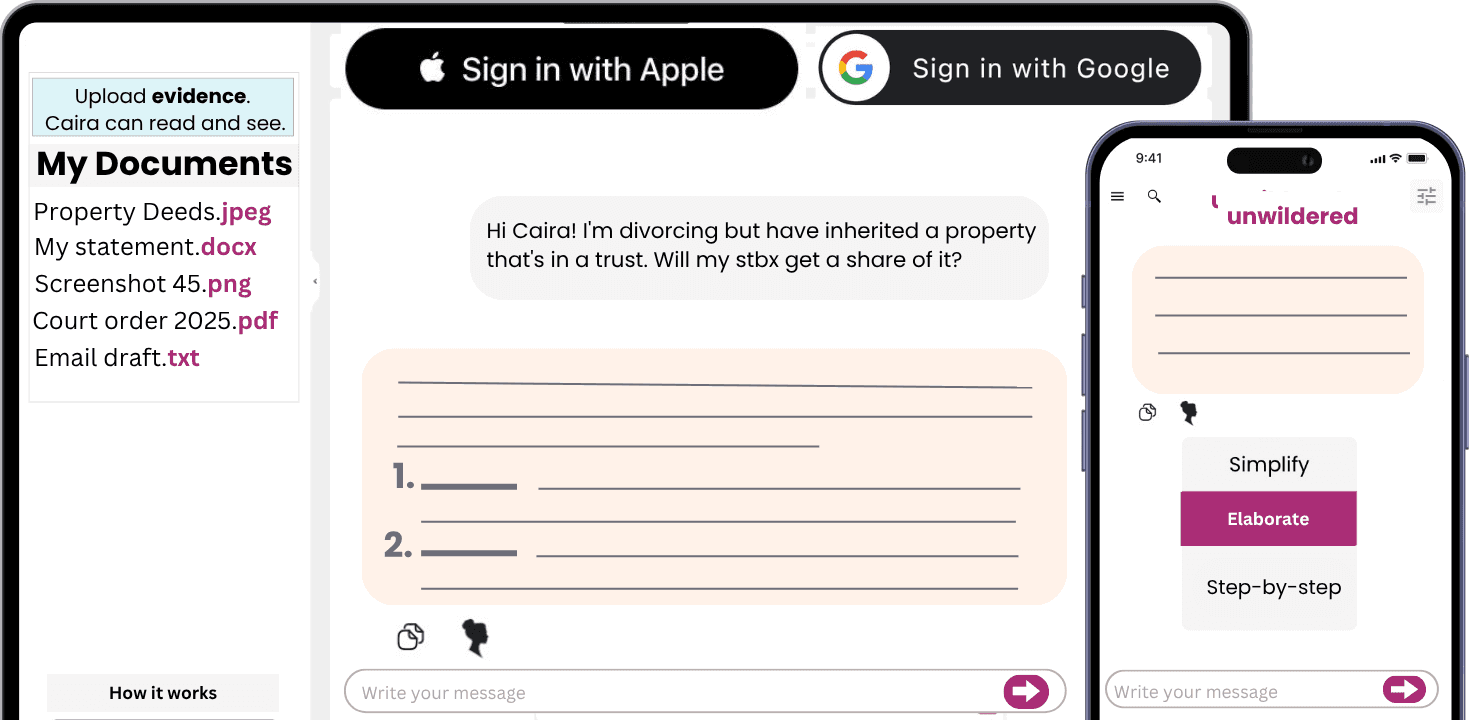
Sign up in 30 seconds and get your first AI property risk report free — no credit card required. Upload the legal pack and know whether the lender will say yes before you waste weeks on the application: Try Unwildered Free
The Application That Wasted 6 Weeks of Your Life
You know the feeling. You have spent three weeks qualifying the client, sourcing the best rate, packaging the application, and chasing the payslips. The lender instructs a valuer. The valuer visits the property. The report comes back.
“Valuation declined. Lease length: 68 years. Below minimum lending criteria.”
Six weeks of work. Zero commission. One unhappy client who is now questioning whether they need a broker at all.
Or perhaps it was the ground rent. The valuer noticed a doubling clause every 10 years. Lender policy: no doubling ground rent. Declined.
Or the cladding. A building over 11 metres with no EWS1 form. Lender policy: no EWS1, no mortgage. Declined.
Or the restrictive covenant prohibiting commercial use on a mixed-use property the client planned to operate a business from. Lender policy: property must be suitable for its intended use. Declined.
Every one of these declines was predictable. Every one was detectable in the legal pack before you submitted the application. Every one cost you weeks of unpaid work, a damaged client relationship, and a hit to your professional credibility.
Unwildered’s AI property screening runs 30+ checks on auction and property legal packs, specifically aligned with UK mortgage lender criteria. It takes approximately 10 minutes, costs £20, and tells you whether the property is mortgageable before you invest a single hour in the application.
The Broker’s Hidden Problem: You Are Underwriting Risk You Cannot See
Mortgage brokers are superb at finding the right product. Rate comparison, affordability modelling, lender criteria matching, packaging — this is your expertise. But there is a blind spot in every broker’s workflow: the property itself.
You rely on the client to tell you about the property. The client tells you “it’s a two-bed flat, leasehold, 100 years on the lease.” They are guessing. They do not know. They have not read the title register. They do not know the difference between 100 years original term (which might mean 65 years remaining) and 100 years remaining.
You rely on the valuer to catch problems. But the valuer visits the property for 20 minutes, checks the comparable sales data, and produces a report focused on market value. They are not reviewing the lease in detail. They are not reading the Charges Register for restrictive covenants. They are not checking the special conditions for VAT elections.
By the time the lender’s underwriter identifies a property-level issue, you have already invested weeks. The application is declined. Your pipeline shrinks. Your client goes elsewhere.
The fix is not more work. It is better information, earlier.
The 7 Property Red Flags That Kill Mortgage Applications
These are the property-level issues that cause the most mortgage application declines in the UK — and every single one is detectable through legal pack analysis before you submit.
1. Lease Length Below Lender Minimum
The rule: Most lenders require a minimum unexpired lease term at the start of the mortgage and a minimum term remaining at the end. Typical requirements are 85 years at application and 55–60 years at the end of the mortgage term (25 years). Some lenders accept 70 years; most do not lend below that under any circumstances.
The reality: Clients frequently misunderstand lease length. They confuse the original term with the remaining term. A lease granted in 1965 for 99 years has 38 years remaining — not 99. A lease granted in 1990 for 125 years has 89 years remaining — acceptable but worth checking against the specific lender’s end-of-term requirement.
What Unwildered catches: The AI extracts the original lease term, commencement date, and calculates the exact remaining years. It maps this against tiered lender thresholds and flags properties that fall below common lending criteria. You know before you submit whether this lease will pass underwriting.
2. Ground Rent Escalation Clauses
The rule: Following widespread concern about “toxic leases,” most UK lenders now have explicit policies on ground rent escalation:
Ground Rent Pattern | Typical Lender Position |
|---|---|
Peppercorn / nil | ✅ Accepted by all lenders |
Fixed under £250/year | ✅ Accepted by most lenders |
Fixed over £250/year | ⚠️ Some lenders decline — AST trap risk |
RPI or CPI linked | ⚠️ Many lenders cautious or decline |
Doubling clause | 🔴 Most major lenders decline |
Uncapped escalation | 🔴 Almost universally declined |
The reality: Clients never know their ground rent escalation terms. They know the current amount. They do not know it doubles every 15 years.
What Unwildered catches: The AI detects escalation clauses in the lease text — doubling, RPI-linked, CPI-linked, percentage step-ups, and review clauses. It projects the ground rent forward 25 and 50 years and rates the finding against lender criteria.
3. Cladding and Fire Safety (EWS1)
The rule: For buildings over 11 metres (approximately 4 storeys), lenders typically require an EWS1 form confirming that the external wall system has been assessed. A failed EWS1 (rating B2) means the building has combustible cladding with no remediation plan. Most lenders will not lend.
The reality: Clients buying flats in purpose-built blocks often have no idea whether an EWS1 form exists, has been applied for, or what rating it received.
What Unwildered catches: The AI checks the legal pack and management documents for EWS1 references, fire safety assessments, and any mention of cladding remediation. If no EWS1 is present for a building that appears to exceed the height threshold, it flags the gap.
4. Non-Standard Construction
The rule: Lenders have restricted or excluded lending criteria for non-standard construction types — including Wimpey No-Fines, Airey, Reema, Cornish, BISF, and timber-frame properties. Some lenders will lend with specialist reports; many will not lend at all.
The reality: A client buying a post-war concrete construction property may not know (or disclose) that it falls into a restricted construction category.
What Unwildered catches: The AI checks the property information forms and any surveyor reports in the legal pack for construction type references. It flags non-standard construction mentions against known lender restriction categories.
5. Restrictive Covenants Conflicting With Intended Use
The rule: If the property has a restrictive covenant prohibiting a specific use, and the buyer intends that use, the mortgage application may be declined — or the lender may require indemnity insurance as a condition of lending.
The reality: This is particularly dangerous for buy-to-let applications where the client plans HMO conversion, commercial use, or subdivision. A covenant prohibiting “use as other than a single private dwelling” directly conflicts with an HMO lending application.
What Unwildered catches: The AI scans the Charges Register for restrictive covenants and translates them into plain English. It flags covenants that commonly conflict with buy-to-let, HMO, and commercial lending applications.
6. Japanese Knotweed
The rule: Most lenders will not lend on a property where Japanese knotweed is present within 7 metres without an approved management plan in place. Some decline outright.
The reality: The TA6 Property Information Form includes a specific question about Japanese knotweed. If the seller has answered it honestly, the information is in the pack. If they have not answered it, the absence is itself a risk signal.
What Unwildered catches: The AI checks the TA6 responses and environmental search results for knotweed references, management plans, and negative declarations in the knotweed guarantee database.
7. Flood Risk
The rule: Properties in Flood Zone 3 (high probability of flooding) are difficult to insure and therefore difficult to mortgage. Lenders require buildings insurance as a condition of lending. If insurance is unavailable or prohibitively expensive due to flood risk, lending is declined.
The reality: Flood zones are postcode-level designations. A property at the top of a hill can share a postcode with a property by the river. The environmental search results in the legal pack contain the specific flood risk assessment.
What Unwildered catches: The AI extracts flood zone designations from environmental search results and flags Zone 2 (medium) and Zone 3 (high) properties with appropriate severity ratings.
How This Saves You Money: The Broker’s ROI Calculation
Let us quantify the value of catching a lender red flag before submission versus after decline.
Scenario | Without Unwildered | With Unwildered |
|---|---|---|
Your time invested | 15–30 hours over 4–6 weeks | 15 minutes reviewing AI report |
Application fee | £0–300 (some lenders charge) | Not submitted (saved) |
Valuation fee | £300–500 (paid by client, non-refundable) | Not incurred (saved) |
Commission earned | £0 (application declined) | £0 (but time preserved for viable application) |
Client relationship | Damaged — client questions your competence | Protected — you warned them proactively |
Opportunity cost | 4–6 weeks that could have been spent on viable cases | 15 minutes. Move on immediately |
The real cost of a declined application is not the £0 commission. It is the 4–6 weeks of your time that earned nothing. If your average case earns £1,500 in proc fees and takes 3 weeks to complete, a declined application costs you £1,500–£3,000 in lost opportunity.
Unwildered’s screening costs £20. One avoided decline pays for 75–150 reports.
The Broker’s New Workflow: Screen Before You Submit
Here is how forward-thinking mortgage brokers are incorporating Unwildered into their process.
Step 1: Initial Client Call
During the fact-find, ask the client: “Do you have the legal pack or title documents for the property?” For auction purchases, the pack is always available before the sale. For private treaty purchases, the client can request the title register from Land Registry for £3 or ask the seller’s solicitor for the draft contract.
Step 2: AI Screening (10 Minutes)
Upload the available documents to Unwildered. Within 10 minutes, you have a traffic-light report covering lease length, ground rent, construction type, restrictive covenants, and any flagged issues.
Step 3: Lender Matching
Use the AI report findings to match against specific lender criteria. If the lease has 82 years remaining, you know to target lenders who accept 80+ rather than those requiring 85+. If there is a ground rent review clause, you know to check each lender’s ground rent policy before recommending a product.
Step 4: Client Conversation
Share the relevant findings with your client. “I have screened the property’s legal documents, and there are two things we need to discuss before I submit the application.” This conversation positions you as a thorough, proactive advisor — not just a rate-finder. The client’s confidence in you increases. Their likelihood of referring you increases.
Step 5: Informed Submission
Submit the application with confidence that the property meets lending criteria. Your decline rate drops. Your throughput increases. Your per-case earnings improve because you spend less time on dead-end applications.
Comparison: Unwildered vs Doing Nothing vs Checking Manually
Feature | Unwildered AI Screening | Manual Lender Criteria Check | No Pre-Screening |
|---|---|---|---|
Time per property | ~10 minutes | 1–2 hours (if you have the docs) | 0 minutes (but 4–6 weeks wasted on decline) |
Cost | £20 per report | Your time only | £0 upfront / £1,500+ in lost opportunity |
Lease length check | ✅ Automatic with tiered thresholds | ⚠️ Manual if you have the title | ❌ Discovered at valuation |
Ground rent analysis | ✅ Escalation detection + projection | ⚠️ Only if you read the full lease | ❌ Discovered at valuation |
Covenant detection | ✅ Automatic scan of Charges Register | ⚠️ Requires legal knowledge | ❌ Discovered at underwriting |
Consistency | ✅ Same checks every time | ❌ Depends on your attention to detail | ❌ N/A |
Client perception | “My broker screens properties before applying” | “My broker is thorough” | “My broker wasted 6 weeks” |
Pricing for Brokers
Tier | Reports | Cost | Per Report |
|---|---|---|---|
Free Trial | 1 | £0 | Free |
One-Off | 1 | £30 | £30 |
Broker Pack | 5 | £100 | £20 each |
Volume Pack | 15 | £300 | £20 each |
No subscription. No monthly commitment. Buy reports when you have a case that needs screening. One avoided decline pays for the entire pack.
What Unwildered Is Not
Not a lender criteria service. Unwildered screens the property, not the borrower. It does not replace Knowledge Bank, Trigold, or your sourcing system. It complements them by adding property-level risk data that no sourcing tool provides.
Not a solicitor. Unwildered does not provide legal advice. It provides screening-grade information to help you make better decisions about which applications to submit.
Not regulated by the FCA or SRA. Unwildered is a technology product, not a financial or legal service. You remain responsible for your own regulatory obligations under FCA rules.
Conclusion: The Smartest 10 Minutes in Your Application Process
Every mortgage broker has a story about the application they wish they had never submitted. The one that took six weeks, ended in a decline, and earned nothing.
The question is not whether property-level screening is worth doing. It obviously is. The question is whether you can afford to do it — in terms of time, cost, and expertise.
Unwildered makes the answer yes. Ten minutes. Twenty pounds. Thirty-plus checks calibrated to UK mortgage lender criteria. Before you submit the application, before you instruct the valuer, before you invest a single hour — know whether the property will pass.
One declined application avoided is worth 75 reports. The math does itself.
Try your first property screening free — no credit card required →
Disclaimer: This article is for information and discussion purposes only and does not constitute legal, financial, or mortgage advice.