This article is for you if:
You are facing questions from a liquidator, the Insolvency Service or a lender about a Bounce Back Loan.
You are considering whether the company’s unpaid loan could become a personal liability or lead to director disqualification.
An issue has arisen about the turnover stated in the application, eligibility, or how the loan money was used.
A Bounce Back Loan investigation is not automatically a criminal case. The same loan can raise several different issues: company debt, a liquidator’s civil claim, director disqualification and compensation, or criminal fraud. Start with the letter in front of you.
That distinction matters.
First identify the process
Note who wrote to you, the power or legal basis mentioned, the amount alleged, the deadline and what outcome the sender wants. A request for information is not a court judgment. A liquidator’s letter of claim is not, by itself, a criminal charge.
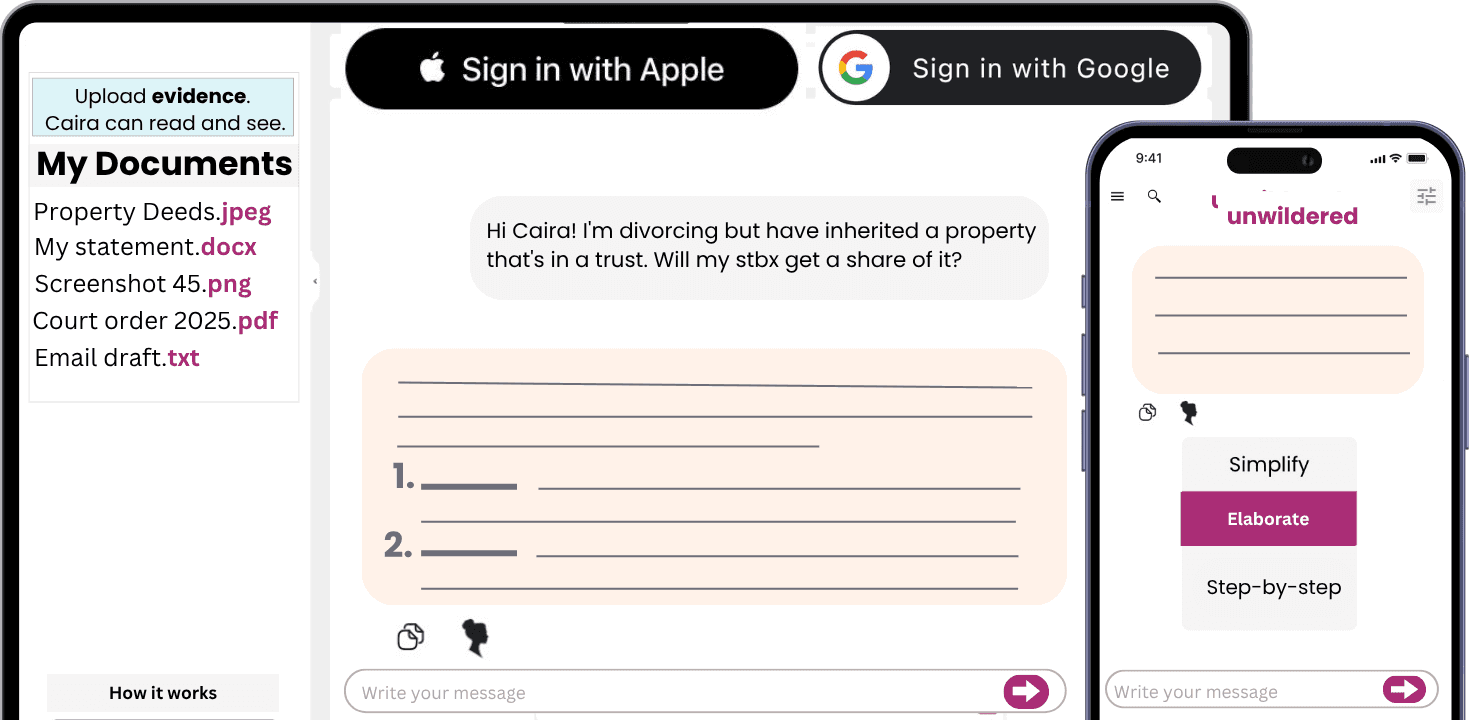
If the wording is dense, you can upload the letter to Unwildered and ask Caira to separate the allegations, dates, amounts and documents requested. Check the result against the original before relying on it.
Route | Usually involves | What may happen |
|---|---|---|
Company loan recovery | Lender, company and government guarantor | The company remains liable for the debt; the government guarantee protects the lender, not the borrower |
Liquidator’s civil recovery | Liquidator, company and director or recipient | Repayment, restoration, an account or compensation may be sought if company property was allegedly misapplied or duties were breached |
Director disqualification | Insolvency Service and director | Investigation may close, or lead to an undertaking or court order; the statutory range is generally two to 15 years |
Criminal investigation | Investigator, prosecutor and suspect | Fraud must be proved to the criminal standard; an investigation may end without charge, or lead to prosecution |
Section 212 of the Insolvency Act 1986 is a civil route for remedies including repayment, restoration or compensation. It is not confined to dishonesty. Director disqualification is also civil, although parallel action is possible.
Criminal fraud is different. Fraud by false representation requires a dishonest false representation and the relevant intention to make a gain or cause loss or a risk of loss. A disputed accounting treatment, an unexplained transfer or a failed business does not automatically prove those elements.
Separate entitlement from use
Two questions are often bundled together:
Was the business entitled to the amount borrowed under the scheme rules?
How was the loan money used after it arrived?
Evidence of genuine business expenditure does not automatically prove that the application figure was accurate. Equally, a transfer to a director’s personal account does not automatically prove final personal benefit. The receiving account, onward payment, invoice, authority and accounting treatment may all matter.
Consider a composite example. A small events company enters liquidation. Its accounts appear inconsistent with the BBL application, and statements show transfers to the director. The director says some receipts were client deposits and some transfers reimbursed venue costs. The separate issues are entitlement, purpose and proof.
One story. Three issues.
What to do now
Preserve the application, top-up request, statements, accounts, ledgers, invoices, contracts and messages. Do not alter originals or create a document that appears contemporaneous.
You can upload relevant letters, invoices, statements and Excel exports to Unwildered to build a first-pass chronology and identify figures that need checking. That is organisation, not a finding about liability.
Record the deadline. Ask for missing schedules or lender records. Reconstruct disputed turnover and transaction classifications from the original accounts, ledgers and bank records. If the letter mentions personal recovery, disqualification, an interview under caution or prosecution, do not make speculative admissions: preserve the records and answer only what can be supported.
Repayment is not an automatic amnesty. The government’s Voluntary Repayment Scheme closed on 31 December 2025, although borrowers can still contact their lender. Official guidance made clear that voluntary repayment did not prevent investigation or enforcement.
Questions people are often embarrassed to ask
If the turnover figure was wrong, am I automatically going to prison?
No. An incorrect figure is not automatically criminal fraud. Criminal liability requires additional elements, including dishonesty and intent, while civil recovery and disqualification use different tests.
Does genuine business use fix an excessive application?
Not automatically. Entitlement and use are separate questions. Business spending may be relevant, but it does not itself establish that the original declaration was accurate.
If I repay the loan, will everything stop?
Not necessarily. Repayment may affect the financial loss or balance, but it does not retrospectively decide the application, the use of funds or any other process.
I used my personal account. Does that prove misuse?
No, but it needs proper tracing. Preserve both account statements and identify the onward payment, invoice, business purpose, authority and accounting entry.
How Unwildered can help
Unwildered can help you organise uploaded letters and records, compare figures and prepare questions or first-draft wording linked to the source documents. It cannot determine criminal liability, certify an accounting reconstruction, represent you or guarantee that an explanation will be accepted. Verify every date and figure.
This article is general information, not legal, financial, tax or medical advice.