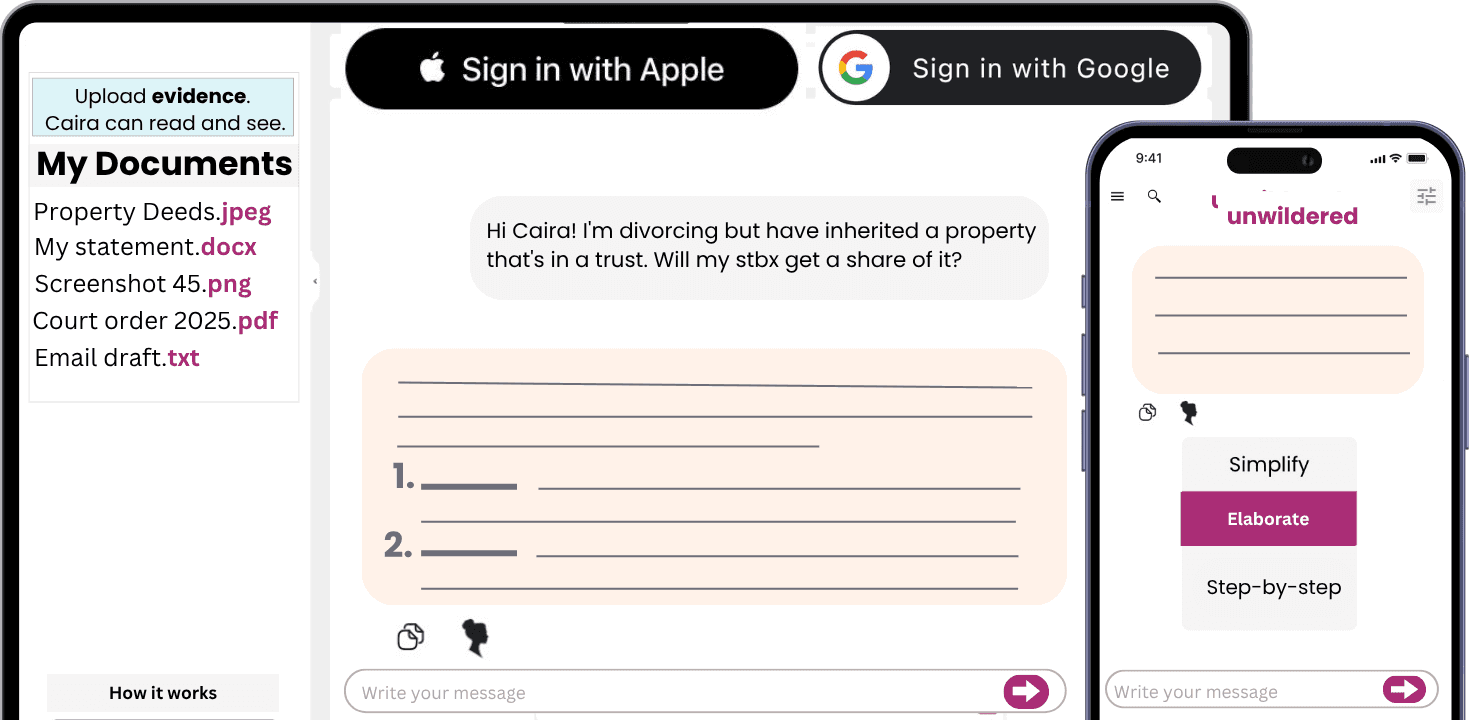
Caira can review your contract in 3 clicks:
Get suggested changes and comments added directly to your file
Generate an email summary to send to the other party
It takes less than 30 seconds to sign up for a free trial. No credit card required: Start your free trial
The job interview went great. The salary is perfect. You skim the contract, sign, and start planning your future. Six months later, you’re working on a side project—your own laptop, your own time, maybe a Sunday afternoon. You launch an app, or publish a novel, or start a freelance gig. Suddenly, your employer claims they own it.
This isn’t rare. In the UK tech and creative sectors, it’s a weekly occurrence. Browse Hacker News, r/LegalAdviceUK, or UK business forums and you’ll find horror stories:
Developers losing their startup ideas because of a sweeping “IP Assignment” clause.
Designers forced to hand over freelance work.
Salespeople and recruiters blocked from working in their own industry for a year.
It’s not just about intellectual property. Restrictive covenants—non-competes, non-solicits, and non-dealing clauses—can stop you from getting your next job, launching your own business, or even working with people you know.
Who Needs to Pay Attention?
Software developers and engineers
Designers, copywriters, and creatives
Salespeople and recruiters
Senior managers and team leads
Anyone with a side hustle, freelance ambitions, or plans to move up in their field
If you’re signing an employment contract, these are the traps to watch for.
The Clauses That Hurt Your Career (and How to Fix Them)
1. The “All Inventions” Assignment
The Scenario:
You’re a marketing manager. In your spare time, you write a novel or build an app. Your employment contract says: “Employee assigns all Intellectual Property created during the term of employment to the Company.” Strictly read, your employer could claim ownership of your novel, your app, or any creative work you do—even if it’s unrelated to your job.
Why It’s a Problem:
Many contracts use broad language, sweeping up everything you create, regardless of whether it’s related to your work or done on your own time.
What to Do:
The assignment should be limited to IP created “in the course of your specific duties” or “related to the Company’s business.”
Insist on an explicit carve-out for personal projects done on your own time, with your own equipment, and unrelated to your employer’s business.
If you’re in a regulated sector (e.g., finance, defence), expect stricter terms—but always ask for clarity.
2. The 12-Month Non-Compete
The Scenario:
You work in sales. You leave to join a competitor. Your contract has a “Non-Compete” preventing you from working for any competitor for 12 months. You’re effectively banned from your industry for a year.
The Reality:
UK courts are sceptical of long non-competes, especially for junior and mid-level roles. Twelve months is rarely enforceable unless you’re a senior executive with access to highly sensitive information. For most, 3–6 months is the norm.
The Real-World Risk:
Even if the clause is unenforceable, the threat of legal action can be enough to scare off new employers.
A common forum complaint: “My old boss sent a legal letter to my new employer claiming I’m breaching my non-compete. My new job offer was rescinded.” The stress and uncertainty alone can derail your career.
What to Do:
Negotiate non-competes down to 3 months, or remove them entirely if possible.
Ask for the scope to be limited—by geography, by specific competitors, or by role.
If you’re moving to a non-competing business, get written confirmation from your employer that they have no objection.
3. The “Non-Dealing” Trap
The Scenario:
You’re a recruiter. You leave to start your own agency. A client you worked with two years ago gets in touch: “Can you help us?” You say yes. Your old employer sues you for “Non-Dealing.”
Why It’s a Problem:
“Non-Dealing” clauses prevent you from doing business with former clients, even if they approach you. “Non-Solicitation” only stops you from actively reaching out to them.
What to Do:
Try to negotiate for a simple “Non-Solicitation” clause, not “Non-Dealing.”
If you must accept “Non-Dealing,” limit it to clients you’ve worked with in the last 6–12 months, not everyone you’ve ever met.
Clarify that general advertising or public marketing is not a breach.
4. “Garden Leave” Without Pay?
The Scenario:
You resign. The company puts you on “Garden Leave” for three months—keeping you away from clients and projects. But the contract is vague about pay or bonuses during this period.
Why It’s a Problem:
Garden Leave is meant to keep you out of the market while you’re still technically employed. You should receive full salary and contractual benefits, including bonuses and pension contributions, during this time.
What to Do:
Ensure the contract states you receive full pay and benefits during Garden Leave.
Clarify what happens to bonuses, commissions, and share options.
If you’re put on Garden Leave, get written confirmation of your entitlements.
Other Common Pitfalls
Worldwide Restrictions: Some contracts claim to restrict you globally. UK courts rarely enforce this—restrictions must be reasonable in scope and geography.
IP Created Before Employment: Watch for clauses that try to claim ownership of work you did before joining.
Post-Termination Confidentiality: Reasonable, but should not prevent you from using general skills and knowledge.
Why AI Contract Review Helps Employees
HR departments often use “one-size-fits-all” templates that are overly broad or aggressive. They’re not trying to be evil, but they’re protecting the company, not you.
AI contract review helps you spot the overreach. It flags “Worldwide Non-Compete,” “All Inventions Assignment,” and “Unpaid Garden Leave” instantly. It gives you the confidence to ask:
“Can we clarify that the IP assignment only applies to work I do for the company?”
“Can we limit the non-compete to three months and direct competitors only?”
HR will usually say yes—especially if you raise the issue before you sign.
For workplace perks and employee terms, see our guide to trivial benefits and gift vouchers.
Final Thought
Your employment contract is more than a formality—it’s the rulebook for your career, your side projects, and your future opportunities. With a little knowledge and the right tools, you can protect your creativity, your freedom, and your next big idea.
Disclaimer: This content is for general information only and does not constitute legal, financial, or tax advice. Outcomes may vary depending on your individual circumstances.