
Chat to Caira about your workplace injury or psychiatric harm. She can help you organise your evidence, answer questions, and draft statements in seconds—all confidentially. https://caira.unwildered.co.uk
1. Introduction: Why Workplace Injury and Psychiatric Harm Matter
Workplace injury isn’t just about slips, trips, or falls. In today’s high-pressure environments—whether in finance, law, healthcare, or tech—psychological harm is increasingly at the forefront. Employees are more aware than ever of their rights to a safe working environment, and courts are recognising the serious impact of psychiatric injury, such as stress breakdowns, anxiety, and depression, caused by employer negligence.
Why this matters:
Psychiatric injury can end careers, devastate families, and lead to long-term health problems.
High-value claims are on the rise, especially where employers ignored warnings or failed to act on clear risks.
Compensation can cover not just pain and suffering, but also lost earnings, future care, and even reputational harm.
If you’re searching for answers after a breakdown, injury, or denial of support at work, you’re not alone—and the law is evolving to protect you.
2. The Basics: What Is Negligence at Work?
Negligence is a legal concept that means your employer failed to take reasonable care for your safety. The duty of care is at the heart of every employment relationship, and it’s not just about physical safety—it extends to mental health as well.
Key elements of employer negligence:
Duty of care: Every employer must take reasonable steps to protect employees from foreseeable harm.
Breach: The employer failed to act as a reasonable employer would (e.g., ignored complaints, failed to risk assess).
Causation: The breach caused your injury—whether physical or psychiatric.
Damage: You suffered actual harm (medical diagnosis, lost earnings, etc.).
Common breaches include:
Failing to address excessive workloads or chronic understaffing.
Ignoring complaints of bullying, harassment, or toxic management.
Not providing adequate training, supervision, or risk assessments.
Failing to make reasonable adjustments for known vulnerabilities.
Example:
A City banker repeatedly flagged burnout and exhaustion to HR. The employer took no action, and the banker suffered a breakdown. The court found the employer negligent for ignoring clear warning signs.
3. Psychiatric Injury: Stress, Breakdown, and Mental Health Claims
Psychiatric injury claims are no longer rare or “soft” claims. The courts now recognise that mental health is as important as physical health, and employers can be liable for psychiatric harm if they fail to act on foreseeable risks.
What counts as psychiatric injury?
Diagnosed conditions such as depression, anxiety disorder, PTSD, or stress-induced breakdown.
Symptoms must be more than ordinary workplace stress—there must be a recognised medical condition.
Claims often arise from:
Chronic overwork or impossible targets.
Bullying, harassment, or exclusion.
Failure to support after a traumatic incident.
Ignoring requests for help or reasonable adjustments.
How these claims differ from physical injury:
Proving foreseeability is key: Did the employer know (or should they have known) you were at risk?
Medical evidence is crucial—GP and psychiatrist reports, occupational health assessments, and sometimes therapy notes.
Damages can be substantial, especially if the injury ends your career or causes long-term disability.
Example:
A tech lead developed severe anxiety after repeated “crunch” periods and ignored requests for time off. The employer’s failure to intervene led to a successful six-figure claim.
4. Who Brings These Claims—and Why?
These claims are brought by people from all walks of professional life, but certain patterns are common:
Employees denied support after breakdown or injury:
Many claimants have a history of raising concerns, only to be dismissed or ignored by HR or management.Managers and professionals in high-stress sectors:
City bankers, NHS managers, lawyers, and tech leads are increasingly bringing claims after suffering burnout, breakdown, or psychiatric injury.Those facing retaliation or stigma:
Some claimants are pushed out, demoted, or isolated after raising mental health concerns.
Contextual examples:
An NHS manager bullied by a senior colleague, denied mental health support, and later diagnosed with depression.
A consultant in a Big Four firm who suffered a breakdown after being assigned impossible workloads and denied flexible working.
A senior associate in a law firm who was sidelined after disclosing anxiety, leading to a claim for constructive dismissal and psychiatric injury.
Why people claim:
To recover lost earnings and medical costs.
To hold employers accountable for unsafe practices.
To seek recognition and closure after a traumatic experience.
5. What Evidence Wins (or Loses) These Claims?
Winning a negligence or psychiatric injury claim against an employer depends on robust, well-organised evidence. Courts look for clear links between the employer’s conduct and the harm suffered.
Key evidence includes:
Medical reports:
GP letters, psychiatrist or psychologist assessments, occupational health records. These should detail diagnosis, treatment, and prognosis.Workplace documentation:
Emails to HR or management raising concerns, formal complaints, risk assessments, and records of workload or hours.Witness statements:
Colleagues who observed your condition or the employer’s response, family members who saw the impact, and medical professionals.Performance reviews and absence records:
These can show a decline linked to workplace stress or injury.Timeline of events:
A clear chronology from first warning signs to breakdown or injury.
Sector examples:
Finance: A banker’s emails to HR about burnout, ignored until a breakdown occurred.
Healthcare: An NHS manager’s occupational health referral and subsequent lack of support.
Tech: A developer’s Slack messages requesting time off during “crunch” periods, followed by medical leave for anxiety.
Law: A senior associate’s written complaints about bullying, with no action taken.
Technical note:
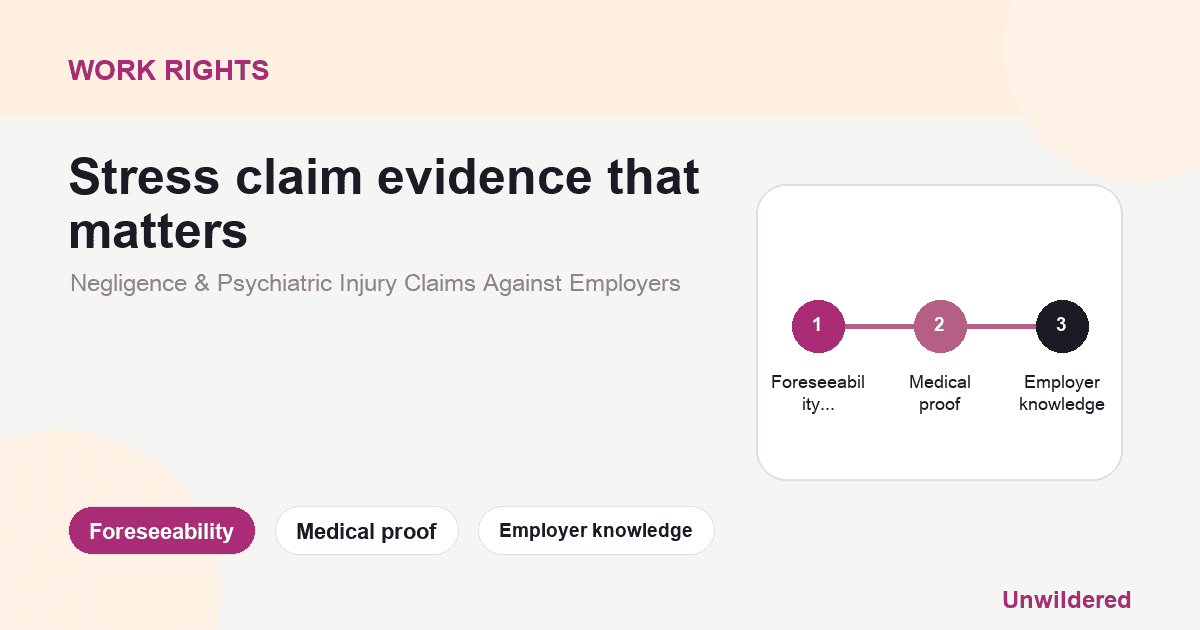
Causation is often the hardest part—proving the employer’s breach directly led to your injury. Foreseeability is key: did the employer know, or should they have known, you were at risk?
6. How to Start a Claim: First Steps and Pitfalls
Starting a claim can feel daunting, but early action and careful documentation make a huge difference.
First steps:
Preserve all evidence:
Save emails, medical records, complaint logs, and any correspondence with HR or management.Report the injury:
Notify your employer formally—raise a grievance or submit a written complaint.Seek medical help:
Get a diagnosis and treatment plan from your GP or a specialist.Check limitation periods:
Personal injury claims usually have a three-year time limit from the date of injury or knowledge of harm.
Common pitfalls:
Failing to report concerns or injury in writing.
Deleting emails or messages that show you raised issues.
Missing the limitation deadline.
Not seeking medical evidence early.
Example:
A tech executive who kept a detailed log of overtime, emails to HR, and medical records was able to prove both breach and causation, leading to a substantial settlement.
7. Typical Outcomes and Compensation
Compensation in high-value negligence and psychiatric injury claims can be significant, especially for senior professionals whose careers are disrupted.
What damages can be claimed?
Pain and suffering:
Compensation for the physical and psychological impact.Loss of earnings:
Past and future lost salary, bonuses, and benefits.Medical costs:
Therapy, medication, and ongoing care.Future care and support:
Where long-term disability or career change is required.
Sector examples:
Finance: A banker received £250,000 after a stress-induced breakdown ended his career.
Healthcare: An NHS manager won damages for depression caused by bullying and lack of support.
Tech: A developer settled for six figures after anxiety forced a career change.
Law: A senior associate received compensation for constructive dismissal linked to psychiatric injury.
County Court vs. High Court:
High-value claims (often above £50,000) or those with complex facts are heard in the High Court. County Court handles lower-value or straightforward cases.
8. Defences Employers Use—and How to Respond
Employers rarely admit fault. They often deploy technical and factual defences to avoid liability.
Common employer defences:
“We did all we could”:
Evidence of risk assessments, support offered, or reasonable adjustments.“The injury was not foreseeable”:
Claiming no prior warning or indication of risk.“Pre-existing condition”:
Arguing the injury was not caused by work, but by personal factors.
How to respond:
Show clear, repeated warnings or requests for help.
Provide medical evidence linking the injury to workplace events.
Demonstrate lack of support or failure to act on known risks.
Counter claims of pre-existing conditions with medical records showing deterioration after workplace events.
Example:
A consultant in a Big Four firm overcame the “not foreseeable” defence by producing months of emails warning of burnout, ignored by management.
9. Frequently Asked Questions
Can I claim for stress or anxiety?
Yes, if you have a recognised psychiatric injury (such as depression, anxiety disorder, or stress breakdown) diagnosed by a medical professional and can show it was caused or worsened by your employer’s negligence.
Example: A senior associate in a law firm successfully claimed for anxiety disorder after repeated ignored requests for workload adjustments.
What if my employer denies responsibility?
This is common. You’ll need to show evidence of your warnings, the employer’s lack of action, and medical proof of harm.
Example: An NHS manager’s claim succeeded after she produced emails and grievance records showing management ignored her complaints.
Will my medical records be private?
Your medical records are confidential but will need to be disclosed to the court and the employer’s legal team if you bring a claim. Only relevant records are usually required.
Tip: Ask your solicitor or representative to limit disclosure to what’s necessary for your case.
How long does a claim take?
Claims can take 12–24 months, depending on complexity, value, and whether the employer settles early or fights the case.
High-value or High Court claims may take longer, especially if expert evidence is needed.
What if I’m still employed?
You can still bring a claim, but consider the impact on your working relationship. Many claimants raise a grievance first or negotiate a settlement exit.
10. Checklist: Preparing Your Case
Gather all medical records (GP, psychiatrist, occupational health).
Save all emails, grievance forms, and HR correspondence.
Keep a diary or timeline of events, including symptoms and work incidents.
Collect witness statements from colleagues or family who saw the impact.
Document all financial losses (lost earnings, medical expenses, therapy costs).
Note any adjustments requested and the employer’s response.
Check the limitation date—usually three years from injury or knowledge of harm.
11. Final Thoughts
Bringing a negligence or psychiatric injury claim against an employer is never easy, especially for senior professionals in high-pressure sectors. But the law is increasingly recognising the reality of workplace mental health risks. Early action, thorough evidence gathering, and a clear understanding of your rights can make all the difference.
What is Early Conciliation in Acas? Find out how it leads into the COT3 settlement process for resolving employment grievances.
If you’re struggling, don’t wait—seek medical help, document everything, and consider your options. Many claims settle before trial, and even the process of raising a grievance can lead to positive change or a fair settlement.
Disclaimer: This content is for general information only and does not constitute legal, financial, or tax advice. Outcomes may vary depending on your individual circumstances.
