
Quick take: Auction catalogues love to showcase “Amenity Land” and “Plots with Potential,” often on the outskirts of towns like Guildford or Bristol. The glossy photos promise future development, but the real story is buried in the legal pack. Buying land at auction without a thorough legal review is more than risky—it’s a gamble with your conveyancing liability.
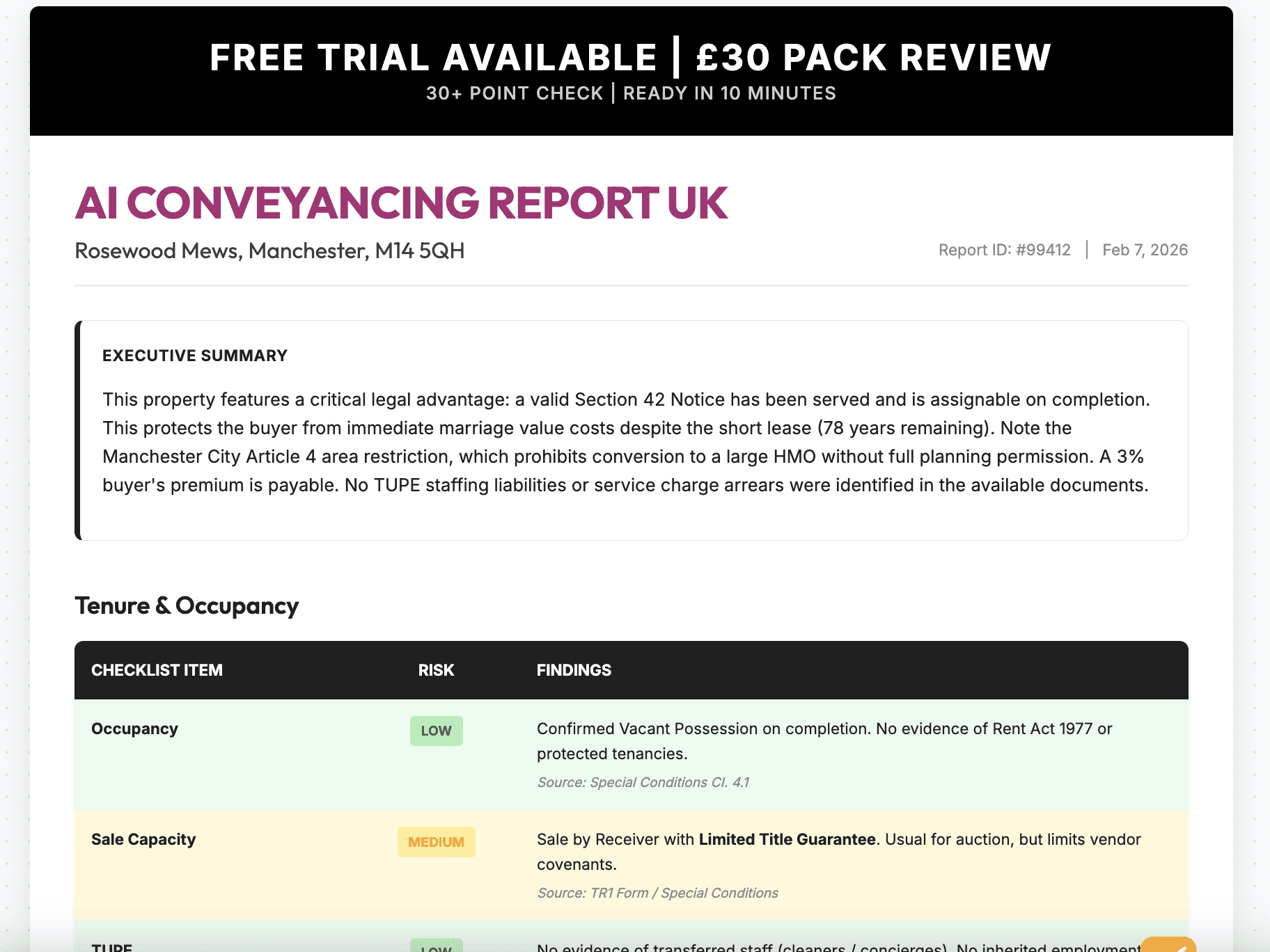
Make decisions faster. Free trial, review auction/conveyancing packs in 10min. Thereafter just £30 per review. Start your review now
The “Hope Value” Hype
Picture yourself bidding on a sunny green field, dreaming of building homes or a business. The reality? You’re not just buying soil—you’re buying a bundle of legal rights, restrictions, and potential headaches. Here’s how land investors can lose big at auction:
1. Overage / Clawback Clauses: The Hidden Profit Drain
Let’s say you buy a plot for £20,000. Years later, you secure planning permission, and the land’s value jumps to £150,000. You expect a windfall, but the Transfer Deed contains an “Overage” or “Clawback” covenant. This legal mechanism obliges you to pay a hefty percentage—often 30-50%—of any uplift in value back to the previous owner. These clauses can last decades, sometimes up to 50 years. If you miss this in the legal pack, your development profits may go straight to someone else.
Nuance: Overage clauses aren’t always obvious. They can be triggered by a range of events—planning permission, change of use, or even sale to a third party. The exact calculation and payment terms are often buried in dense legal language, making expert review essential.
2. Access and the “Ransom Strip”: Ownership Isn’t Enough
Owning the field doesn’t guarantee you can reach it. Many plots are sold without a legally documented right of access from the public highway. Sometimes, a “Ransom Strip”—a narrow piece of land between your gate and the road—is owned by someone else. If you need to cross it, that owner can demand exorbitant sums for access. A proper legal review checks the red-line boundary on the Title Plan and compares it to highway records, ensuring your conveyancing process isn’t derailed by hidden liabilities.
Caveat: Even if access appears straightforward, check for easements and utility rights. Without them, you may face costly negotiations or legal disputes just to connect water or electricity.
3. Article 4 Directions: The End of Permitted Development
Many buyers assume “Amenity Land” can be used for temporary structures, fences, or camping under Permitted Development rights. However, local councils often impose an “Article 4 Direction” to remove these rights. This means you can’t erect a fence, park a caravan, or even put up a shed without full planning permission—permission the council is unlikely to grant. You could end up with a field you can’t use for anything.
Completeness: Article 4 Directions are often referenced in the legal pack, but their practical impact is rarely explained. If you don’t spot this restriction, your investment may be rendered useless.
How Unwildered Helps You Due Diligence
Unwildered’s AI engine is built to spot the legal mechanisms that restrict land use, checking against 30+ data points to support your conveyancing process:
Identify Overage: We scan the Charges Register and Transfer Deeds for terms like “uplift,” “clawback,” and “development value,” summarizing the percentage and duration for you.
Flag Covenant Restrictions: We translate complex restrictive covenants (e.g., “no erection of any structure”) into plain English warnings, so you know exactly what you can and can’t do.
Check Access Rights: We look for express grants of easements for access and utilities in the title documents, highlighting any gaps that could become deal-breakers.
Unwildered is not a substitute for solicitors or surveyors. We provide an initial scan to help you identify legal and conveyancing risks early, so you only pursue viable deals.
FAQ
What is “Hope Value”?
“Hope Value” is the premium paid for land based on the possibility of future planning permission. If the legal pack shows a history of refused applications or strict covenants, that hope may be misplaced—and your liability increased.
Can I insure against a restrictive covenant?
Sometimes. “Restrictive Covenant Indemnity Insurance” exists, but it’s usually only available for covenants breached for 20+ years without complaint. You generally can’t insure against a future breach of a known covenant, especially if you’ve just bought the land.
What about ChatGPT?
ChatGPT processes text generically and doesn’t understand the legal implications of an “Article 4 Direction” or the nuances of UK land law, easements, and licenses. Unwildered is engineered for this domain, providing structured, risk-focused reports that highlight the deal-killers keeping land cheap.
When checking auction land risks, see our guide to restrictive covenants in auction legal packs.
For related guidance, see our guide to buying farmland at auction and avoiding agricultural ties.
How does Unwildered’s AI differ from a solicitor’s review?
Unwildered’s AI acts as a preliminary filter, flagging obvious risks and liabilities. A solicitor provides a comprehensive legal review and advice, ensuring all nuances and caveats are considered before you commit.
Disclaimer: This article is general information, not financial, tax, or legal advice.
