
A flat with high service charges is not automatically a bad buy. It may simply be an expensive building to run. The question is whether the charge buys real value, or whether it quietly weakens your yield, mortgage affordability and resale market.
How Unwildered helps: upload the legal pack, title, searches, lease or auction documents to AI conveyancing review by Unwildered. The 40-point review takes about 5 minutes and is designed to help you feel calmer and more confident before you spend more money. Your first report is free, then GBP 30 per review or GBP 100 for 5 reports.
What This Means In Practice
By “high service charges”, we mean charges that feel large compared with the value, rent or facilities of the flat. A lift, concierge, heat network, gym, fire-safety work or reserve fund can explain a higher bill. Poor management can also explain it, less happily.
The danger is that buyers compare asking prices but forget to compare monthly ownership costs. A cheaper flat can become expensive if the service charge keeps rising or a major works demand lands soon after completion.
Legal Risk
For a high-service-charge flat, the risk usually sits in the lease, service charge accounts, landlord and tenant rules, and the building management history. Service charges generally need to be allowed by the lease and reasonably incurred. Leasehold reform may improve transparency over time, but the buyer still needs to read the current lease, budget and accounts.
The Main Risks
service charges can rise after completion and are not a fixed mortgage-like number
major works and reserve fund demands can arrive at the worst time
a service charge above about 1% of value can make some buyers compare it with rent or mortgage cost
poor management can mean high charges without visible quality
None of those points automatically means walk away. They mean the decision deserves a slower, calmer check. With a flat with high service charges, the risk is often hidden in documents rather than visible in the viewing. A fresh kitchen can distract from a title defect. A nice river view can distract from an insurance problem. A cheap flat can distract from an annual bill that rises faster than the rent.
What To Check Before You Offer
Document or check | Why it matters |
last three years of accounts, budgets, reserve fund and section 20 notices | This is the first place the real risk usually appears. |
managing agent reputation and complaints | It tests whether the seller story matches the paperwork. |
building safety, insurance and cladding documents where relevant | It protects the financing, insurance or resale assumption. |
lease wording for apportionment, reserve funds and admin charges | It turns a vague worry into a costed decision. |
If you are buying at auction, run the legal pack through Unwildered AI conveyancing analysis before bidding. The process is built to be simple: upload the pack, choose the 40-point review, and read the report. In a typical case it takes under 5 minutes, so you can spot the questions to ask before the auction clock makes everything feel urgent. Auction contracts can become binding quickly, so this does not replace a solicitor; it helps you notice red flags earlier. If you are buying privately, the same 3-click check can help before you make an offer or spend more on searches, surveys and legal fees.
Why Someone Might Still Buy
A high charge can be rational where the block is genuinely well run, insured, repaired and attractive to tenants who pay for convenience.
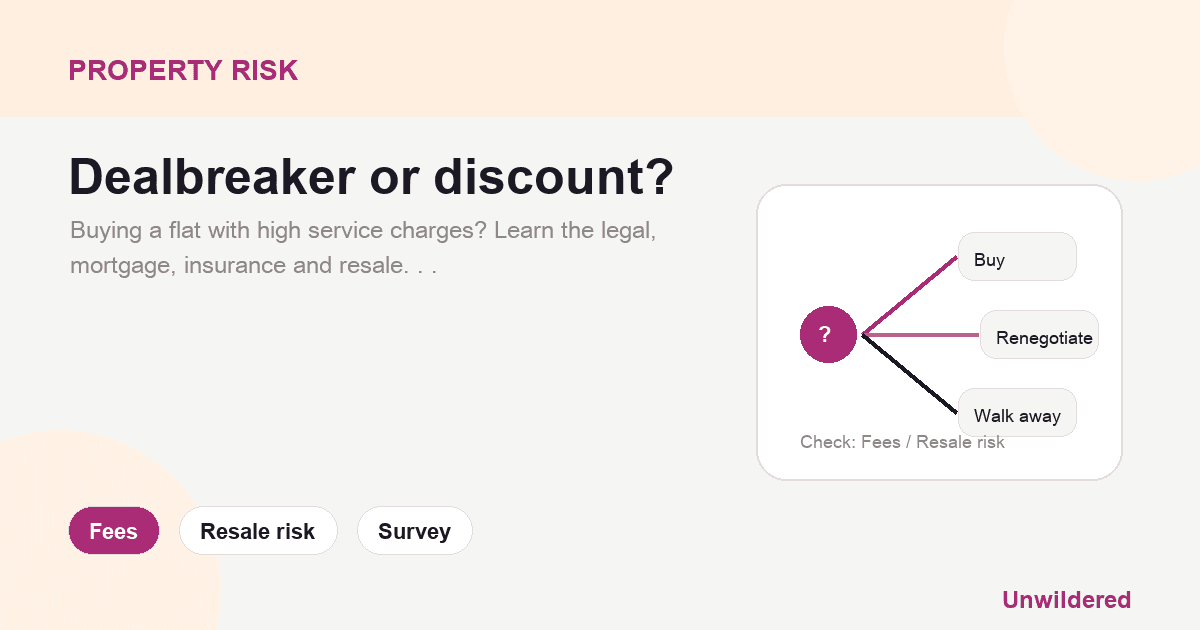
Negotiate against the real monthly ownership cost, not the headline price. A flat that looks GBP 20,000 cheaper may be no bargain if the service charge wipes out the saving within a few years.
A prepared buyer is not fearless. They are specific. They know which risk they are accepting, which risk they have priced, and which risk would make them walk away.
Before You Decide
If you are still interested after the first checks, that is fine. The aim is not to frighten you away from unusual property. It is to make the risk visible before you commit. A 5-minute Unwildered review can help you organise the documents, spot the questions to ask and decide whether you need a solicitor, surveyor, broker or specialist report before moving forward.
A Practical Rule
If the answer to “what is wrong with it?” is vague, pause and ask for the document that proves the answer. With a flat with high service charges, vague is expensive. Ask for documents, get the legal position checked, price the worst credible case, and keep enough margin for delay.
FAQ
If the service charge is high, how do I tell whether it is fair or a red flag?
Compare the accounts, budget, reserve fund, insurance, major works history and facilities. A high charge may be reasonable in a complex building, but unexplained management fees, arrears or repeated emergency works need careful questioning.
What can I do if the service charge makes the flat hard to sell later?
The practical route is to model net yield and owner-occupier affordability before buying. If the building is poorly managed, Right to Manage or collective action may be relevant, but those routes take time and cooperation.
Should I treat a cheap flat with high charges as a bargain?
Only if the discount reflects the ongoing cost and resale risk. Ask what the same buyer could afford if the service charge were treated like an extra monthly mortgage payment.
This article is general information, not legal, financial, investment or medical advice.
