
A home on or near former landfill is not automatically unsafe or unmortgageable. Many brownfield sites have been properly remediated. The calm question is whether the file proves that the ground risk is understood and controlled.
How Unwildered helps: upload the legal pack, title, searches, lease or auction documents to AI conveyancing review by Unwildered. The 40-point review takes about 5 minutes and is designed to help you feel calmer and more confident before you spend more money. Your first report is free, then GBP 30 per review or GBP 100 for 5 reports.
What This Means In Practice
“Former landfill” or “former refuse dump” can mean waste under the site, nearby historic waste, filled ground, contaminated land, ground gas risk or settlement risk. Those are different problems, so the wording in the environmental search matters.
The risk is stopping at either panic or reassurance. A red environmental search needs interpretation; a clean-looking garden does not prove the ground history is clean.
Legal Risk
For former landfill, the risk sits in environmental evidence rather than appearance. Part 2A of the Environmental Protection Act 1990, planning remediation conditions and environmental search data may all be relevant. A search flag is not the final answer, but it is a reason to ask for remediation, validation and ground-gas evidence where needed.
The Main Risks
ground gas, contamination, settlement and abnormal foundations can affect safety and cost
environmental searches may flag historic landfill nearby rather than under the exact house
gardens, extensions and excavations may need more care
stigma can affect resale even after remediation
None of those points automatically means walk away. They mean the decision deserves a slower, calmer check. With a property on or near former landfill, the risk is often hidden in documents rather than visible in the viewing. A fresh kitchen can distract from a title defect. A nice river view can distract from an insurance problem. A cheap flat can distract from an annual bill that rises faster than the rent.
What To Check Before You Offer
Document or check | Why it matters |
environmental search, local authority contaminated land records and historic landfill data | This is the first place the real risk usually appears. |
planning remediation conditions and verification reports | It tests whether the seller story matches the paperwork. |
structural survey for movement or unusual foundations | It protects the financing, insurance or resale assumption. |
insurance and lender comfort before exchange | It turns a vague worry into a costed decision. |
If you are buying at auction, run the legal pack through Unwildered AI conveyancing analysis before bidding. The process is built to be simple: upload the pack, choose the 40-point review, and read the report. In a typical case it takes under 5 minutes, so you can spot the questions to ask before the auction clock makes everything feel urgent. Auction contracts can become binding quickly, so this does not replace a solicitor; it helps you notice red flags earlier. If you are buying privately, the same 3-click check can help before you make an offer or spend more on searches, surveys and legal fees.
Why Someone Might Still Buy
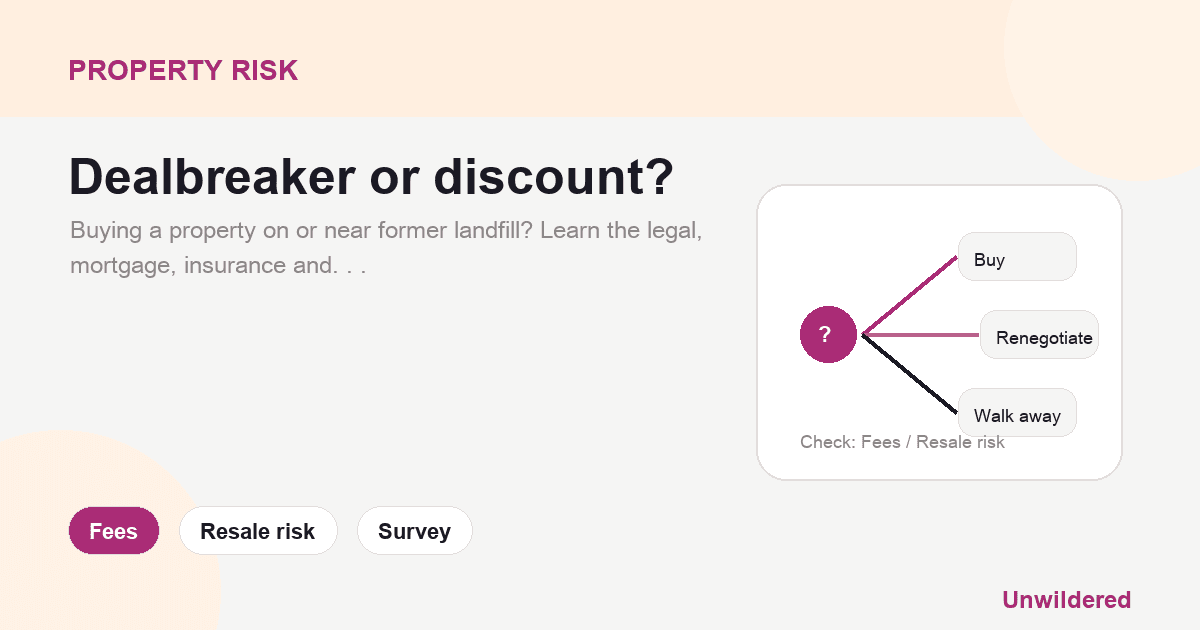
Many remediated sites become ordinary homes, especially where documentation is strong and infrastructure is mature.
The discount should reflect evidence quality. A clean remediation file is valuable; vague reassurance is not.
A prepared buyer is not fearless. They are specific. They know which risk they are accepting, which risk they have priced, and which risk would make them walk away.
Before You Decide
If you are still interested after the first checks, that is fine. The aim is not to frighten you away from unusual property. It is to make the risk visible before you commit. A 5-minute Unwildered review can help you organise the documents, spot the questions to ask and decide whether you need a solicitor, surveyor, broker or specialist report before moving forward.
A Practical Rule
If the answer to “what is wrong with it?” is vague, pause and ask for the document that proves the answer. With a property on or near former landfill, vague is expensive. Ask for documents, get the legal position checked, price the worst credible case, and keep enough margin for delay.
If the environmental search flags historic landfill, do not stop at the red box. Ask whether the concern is under the plot, nearby, uphill, downstream, historic, remediated or still technically uncertain. Those differences change the price conversation.
FAQ
If the environmental search flags landfill nearby, what should I do next?
Ask whether the risk is under the plot or nearby, and request planning remediation documents, validation reports and any ground-gas information. A consultant can explain whether the risk is live or historic.
Can a former landfill site be safe after remediation?
Yes, many brownfield sites are successfully remediated, but the buyer needs evidence. A clean validation report is more useful than informal reassurance.
What value-add is realistic here?
The value-add is usually reducing uncertainty: assembling the environmental file, confirming insurance and lender comfort, and documenting that the ground risk is controlled.
This article is general information, not legal, financial, investment or medical advice.
