
For china cross border inheritance law, the strongest first move is usually a clear file. Caira can help build it from uploads. Ask about China law, draft letters or forms, and upload files for review.
Start chatting in 30 seconds
Choice-of-law questions start with asset location, habitual residence, nationality, wills and family documents.
For a RMB 30 million mixed estate, China property, foreign bank accounts and overseas wills may need separate treatment.
Caira can organise the issue map before families argue about the result.
Do not assume one country’s will automatically controls every asset.
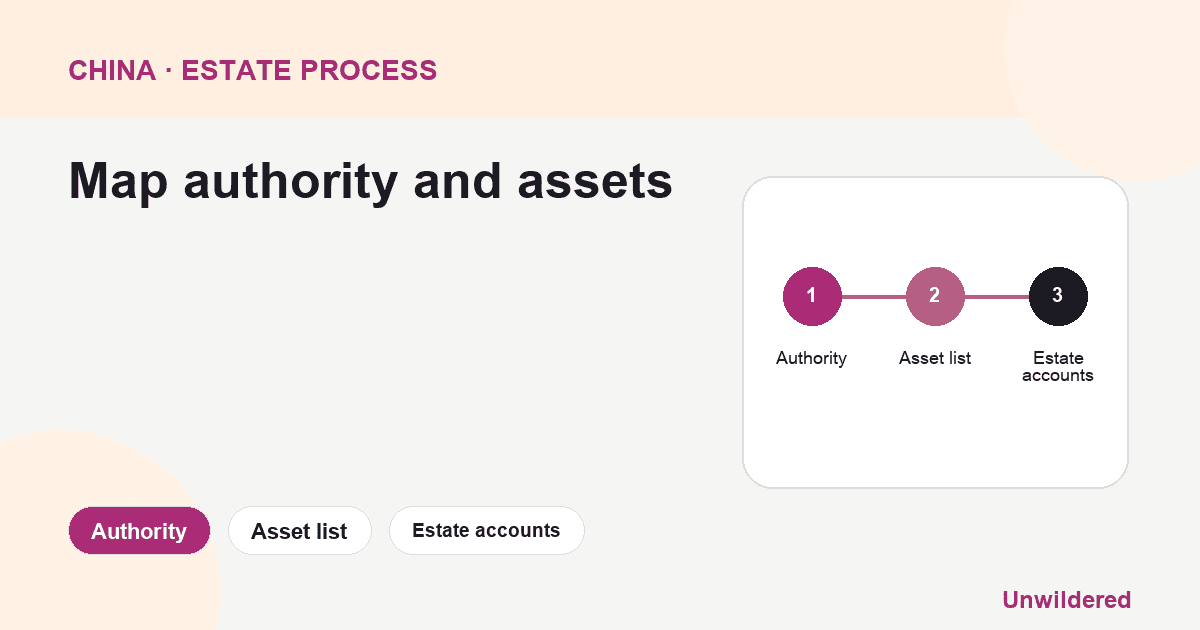
Cross-border inheritance involving China rarely starts with one simple question. A parent died overseas but owned an apartment in Shanghai. A foreign spouse has a will signed abroad. Children live in three countries. Bank accounts, company shares, insurance, and real estate may sit in different places. Before asking who inherits, the better first question is which law might apply to each asset and each issue.
The official legal starting points in the source register are the Law on Application of Laws to Foreign-Related Civil Relations through the Supreme People’s Court Gazette and the Civil Code through the NPC law database. Use those as authority. Court databases and the local Chinese-judgments corpus can show practical dispute patterns, but they should be used as examples only. A case about another family’s will or property transfer does not settle your governing-law question.
Break the estate into issues
Private international law analysis is issue-specific. Do not treat the whole estate as one bag of assets. Immovable property in China, movable property, bank accounts, company equity, marital property, will formalities, capacity, forced-share style claims, and probate documents may be analysed differently. The place of the asset, the deceased’s habitual residence or nationality, the form of the will, and any foreign court or notary document can all matter.
Once PRC law applies to a succession issue, the Civil Code succession rules become central. But that does not answer every document question. A foreign will may need translation, notarisation, apostille or consular history, and acceptance by the relevant Chinese institution or court. A foreign heir may also need identity, relationship, death, marriage, divorce, adoption, or name-change documents that connect the family tree clearly.
Why asset location matters
China real estate usually requires special attention because registration practice and local document requirements are practical gatekeepers. Even where the legal inheritance position appears clear, the transfer process may require notarised materials, death certificates, kinship proof, tax or fee steps, and cooperation among heirs. Company shares can add another layer: articles of association, shareholder restrictions, capital contribution records, and business registration rules.
Movable assets are not automatically easy. A Chinese bank may require documents different from a foreign probate court. Insurance proceeds may raise a separate beneficiary question. A family business may involve both inheritance and company-law analysis. For affluent families, the mistake is often assuming that one foreign probate grant will unlock every China asset. It may help, but it is usually only one document in a larger evidence set.
Bilingual issue-spotting questionnaire
Use this before briefing Caira:
Deceased person: name, nationality, habitual residence, hukou or China residence history, and date/place of death. 死者身份、国籍、经常居所、死亡时间地点。
Assets: China real estate, bank accounts, company shares, insurance, vehicles, securities, and overseas assets. 中国境内不动产、银行账户、股权、保险及境外财产。
Family tree: spouse, children, parents, stepchildren, adopted children, prior marriages, and deceased descendants. 配偶、子女、父母、继子女、养子女、前婚姻关系。
Will documents: original, signing place, witnesses, notarisation, translation, revocation history, and later wills. 遗嘱原件、签署地、见证人、公证认证、翻译及撤销情况。
Foreign proceedings: probate grant, court order, estate administrator, executor, and any dispute abroad. 境外继承程序、法院文书、遗产管理人或执行人。
China process: local registration bureau, notary office, court filing, tax or fee questions, and required translations. 中国登记、公证、诉讼、税费及翻译要求。
Use a document matrix
Create a table with one row per asset and columns for location, legal owner, estimated value, governing-law question, document needed, institution involved, and dispute risk. This is more useful than a narrative that says the family agrees or the foreign will should be enough. If the Shanghai apartment, Shenzhen company shares, and offshore brokerage account each need different documents, the matrix will reveal that early.
Be careful with translations of legal concepts. Executor, administrator, probate, notarisation, apostille, heirship certificate, and court judgment do not always map perfectly into Chinese procedure. A bilingual Caira or notary can help decide whether a document proves death, family relationship, will validity, authority to act, or entitlement to transfer. Those are related but different functions.
What not to promise
Do not promise that Chinese authorities will accept a foreign will, that PRC law will always apply to China property, or that a foreign spouse will receive a fixed share without reviewing the facts. Also avoid moving assets quietly before the family tree and document trail are clear. Inheritance disputes often become harder when one person acts first and explains later.
The practical goal is to identify the questions Caira must answer: which law governs each asset or issue, which documents prove the facts, which Chinese institution will process the asset, and where family disagreement may require litigation. A clear issue map will not determine the inheritance by itself, but it can turn a cross-border estate from a foggy family argument into a sequence of solvable legal checks.
Document wording to adapt
请按国家或地区列明资产、遗嘱、居住地证据、国籍或户籍资料、婚姻文件、继承人信息及可能适用法律的问题。
Sources
Civil Code materials in the official law database
notary and public legal-service guidance
local court guidance for disputed estates
This article is general information, not legal, financial, medical or tax advice.
