
Working on China Fake Rental Listing Agent Fee? Upload the relevant files to Caira and turn the issue into a practical document checklist. Ask about China law, draft letters or forms, and upload files for review.
Start chatting in 30 seconds
Keep the contract, deposit proof, inventory, photos, messages and payment records together.
For RMB 10 million in rent, repairs or risk of losing the deposit, small missing evidence can matter.
Separate what the agreement says from what actually happened.
Use Caira to draft a landlord, tenant or tribunal-ready document checklist.
A fake rental listing in China can be more than an annoying bait-and-switch. A tenant may pay an agency fee after seeing photos of an apartment that is unavailable, materially different, not authorised by the landlord, or advertised at a misleading price. For expat renters, the problem is often intensified by short relocation timelines, Chinese-language contracts, WeChat negotiations, and pressure to pay before documents are checked.
The official legal map should start with the 2025 Housing Rental Regulations, the Consumer Rights Protection Law through the NPC law database, and the national 12315 platform operated under market-regulation channels. Court databases can show how rental and brokerage disputes are argued, but they are practical examples only. A 12315 complaint may help with a consumer or market-regulation issue, but it does not can help a refund or replace a civil contract claim where the dispute is private and evidence-led.
Identify The Misrepresentation
Do not simply write that the agent lied. Break the problem into provable statements. Was the advertised apartment unavailable? Were the photos from another unit? Was the rent, deposit, floor, area, school-zone claim, metro distance, furnishing, pet permission, invoice arrangement, or landlord identity misrepresented? Did the intermediary say the property could be rented immediately, then switch you to another unit after collecting a fee?
The 2025 rental regulations place emphasis on order in the housing rental market and duties around truthful information and brokerage conduct. That makes the listing evidence important. Screenshot the advertisement with date, platform, account name, property address if shown, price, description, photos, and any claim about commission or refunds. Preserve WeChat messages, voice-message transcripts where lawful, payment records, receipts, service agreements, and the lease you were asked to sign.
Separate Three Possible Routes
First, there may be a negotiation route: you ask the agent or company to refund the fee or correct the problem. This works best when your request is calm, specific, and attached to evidence. Second, there may be a consumer or market-regulation complaint route through 12315 or a local market regulator, especially where advertising or brokerage conduct appears misleading. Third, there may be a civil claim route if the dispute turns on contract, unjustified fee retention, or damages.
These routes can interact, but they are not identical. A regulator may focus on business conduct. A court or mediator may focus on the contract, proof of reliance, fee terms, and loss. A landlord may not be liable for everything an independent agent said. An agent may argue that it provided introduction services even if the tenant disliked the final apartment. That is why documents matter more than anger.
Listing evidence: screenshots, URL or platform, account name, photos, rent, unit details, and date.
Agency identity: business name, licence or registration details, employee name, phone, office address.
Payment proof: transfer records, receipt, invoice, fee label, refund promise, and payment recipient.
Contract trail: brokerage agreement, lease draft, landlord authorisation, viewing confirmation, and cancellation terms.
Mismatch proof: actual apartment photos, landlord statement, unavailable-unit proof, price change, or bait-and-switch messages.
Loss record: hotel cost, moving delay, duplicate fee, translation cost, or deposit issue, with receipts.
Simplified Chinese Refund Request Template
Use this as a concise starting point and adapt it to the evidence:
本人于[日期]通过[平台/门店]看到[房源地址/编号],页面显示[租金/面积/照片/条件]。
贵方工作人员[姓名]表示该房源可以出租,并收取中介费/服务费人民币[金额]。
后发现该房源存在[虚假信息/无法出租/照片不符/价格不符/无授权],相关证据包括[截图、聊天记录、付款凭证]。
请于[日期]前退还人民币[金额],并书面说明处理结果。否则本人将考虑通过12315、市场监管部门或法律途径维护权利。
How To Use 12315 Without Overclaiming
A 12315 submission should be organised like a small evidence bundle. Identify the trader, transaction, disputed conduct, amount, requested remedy, and attachments. Keep the Chinese wording factual. Avoid threats, insults, or allegations you cannot prove. If the platform asks for jurisdiction or trader location, use the business address and payment recipient information where available.
For high-end rentals, also check whether the dispute involves separate issues: deposit refund, lease filing, landlord authorisation, property defects, tax invoice, early termination, or serviced-apartment rules. Do not let a fake-listing complaint become a confused essay about every problem in the tenancy. File one chronology and one evidence index, then decide which issue is the refund request and which issue needs separate advice.
The practical aim is modest but valuable: preserve the listing, prove the payment, show the mismatch, ask for a defined refund, and choose the right channel. The law may support action against misleading conduct, but outcomes depend on facts, documents, and the route chosen. A clean record gives the agent, regulator, mediator, or court fewer places to hide the real question.
Official context to check
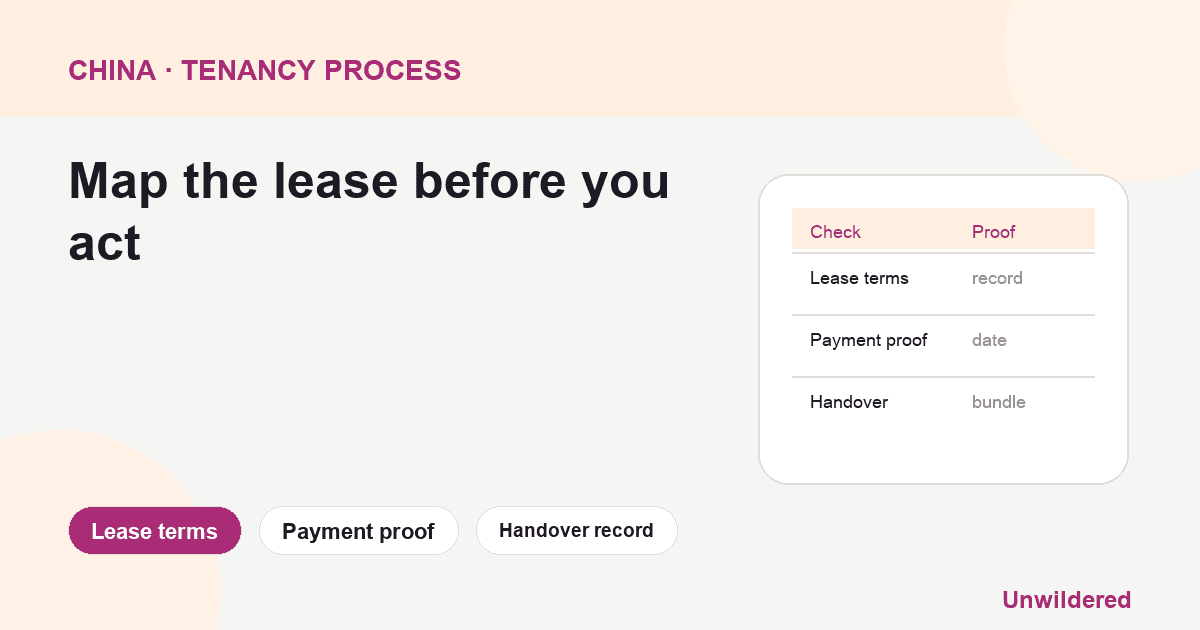
The useful official hook is not a national rent average; it is the 2025 housing-rental framework. Treat the State Council regulation and the SAMR model lease as document-quality signals: identity, authority to rent, deposit wording, repair allocation, handover evidence and local filing should all line up.
Sources
State Council official portal: 2025 housing rental regulations
SAMR: 2025 model urban housing lease
local housing bureau or rental filing platform
This article is general information, not legal, financial, medical or tax advice.
