
If france controle fiscal particulier is on your desk, begin by uploading the notice, agreement, order, or correspondence to Caira. Ask about France law, draft letters or forms, and upload files for review.
Start chatting in 30 seconds
Identify the order, date received, deadline, permission issue, and exact remedy sought.
For EUR 1 million at stake, unclear grounds can weaken an otherwise serious appeal.
Appeals usually depend on the record. Rarely do they allow a fresh telling of the whole dispute.
Use Caira to organise the decision, evidence bundle, and draft grounds checklist.
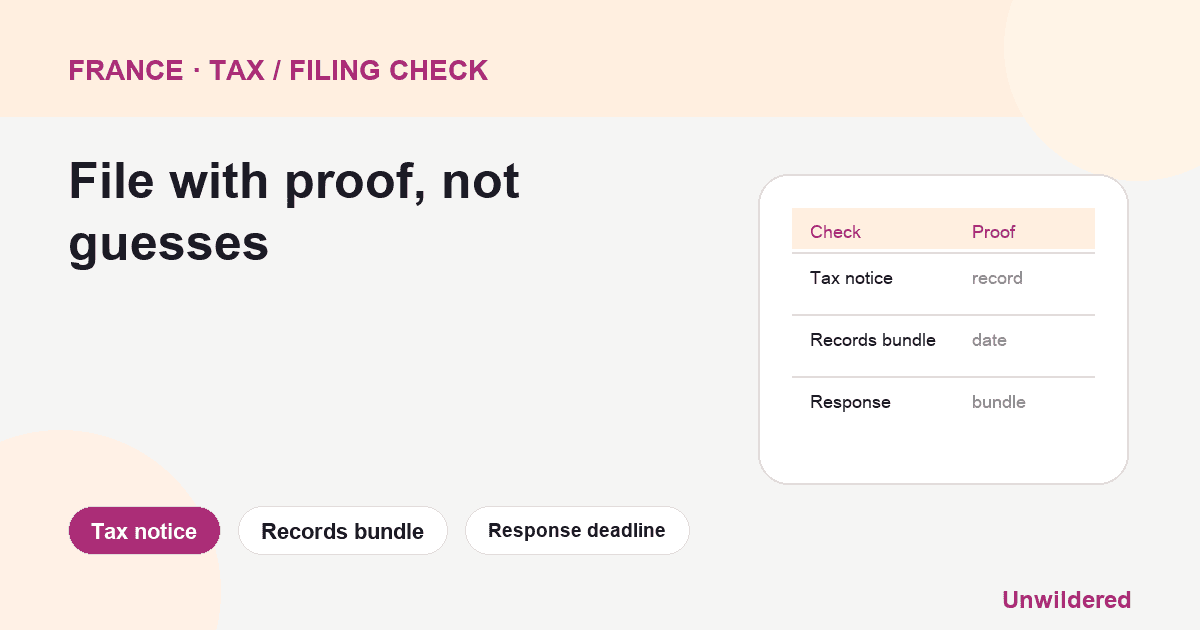
Handling a French contrôle fiscal becomes easier when you separate three things: the document you received, the deadline attached to it, and the evidence required to answer. Not all notices demand the same reply. A request for information, an examination of personal tax position, and a proposition de rectification each need a different approach. For high-income individuals, the audit may pull in foreign accounts, rental property, securities, crypto, family loans, trusts, company benefits, or residence status.
A quick emotional reply can bring more risk than taking a few silent days to organise your file.
The official tax materials draw a line between information-gathering and the formal rectification process. BOFiP guidance on the proposition de rectification states it must allow the taxpayer to submit observations or accept the adjustment. The usual response period is 30 days from receipt. Often, you can request a 30-day extension if you follow the contradictory procedure. The notice should state you are entitled to get help from an adviser of your choice.
First identify the document
Read the heading. Note the legal references, tax years, taxes involved, and the date you received it. Don’t trust only the subject line in your secure message inbox. If you receive a request for documents, your prompt task is production and explanation. If it’s a proposition de rectification, the administration is setting out proposed adjustments – it’s time to decide whether you’ll accept, contest, or partially accept. Language about penalties, bad faith, abuse of law, hidden activity, or tax fraud is a red flag. In these cases, have a tax Caira review your reply before you file.
Save the envelope, electronic receipt, and any timestamp from your account messages.
Make a table of every deadline mentioned in the letter.
Check whether the query relates to income tax, wealth-related reporting, social contributions, VAT, property income, or another tax.
Identify if the administration is asking for documents, explanations, or your formal observations.
Avoid sending new calculations before you know which legal or factual points are actually disputed.
Build the response around evidence
A strong response is concise and structured around the facts. It’s not a long autobiography. Address each issue with reference to the tax year, the amount, the administration’s position, your position, and the supporting evidence. Need to correct an error? Explain how it happened, and attach documents that support the corrected figure. If the issue is residence or source of income, gather travel records, employment contracts, board minutes, lease documents, bank statements, and proof of family location.
Assets or accounts outside France add complexity. Translation and traceability become important. The tax office may accept an English bank statement, but providing a clear French summary helps avoid confusion. Don’t hide adverse documents. If something in the file is unhelpful, your adviser should see it before the administration discovers it.
French response-letter structure
Use this as a structure, not as a finished legal submission. Always adapt to match the exact notice.
Objet: Réponse à votre demande du [date] / proposition de rectification du [date].
Références: numéro fiscal, années concernées, impôts concernés.
Calendrier: date de réception et, si nécessaire, demande de prorogation du délai de réponse.
Pièces jointes: liste numérotée des justificatifs transmis.
Observations: réponse point par point, avec renvoi aux pièces.
Réserve: demande de confirmation écrite de la bonne réception et de toute pièce complémentaire souhaitée.
What not to do
Don’t ignore the letter just because the tax office already holds some information. Avoid broad statements like, “all income was declared,” unless you have checked each year. Don’t ask your accountant for a defensive response without sharing the original notice. Skip online templates that admit fault, allege administrative error, or threaten litigation, unless you truly have facts to support them.
If the tax office maintains its adjustments after you reply, further steps may include hierarchical review, referral to specialist commissions, a formal tax claim, or litigation. Use Service-Public tax dispute resources, the Conseil d’Etat, and Cour de cassation databases to understand how disputes have reached the courts. Treat them as practical examples – not predictions of your case.
When to escalate to Caira
Bring in a tax Caira early if the amount is high, if penalties are alleged, if the issue concerns residence, trusts, offshore entities, company benefits, crypto, or family transfers, or if any request ties in with potential criminal tax-fraud risk. The point is not to be combative. The goal is to keep your response procedurally valid, factually complete, and in line with later appeal rights.
A contrôle fiscal is a document process before it becomes an argument. Preserve the timeline. Respond before the deadline. Request extra time if you can, and see that every factual statement can be supported by evidence. Good discipline pays off. It may not win or lose the audit, but it helps your adviser build a stronger file and reduces avoidable procedural mistakes.
This article is general information, not legal, financial, medical or tax advice.
