
Before you send the next message about france non compete clause compensation, let Caira review the documents and identify the missing information. Ask about France law, draft letters or forms, and upload files for review.
Start chatting in 30 seconds
Check the dismissal date, deadline, contract, warnings, pay records, and messages first.
For EUR 1 million of salary, bonus, or severance, a careful chronology can make all the difference in negotiation.
Preserve lawful evidence. At the same time, avoid taking any confidential files you aren’t entitled to keep.
Use Caira to build a timeline and draft a response checklist.
Non-compete disputes in France often become urgent in the week an employee leaves. Yet the answer is usually found in documents signed much earlier. Relevant files include the contract, the collective agreement, any amendments, the dismissal letter, settlement proposals, waiver notices, payroll records, and, sometimes, the new-job description. Official French employment sources explain the contract and the post-termination rules. For authority, the Labour Code and guidance from the labour ministry are essential.
Court decisions help show how non-compete clauses are tested in practice. View them as examples, not as a roadmap for breaking a restriction.
The safest move? Review the clause before accepting a new role, launching a business, or ignoring the employer’s letter. Broad, unpaid, poorly waived, or job-mismatched restrictions can be contestable. However, always read the file carefully first.
Find Every Relevant Document
Gather the signed contract and any later amendments. Next, collect the collective bargaining agreement, bonus plan, confidentiality agreement, and garden-leave letter. Add dismissal or resignation letters, rupture conventionnelle papers if they exist, any settlement drafts, and the final payslip package. For executives, check for side letters, equity plans, management-company agreements, and board mandates. Remember, sometimes a person is both employee and corporate officer. The analysis may shift depending on the role.
Build a brief timeline: date the clause was signed, date employment ended, when any waiver was sent, when compensation started or stopped, when new work begins, and if there’s any employer objection. This sequence can reveal if the real problem is about validity, waiver, payment, or alleged breach.
What To Review In The Clause
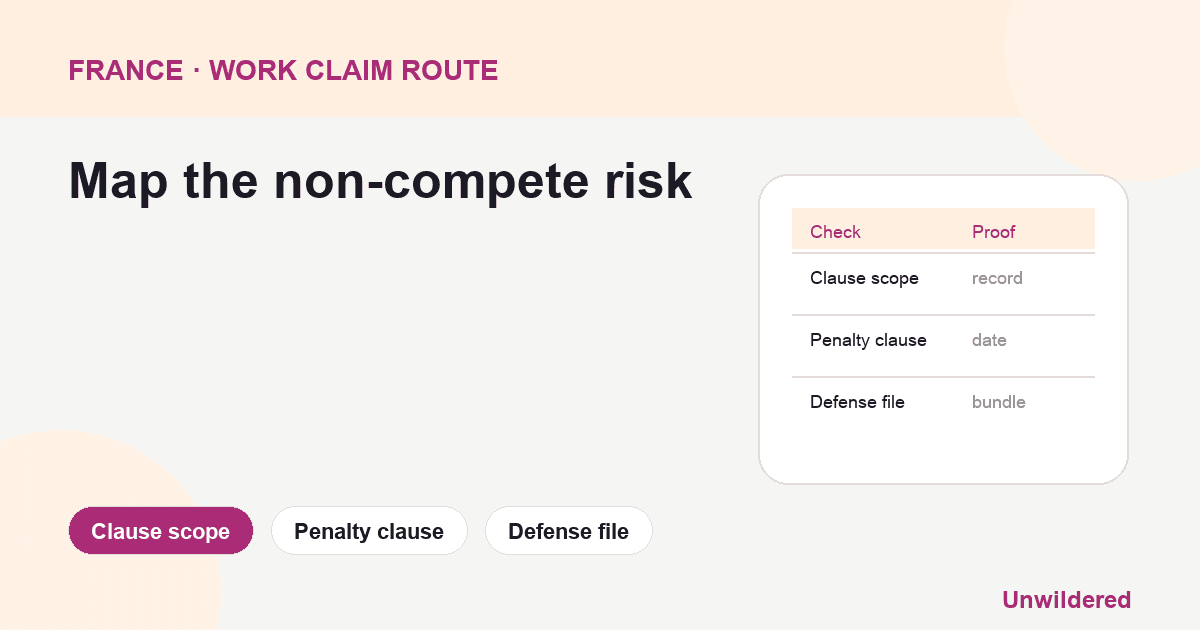
Don’t just look for the phrase “non-concurrence.” Take a closer view: what business interests are protected? What activities are forbidden? Check the territory, duration, compensation, waiver process, penalty clauses, and if the restriction fits the person’s real job. A tight clause for a senior sales director with client access isn’t the same as a blanket ban on a junior staffer with no strategic risk.
Financial consideration is essential. The post-employment restriction restricts the employee’s ability to work. If compensation is missing, is merely token, subject to unclear conditions, or not paid at all, Caira should review what happens next before you assume the clause doesn’t apply. Payroll details matter too. Check the gross amount, how often it’s paid, social security deductions, and whether it shows up on payslips.
French Clause-Review Snippet
Use this checklist before sending a challenge:
Clause: texte complet, date de signature, avenants, convention collective applicable.
Limites: durée, zone géographique, activités interdites, clients ou secteur visés.
Contrepartie: montant, base de calcul, périodicité, bulletins de paie, paiements reçus.
Renonciation: délai prévu, forme exigée, auteur du courrier, preuve de réception.
Nouveau poste: fonctions, employeur, secteur, clients, localisation, date de début.
Risques: clause pénale, mise en demeure, référé, transaction, confidentialité.
If The Employer Waives The Clause
Waivers cause many disputes. Often, the employee wants freedom to work, while the employer wants to waive restrictions and end compensation. Check who can waive, how the notice should be given, and when. Is the waiver hidden in a settlement draft, or sent to an old address? These raise different questions than a prompt, formal notice under the contract.
If anything about waiver feels unclear, avoid actions that complicate the dispute. Ask for written confirmation before acting. Don’t rely on a casual message from a manager if the contract requires a formal employer notice. Starting a new job? Give Caira the date and role description to ensure the advice fits your situation.
If Compensation Is Unpaid
Before escalating, confirm whether the employer is still asking the employee to comply. Occasionally, the employer insists on market exclusion, yet hasn’t processed the promised compensation. That is very different from a clear waiver.
If you are respecting the restriction but compensation is missing or underpaid, assemble your payment claim file. Include payslips, bank statements, contract wording, reminders, job-search proof, and evidence that you stayed away from restricted work. If the employer claims you breached the clause, ask exactly which client, activity, territory, or competitor they’re referring to.
Don’t exaggerate your losses. Depending on the facts, your claim may be for contractual compensation, for damages, or for release from the restriction. A clean, complete file lets Caira test the right legal strategy, so you don’t open with accusations you cannot prove.
Before Accepting A New Role
Your new employer shouldn’t get confidential documents they don’t need, but should get enough information to avoid a dispute. Only share details Caira approves: that there’s a restriction, what is disputed, the timing, and any limitations. Do not hand over client lists, strategy decks, source code, pricing, or internal company data.
Non-compete disputes aren’t resolved by faith alone. They’re about contracts, timing, payment, and—above all—evidence. The practical question is whether the clause is enforceable enough to respect, weak enough to challenge, clearly waived, or must compensation be paid because the employee is complying? Never assume the answer before reviewing the documents.
This article is general information, not legal, financial, medical or tax advice.
