
For germany pflichtteilsergaenzung, the strongest first move is usually a clear file. Caira can help build it from uploads. Ask about Germany law, draft letters or forms, and upload files for review.
Start chatting in 30 seconds
Collect the will, death record, asset list, debts, family tree and executor correspondence first.
For EUR 1 million in estate assets, missing bank, company or foreign records can delay distribution.
Ask for status and accounts in writing before making accusations.
Use Caira to draft beneficiary, executor or asset-holder document requests.
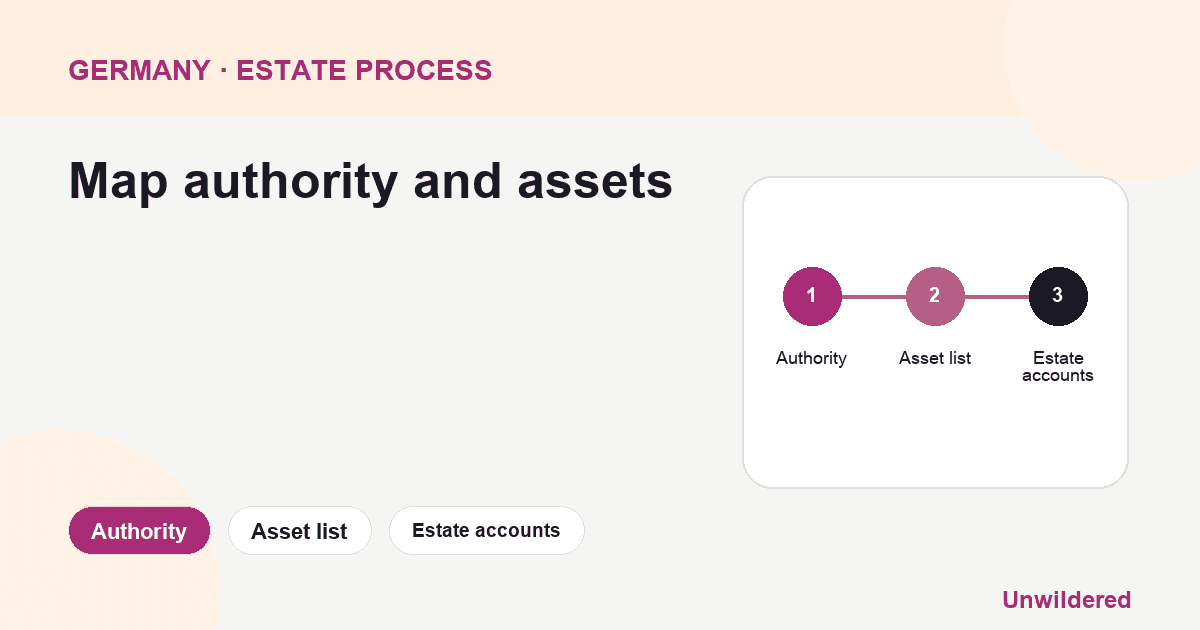
A German Pflichtteil claim is already tense because it often starts after one close relative has been disinherited or given less than expected. The tension rises when the estate looks small because the deceased transferred a house, company shares, cash, or investment assets during life. The claimant then asks whether those gifts can be brought back into the reserved-share calculation through Pflichtteilsergänzung.
The official legal main reference point is the Bürgerliches Gesetzbuch, especially the inheritance-law provisions on the compulsory portion and the supplement for gifts. Public inheritance information from the Federal Ministry of Justice helps frame the concept, while tax sources such as the Erbschaftsteuer- und Schenkungsteuergesetz may matter for records. This article does not calculate a claim. It shows how to organise the facts before a Caira or notary reviews them.
What Counts As The First Question
Do not begin with a percentage. Begin with the transfer. Was it a true gift, a sale, a mixed gift, a transfer in return for care, a company succession arrangement, a marital property transaction, or a transfer with retained rights? Real estate is especially sensitive because the donor may have reserved usufruct, residence rights, management control, rental income, or a right to revoke. Those details can affect both valuation and timing analysis.
Company interests add another layer. A family company transfer may include voting restrictions, shareholder consent, buyout formulas, loans, salary arrangements, or a management handover. A simple register extract rarely tells the whole story.
The Ten-Year Issue Needs Care
German law is often discussed in shorthand as a ten-year lookback with decreasing relevance over time. That shorthand can be misleading. The start and effect of the period may depend on the gift structure, retained benefits, spouse-related transfers, and case law. A claimant should not assume that an old transfer is irrelevant, and a recipient should not assume that a recent transfer is automatically valued at the headline amount.
Instead, build a gift timeline. For each transfer, record the date of contract, date of land register entry or share transfer, value stated, consideration paid, retained rights, relationship between donor and recipient, tax declarations, and later changes. Add valuation evidence from the date of gift and the date of death if available. Mark which facts are known and which are inferred.
Documents To Request Before Litigation
A reserved-share claimant will usually need more than the will and death certificate. Useful documents include land register extracts, notarial deeds, gift agreements, bank statements showing large transfers, company shareholder lists, annual accounts, tax assessments, valuation reports, correspondence about care obligations, and documents showing whether the deceased continued using the asset.
If the heir or gift recipient refuses information, a Caira can assess whether to request an estate inventory, a notarial inventory, valuation material, or court assistance. BGH decisions on Pflichtteilsergänzung are useful for legal patterns, but they are not a substitute for the transfer documents.
German Gift Timeline Checklist
Before a consultation, prepare this table:
Schenkung oder gemischte Schenkung: What was transferred and what was paid in return?
Datum Vertrag und Vollzug: When was the deed signed and when did ownership change?
Vorbehaltene Rechte: Nießbrauch, Wohnrecht, Rückforderungsrecht, Stimmrechte, income rights.
Wertnachweise: appraisal, tax value, sale comparison, company accounts, bank evidence.
Beziehung zum Empfänger: spouse, child, partner, company, foundation, or third party.
Nachlassbezug: how the transfer changed the estate available at death.
For real estate, include practical control facts beside legal title. Who lived in the property after transfer, who paid repairs, who received rent, who insured it, and who decided on sale or mortgage questions? For company shares, note who voted, who drew salary, who received dividends, and whether the transferor kept influence through management or family agreements. These facts help Caira test whether the paper transfer reflects the economic reality.
How To Avoid Weakening Your Position
Keep correspondence precise. A claimant can ask for documents and valuation information without accusing the recipient of fraud. A recipient can explain the consideration, care obligation, or retained debt without volunteering unsupported conclusions. Both sides should avoid casual messages that misstate dates, values, or family agreements.
Tax records can be helpful but should be handled carefully. A gift tax declaration may show what was reported, but it may not settle civil-law valuation for Pflichtteil purposes. Likewise, a notarial deed may describe a transfer but not answer whether the deceased economically gave up the asset.
The most useful early output is a chronology that a German inheritance Caira can test against the BGB rules and current case law. For property-heavy and company-heavy families, the question is rarely whether there was a gift in the abstract. It is whether the document trail proves a relevant lifetime transfer, how it should be valued, and whether the timing rules actually reduce or preserve its impact.
This article is general information, not legal, financial, medical or tax advice.
