
Hong Kong Landlord Entry Without Consent can become messy when dates, forms and evidence are scattered. Caira helps organise the record. Ask about Hong Kong law, draft letters or forms, and upload files for review.
Start chatting in 30 seconds
Keep the contract, deposit proof, inventory, photos, messages and payment records together.
For HKD 10 million in rent, repairs or risk of losing the deposit, small missing evidence can matter.
Separate what the agreement says from what actually happened.
Use Caira to draft a landlord, tenant or tribunal-ready document checklist.
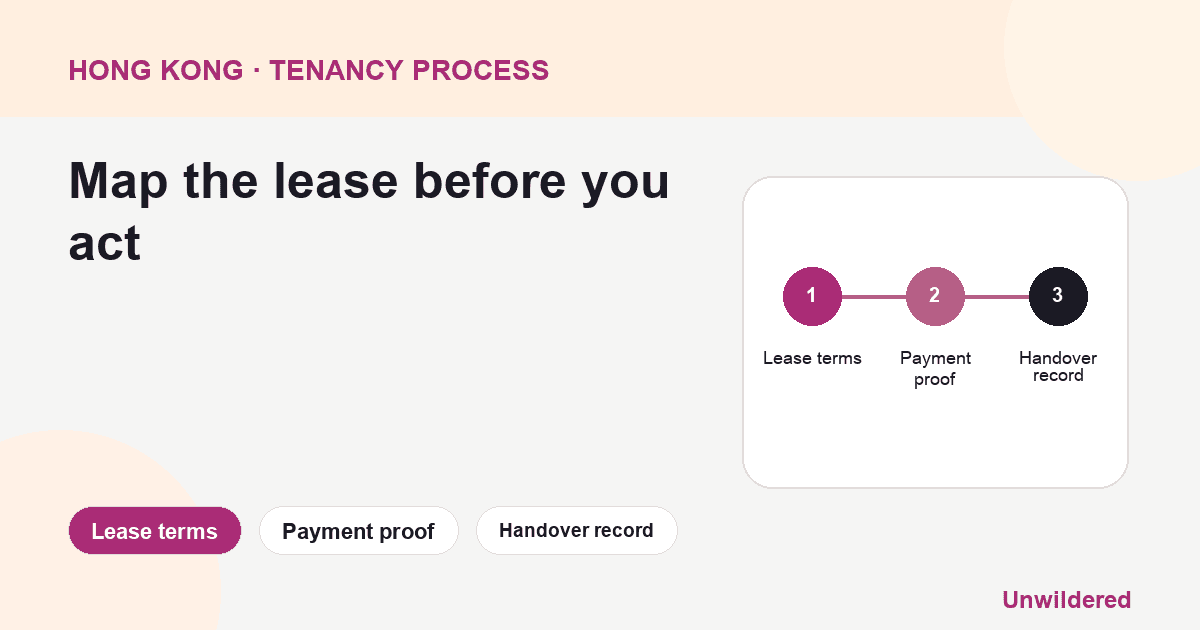
If a Hong Kong landlord enters the flat without warning, the first question is usually not a single magic rule. It is what the tenancy agreement says, why entry happened, whether there was notice or consent, whether there was an emergency, and what evidence exists. The official sources for this draft support tenancy-document context, the Small Claims route for eligible money disputes, and the Crimes Ordinance source family, but the validation notes warn that a clause or case-law source is still needed before making strong legal claims about entry without consent.
Check the tenancy agreement first
Open the lease and look for clauses about inspection, repairs, viewings, management access, keys, emergencies, and quiet enjoyment. Some agreements allow access for repair or inspection after notice. Some say entry must be at reasonable times. Some are silent or unclear. Do not rely only on what an agent says in WhatsApp if the signed agreement uses different wording.
Useful Traditional Chinese labels include 業主入屋 for landlord entering, 未經同意 for without consent, 租客同意 for tenant consent, 維修入屋 for repair access, 睇樓 for viewing, 緊急情況 for emergency, and 租約條款 for lease clause. Put these labels beside the relevant messages and lease clauses.
Separate emergency from convenience
An urgent water leak, fire risk, gas smell, or serious safety issue is different from a landlord wanting to show the flat to a new tenant, measure furniture, or check cleanliness. Even where urgent access may be easier to justify, keep the facts precise: who entered, when, who gave notice, what problem was being addressed, what was touched, and whether any damage or missing property followed. A vague feeling of intrusion becomes easier to explain when the timeline is clear.
Ask for the reason in writing
If it is safe, ask the landlord or agent to confirm why entry happened and what lease clause they relied on. Keep the message calm. You are creating a record, not escalating for its own sake:
主旨:請確認進入單位事宜
[業主/代理姓名] 您好:本人希望確認 [日期/時間] 有人進入位於 [地址] 的單位。請書面確認進入原因、進入人士、是否曾作出通知、所依據的租約條款,以及是否曾移動或處理單位內任何物品。日後如需檢查、維修或睇樓,請先以書面通知並取得確認。謝謝。[姓名]
Build an evidence file
Save the tenancy agreement, key handover record, access-card record if any, CCTV or building-management messages, photos before and after entry, repair notices, agent messages, police report number if one exists, inventory, receipts for damaged items, and witness names. If the dispute later becomes a deposit deduction, damage claim, lock-change dispute, or Small Claims money claim, evidence of what changed inside the flat may matter more than broad legal labels.
If you discover entry only because something looks disturbed, photograph the condition before moving items. Record the date and time you discovered it and who had keys. Do not exaggerate missing items or damage. A narrow, accurate account is stronger than a dramatic one that cannot be proved.
Repair and viewing access
Many disputes come from repairs or viewings near the end of a tenancy. The practical compromise is usually written notice, agreed time windows, confirmation of who will attend, and a tenant or tenant-approved person present where possible. If the landlord says access is needed for repairs, ask for the repair description and contractor details. If the landlord wants viewings, ask for proposed times and whether photos or videos will be taken.
When official routes may matter
If there is a money dispute, such as damaged property, replacement locks, or deposit deductions after the entry, check the current Small Claims Tribunal information and monetary jurisdiction before assuming the route. If there is an immediate safety concern, harassment, threatened violence, suspected theft, or forced entry, get appropriate urgent help. This draft does not decide whether a criminal, civil, building-management, or tenancy route fits a specific case.
Common mistakes
Do not change locks without checking the lease and the practical risk of being accused of breaching it. Do not delete messages after the landlord apologises. Do not describe every unwelcome visit as a criminal offence unless you have advice and facts to support that wording. Do not refuse all repair access if the flat genuinely needs urgent work. Do not let the dispute drift into a deposit issue without preserving entry evidence.
Where Unwildered fits
Upload the lease, access messages, photos, repair notices, inventory, and any building-management records. Unwildered can help organise the timeline, identify the access clause, and prepare a focused question list before you contact the landlord, adviser, police, tribunal, or court route.
Official context to check
Hong Kong has useful official market context through the Rating and Valuation Department, but tenancy disputes still turn on documents. Use RVD materials to separate ordinary tenancies, stamping questions, regulated subdivided-unit issues and small-claims evidence.
Sources
Rating and Valuation Department: tenancy matters
Hong Kong e-Legislation: Landlord and Tenant materials
This article is general information, not legal, financial, medical or tax advice.
