
Working on Hong Kong Small Claims Tribunal Tenancy? Upload the relevant files to Caira and turn the issue into a practical document checklist. Ask about Hong Kong law, draft letters or forms, and upload files for review.
Start chatting in 30 seconds
Identify the order, date received, deadline, permission issue and exact remedy sought.
For HKD 10 million at stake, unclear grounds can weaken an otherwise serious appeal.
Appeals usually depend on the record, not a fresh telling of the whole dispute.
Use Caira to organise the decision, evidence bundle and draft grounds checklist.
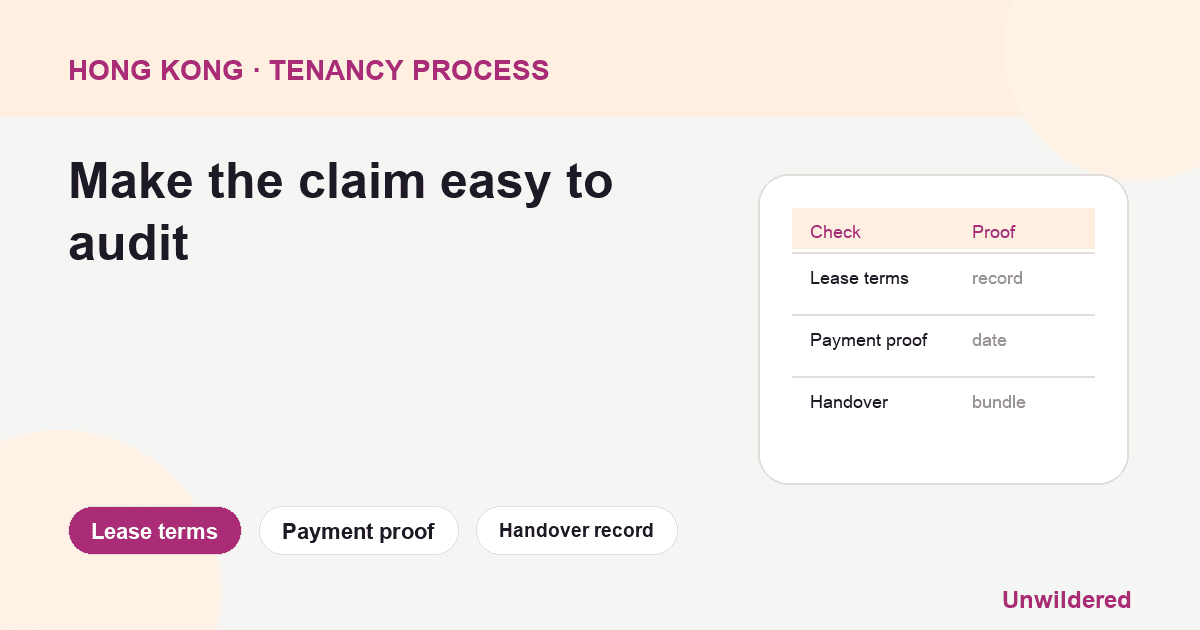
If your Hong Kong landlord has not returned your tenancy deposit, the Small Claims Tribunal can be a practical route for a money claim, but the paperwork still needs care. Treat the case as a clear money dispute: what was paid, what should have been returned, what was deducted, and what evidence supports each side. Do not frame it as a request for possession, eviction, or a broad landlord-tenant declaration unless the official tribunal guidance supports that route for your facts.
Who this is for
This article is for tenants preparing a deposit claim after moving out of a Hong Kong flat, room, or other residential rental. It is especially useful where the landlord says there were cleaning costs, repairs, missing items, unpaid utilities, or early termination losses. It is not a substitute for checking whether your claim fits the current Small Claims Tribunal rules, claim limit, venue requirements, and filing procedure.
Start with the claim story
Before looking at forms, write the claim in six plain sentences. Identify the parties, the address, the lease dates, the deposit amount, the move-out and key return date, and the amount still claimed. Then add one short sentence for each deduction you dispute. This prevents the form from turning into a pile of screenshots without a theory.
Documents to put in order
Tenancy agreement, renewal, side letter, or messages confirming the rental terms.
Deposit receipt, bank transfer, FPS record, cheque copy, or agent receipt.
Move-in and move-out photos or videos.
Inventory, handover checklist, cleaning record, and key return messages.
Landlord deduction list, invoices, quotes, receipts, repair photos, or utility bills.
Your written refund request and the landlord’s response or silence.
Using the tribunal forms carefully
The Hong Kong Judiciary official sources points to the Small Claims Tribunal service page, the forms page, and the guide for claimants. Use those official pages to confirm the exact form, fee, filing method, and any current procedural requirements before submission. For a deposit case, the form should usually make the money amount easy to see. Avoid adding every grievance about the tenancy if it does not change the sum claimed.
A simple structure is: deposit paid; tenancy ended; keys returned; landlord retained all or part of the deposit; tenant requested return; landlord either refused, gave unsupported deductions, or did not answer; tenant claims HK$[amount]. If the landlord accepted some deductions and disputes others, separate the accepted and disputed figures.
Traditional Chinese evidence labels
It can help to label bilingual evidence bundles clearly, especially where WhatsApp, receipts, or landlord messages are in Chinese. Keep labels neutral:
租約及按金收據 - tenancy agreement and deposit receipt
交還鎖匙證明 - proof of key return
業主扣款明細 - landlord deduction breakdown
維修或清潔單據 - repair or cleaning invoices
要求退還按金訊息 - deposit refund request messages
Common mistakes
First, tenants sometimes file without proving the deposit was actually paid. A signed lease helps, but a payment record is stronger. Second, they include hundreds of screenshots without dates or context. Export or screenshot the full conversation around move-out, inspection, and refund requests. Third, they claim the whole deposit while ignoring a deduction that may be supported by a clause and invoice. If you disagree, explain why: ordinary use, pre-existing condition, no invoice, no inspection record, excessive amount, or unclear calculation.
Fourth, do not overstate the legal effect of the tenancy. A deposit claim is a money claim. If the dispute also involves possession, land title, criminal allegations, harassment, or regulated subdivided-unit issues, check the correct official route before assuming the Small Claims Tribunal is the only forum.
Before you file
Prepare a one-page chronology and an indexed evidence pack. Number each item and use the same numbers in your claim summary. Send one final written request if appropriate: state the amount, deadline for response, and the documents you need for any deductions. Keep the tone calm; the message may become evidence.
If the landlord has a counterclaim, organise that too. A claim for unpaid rent, broken furniture, replacement locks, or cleaning should be matched against the lease, photos, invoices, and messages. You do not need to accept the landlord’s figure, but you should be ready to explain why it is unsupported, excessive, already paid, or outside the deposit issue.
Where Caira fits
Upload the lease, deposit proof, deduction list, photos, and draft claim summary. Caira can help turn the material into a timeline, flag missing proof, and make the form narrative cleaner for editorial or legal review.
Official context to check
Hong Kong has useful official market context through the Rating and Valuation Department, but tenancy disputes still turn on documents. Use RVD materials to separate ordinary tenancies, stamping questions, regulated subdivided-unit issues and small-claims evidence.
Sources
Rating and Valuation Department: tenancy matters
Hong Kong e-Legislation: Landlord and Tenant materials
Judiciary: Small Claims Tribunal
This article is general information, not legal, financial, medical or tax advice.
