
For hong kong subdivided unit utility, the strongest first move is usually a clear file. Caira can help build it from uploads. Ask about Hong Kong law, draft letters or forms, and upload files for review.
Start chatting in 30 seconds
Read the official route before filling blanks; form mistakes often come from missing evidence.
For HKD 10 million at stake, dates, signatures and attachments deserve a second check.
Keep a copy of the submitted form and every supporting document.
Use Caira to draft a checklist and spot missing information before filing.
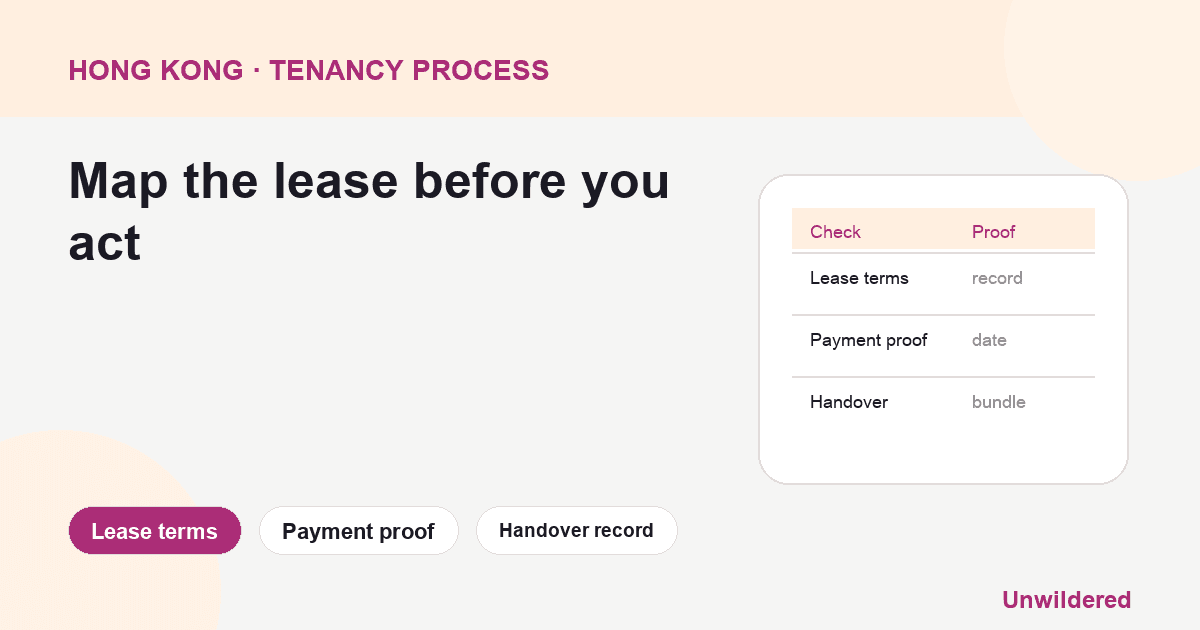
Utility overcharging is one of the most practical problems in Hong Kong subdivided-unit renting. A tenant may receive a water or electricity demand with no bill, no meter reading, and no explanation of how the amount was divided between rooms. The key point is not that every high bill is unlawful. The key point is that, for a regulated subdivided-unit tenancy, the landlord has to be able to justify specified utility and service reimbursement in the way the official RVD materials describe.
Start by confirming the tenancy type
This guide is for tenants in a regulated tenancy of a subdivided unit, not every shared flat or private room arrangement in Hong Kong. Search terms such as 劏房, 分間單位, 規管租賃, 水電費, and 濫收 may describe the lived problem, but the legal checklist starts with coverage. Check the address, tenancy date, landlord identity, rent and deposit documents, and whether there is any Notice of Tenancy information.
If you are not sure whether the unit is regulated, still keep the same evidence. It may help you ask RVD, a community organisation, or an adviser the right threshold question.
What a proper utility demand should let you check
For regulated SDU tenancies, the RVD source family points to rules around reimbursement of specified utilities and services such as water and electricity. In practical terms, the landlord should not simply say, pay HK$800 because electricity is expensive. You need enough information to check the total billed amount, the period covered, the rooms or households included, the method of apportionment, and whether the aggregate apportioned amounts exceed the actual bill.
Ask for copies of the relevant bills and a written account showing the apportionment. If there is a sub-meter, photograph the reading when you move in, monthly if possible, and when you move out. If there is no sub-meter, ask how the landlord calculates your share.
Evidence to collect before challenging the charge
Create a utility folder with 水費單, 電費單, 分攤計算, 收據, 轉帳紀錄, 電錶讀數, and WhatsApp messages. Save each demand with the date it was made. Keep receipts for every payment, even if the landlord wants cash. Photograph any meter safely and without entering areas you are not allowed to access. If the charge includes internet, gas, common-area cleaning, or another service, separate it from water and electricity in your own notes.
A simple table helps: billing period, amount demanded, amount paid, bill provided or not, apportionment provided or not, and your question. This is easier for an official or adviser to review than a long emotional chat thread.
Send a factual request first
Use calm wording. You are asking for documents and calculation, not starting with a legal speech:
您好:本人收到位於 [地址] 的 [水費/電費/其他公用服務費] 要求,金額為港幣 [金額] 元。請提供相關帳單副本,以及列明分攤方法和計算過程的書面資料,方便本人核對。如金額包括其他費用,亦請分項列明。謝謝。[姓名]
If the landlord replies only with pressure to pay, do not ignore the demand. Reply that you are willing to review the charge once bills and apportionment are provided, and keep paying undisputed rent separately if possible. Avoid mixing rent, deposit, and utility disputes in one unclear transfer.
When to escalate
If the landlord refuses to provide bills or a written account, repeatedly demands unexplained amounts, adds non-permitted fees, or threatens eviction over a disputed utility charge, consider contacting RVD or a local tenant support service. Whether a civil claim is sensible depends on the amount, proof, and whether the issue is part of a wider tenancy dispute. Do not assume the Small Claims Tribunal, RVD, or police is always the first route; match the route to the facts.
If you have already moved out, the utility issue may become part of a deposit dispute. In that case, keep the final bill, move-out date, key handover proof, and the landlord deduction message. Ask for invoices or bills before accepting a deduction from your deposit.
Common mistakes
Common mistakes include paying cash with no receipt, deleting old utility demands, taking photos only after the dispute starts, arguing about fairness without asking for the bill, assuming a high charge is automatically illegal, and forgetting that the regulated-tenancy question comes first. Another mistake is asking for a refund without showing your calculation. Officials and advisers need the arithmetic.
Where Unwildered fits
Upload the tenancy documents, utility demands, bills, meter photos, receipts, and landlord messages. Unwildered can help organise the billing periods, missing proof, and next questions before you escalate.
Official context to check
Hong Kong has useful official market context through the Rating and Valuation Department, but tenancy disputes still turn on documents. Use RVD materials to separate ordinary tenancies, stamping questions, regulated subdivided-unit issues and small-claims evidence.
Sources
Rating and Valuation Department: tenancy matters
Hong Kong e-Legislation: Landlord and Tenant materials
Rating and Valuation Department: regulated tenancies of subdivided units
This article is general information, not legal, financial, medical or tax advice.
