
For hong kong tenancy repair responsibility, the strongest first move is usually a clear file. Caira can help build it from uploads. Ask about Hong Kong law, draft letters or forms, and upload files for review.
Start chatting in 30 seconds
Keep the contract, deposit proof, inventory, photos, messages and payment records together.
For HKD 10 million in rent, repairs or risk of losing the deposit, small missing evidence can matter.
Separate what the agreement says from what actually happened.
Use Caira to draft a landlord, tenant or tribunal-ready document checklist.
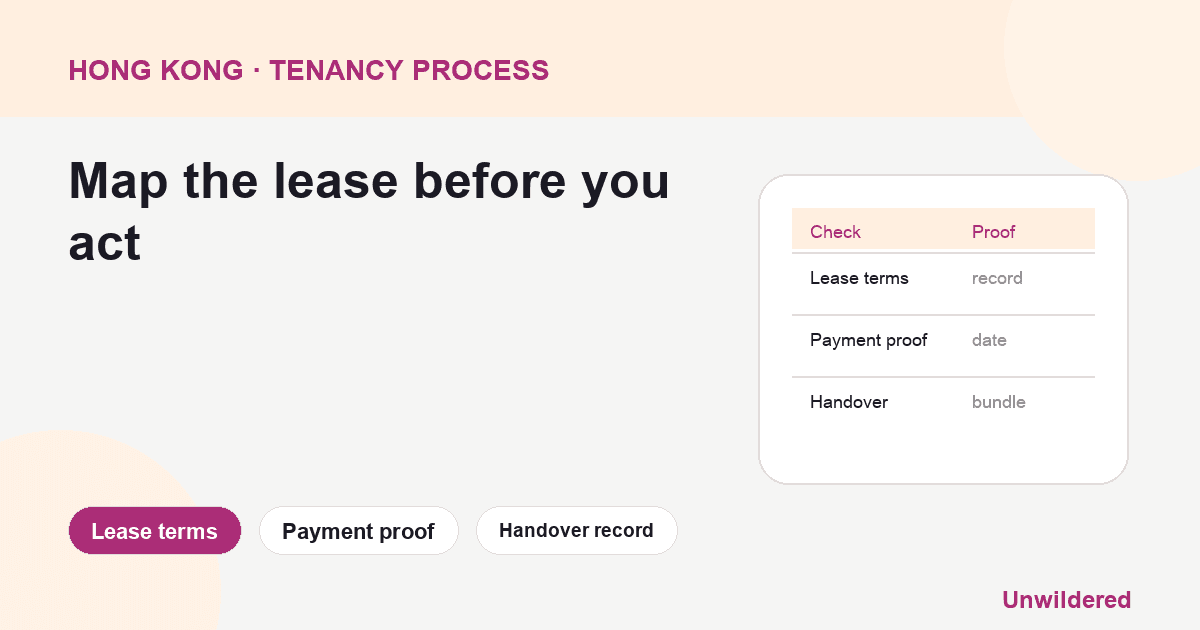
Repair responsibility in a Hong Kong tenancy usually starts with the lease. The question is not only who should fix it, but what the problem is, when it appeared, whether it was reported, whether it is structural, an appliance issue, tenant damage, ordinary wear, or an emergency, and what the tenancy agreement says. The official sources for this draft support tenancy-document context and the Small Claims route for eligible money disputes, but repair responsibility is heavily clause-specific and fact-specific. This is a checklist, not a not automatic answer.
Find the repair clause
Read the sections on landlord obligations, tenant obligations, maintenance, appliances, fixtures, air conditioners, plumbing, electrical work, windows, walls, drains, pest issues, access for repairs, and deposit deductions. Some leases separate structural repairs from minor repairs. Some place appliance maintenance on the tenant after handover. Some require the tenant to report defects quickly. Mark the exact wording before arguing over responsibility.
Useful Traditional Chinese labels include 維修責任 for repair responsibility, 業主維修 for landlord repair, 租客維修 for tenant repair, 損壞 for damage, 自然損耗 for wear and tear, 維修單據 for repair receipt, and 驗樓 for inspection.
Record condition before and after
The best repair file starts at move-in. Keep photos of walls, ceilings, windows, floors, doors, appliances, meters, bathrooms, kitchen, drains, and air conditioners. Save the inventory and any handover checklist. If a defect already existed, report it early in writing. A photo from the first week can prevent the same defect becoming a deposit deduction months later.
When a new problem appears, photograph it with enough context to show location and scale. A close-up of water on the floor is less useful than photos showing the pipe, ceiling, room, and date sequence. Keep videos short and clear if they show leaking, noise, sparks, or an appliance failing.
Give written notice
Even where the landlord may be responsible, a tenant should usually report the issue promptly and clearly. Include address, room, problem, when it started, whether it affects safety or basic use, photos, and access times for inspection. If the problem is urgent, say why. If you arrange a repair yourself, keep the reason, quotes, receipts, and messages showing whether the landlord had a chance to respond.
主旨:通知單位維修問題
[業主/代理姓名] 您好:位於 [地址] 的單位出現 [問題,例如漏水/冷氣故障/窗戶損壞]。本人於 [日期/時間] 發現問題,現附上照片/影片。請確認何時安排檢查及維修,並說明根據租約由哪一方負責費用。如屬緊急情況,請盡快回覆。謝謝。[姓名]
Emergency repairs
Water leaks, electrical hazards, lock failures, gas smells, broken windows, and serious safety risks may need faster action than ordinary maintenance. Still preserve the record: who was contacted, when, what risk existed, which contractor attended, what was done, and what it cost. If you could not wait for approval, explain the urgency with photos, call logs, building-management messages, or contractor notes. Avoid upgrading or replacing items beyond what was necessary and then expecting automatic reimbursement.
Access for repair work
Repair responsibility and access are connected. If the landlord needs to inspect or send a contractor, agree written time windows and who will attend. If you refuse all access, the landlord may later say you prevented repair. If the landlord enters without proper arrangement, keep a separate access record. A calm repair schedule protects both sides better than surprise visits or total refusal.
Deposit deductions after move-out
Repair disputes often become deposit disputes. Ask for a deduction breakdown, photos, invoices, and the lease clause relied on. Separate ordinary wear, pre-existing defects, tenant-caused damage, unpaid utilities, cleaning, and missing items. If the amount is disputed and the claim is monetary, check the current Small Claims Tribunal route and jurisdiction. The repair evidence should be organised before any filing or negotiation.
Common mistakes
Do not wait months to report a leak and then assume the landlord will accept the full repair cost. Do not throw away broken parts, receipts, or contractor reports. Do not rely only on voice calls. Do not accept a deposit deduction described only as repairs without documents. Do not treat every old appliance failure as tenant damage or every tenant complaint as landlord fault. The lease and evidence do the work.
Where Unwildered fits
Upload the lease, repair clause, photos, inventory, messages, contractor quotes, receipts, inspection notes, and deposit deduction list. Unwildered can help build a repair chronology and evidence checklist before you contact the landlord, agent, contractor, adviser, or Small Claims route.
Official context to check
Hong Kong has useful official market context through the Rating and Valuation Department, but tenancy disputes still turn on documents. Use RVD materials to separate ordinary tenancies, stamping questions, regulated subdivided-unit issues and small-claims evidence.
Sources
Rating and Valuation Department: tenancy matters
Hong Kong e-Legislation: Landlord and Tenant materials
This article is general information, not legal, financial, medical or tax advice.
