
When it comes to a Hong Kong Town Planning Board review, a clear file is usually your best first move. Caira can help you build this from your uploads. Ask about Hong Kong law, draft letters or forms, or upload files for review.
Start chatting in 30 seconds
Identify the order, date received, deadline, permission issue, and the exact remedy you seek.
If HKD 10 million or more is involved, unclear grounds can weaken even a serious appeal.
Appeals usually stand or fall on the record—not on starting the dispute afresh.
Caira can help organise the decision, evidence bundle, and a checklist of draft grounds.
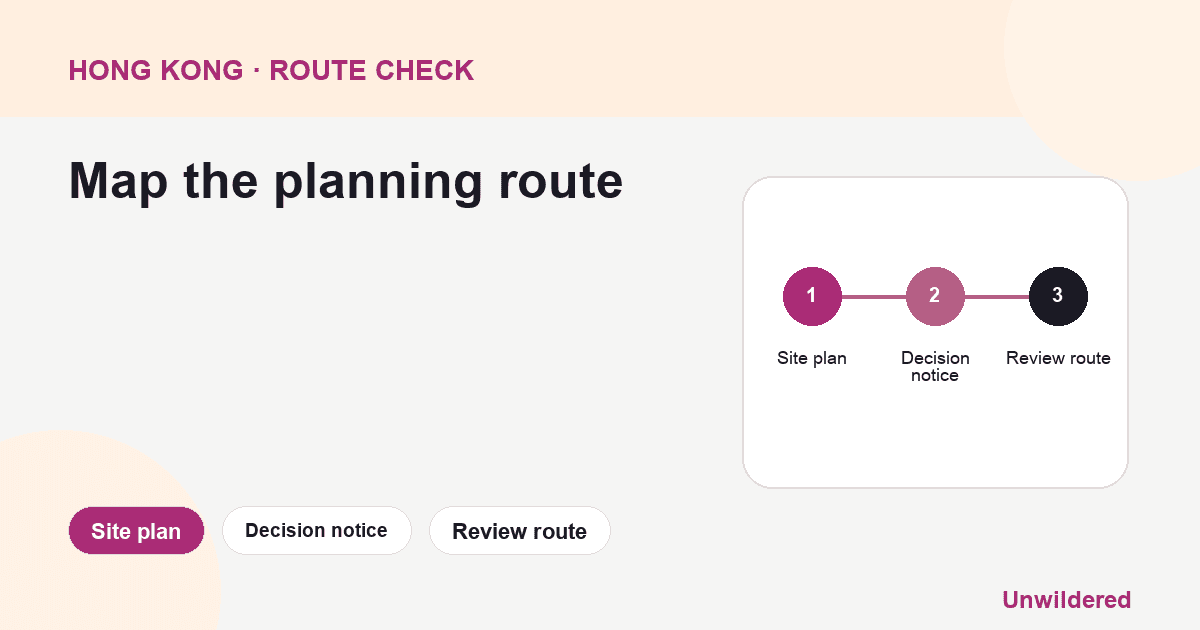
Applying for a Town Planning Board review is not the same as making a fresh planning application. It begins with an existing decision, condition, refusal, or application outcome. You’re asking the Board to review this, using the official review channel. The main job? Pin down the exact decision under review, the filing deadline and form requirements, the grounds for review, and the key supporting evidence.
This guide is for applicants, owners, occupiers, consultants, small businesses, and community groups preparing a Hong Kong planning review file. It does not give a planning opinion, nor does it predict the Board’s decision. Always double-check the current Town Planning Board review page, forms page, and application guidance before filing.
Start with the decision letter
Don’t jump into a long argument right away. Begin with the decision letter or notice. Record: application number, site address, lot or premises description, applicant name, decision date, any conditions or refusal reasons, plan or zone references, and the review route if stated. If a consultant filed the first application, ask for the entire file—not just the final letter. Your review should answer the actual decision, not general frustration with planning control.
For file labels, use: Town Planning Board, review application, planning application, decision notice, grounds of review, supporting statement, further information, site plan, location plan, 覆核申請, 城市規劃委員會, 規劃申請, 決定通知書, and 理據陳述.
Common mistake: missing the form route
The forms page of the Town Planning Board is part of the process, not an afterthought. Check which review form or submission route applies, who may apply, how submissions should be signed or authorised, and which supporting documents you need. If the applicant is a company, agent, tenant, or acting with owner consent, keep authority documents clear. Never assume the person who sent emails for the first application can automatically sign the review.
Common mistake: vague grounds
Your review must explain why the decision should be reconsidered. Avoid vague lines like “the decision is unfair” or “the business needs approval”—unless supported by planning reasons and evidence. Build your grounds around the decision: land use, access, traffic, environmental impact, building or fire safety, neighbourhood compatibility, prior permissions, mitigation, compliance with conditions, or any factual errors. State each ground briefly. Attach the supporting document or plan.
Common mistake: changing the proposal without explanation
Sometimes you want to adjust the scheme after a refusal—fewer hours, different access, a revised layout, extra mitigation, or a scaled-down use. Don’t slip changes into the review as if nothing changed. Identify each change, explain why it’s needed, and point to the updated plan. If new material or extra information must follow a specific route, do so.
Evidence to organise
Gather: the original application, decision letter, submitted plans, any revised plans, location plan, site photos, lease or ownership proof (if relevant), company authorisation, consultant reports, correspondence with departments, traffic or environmental material, and community or management office correspondence. Keep a clean chronology. If neighbours, incorporated owners, or a management company are involved, separate their comments from those of official departments. Don’t edit screenshots so much that sender, date, or context is lost.
Message to request the first application file
Use a focused request:
Please send the complete Town Planning Board file for application [number], including the original application, submitted plans, supporting statement, departmental comments, correspondence, further information, decision letter, and any advice on review deadlines or required forms. We are preparing a review file and need to respond to the actual decision and documents submitted.
Traditional Chinese version:
請提供城市規劃委員會申請編號[編號]的完整文件,包括原申請、已提交圖則、理據陳述、部門意見、往來信件、補充資料、決定通知書,以及任何有關覆核期限或所需表格的資料。我們正準備覆核文件,需要按實際決定及已提交資料回應。
Before filing
Create a review index: decision challenged, applicant and authority, form and deadline check, grounds summary, plan set, evidence list, changed proposal (if any), unresolved questions, and submission proof. Save the official URLs you used and the dates checked. If the case is valuable, urgent, or technically complex, get planning or legal input and a document review before you file.
Where Unwildered fits
Upload your decision letter, application papers, plans, correspondence, evidence list, and draft grounds. Unwildered helps organise your chronology, matches each ground to supporting evidence, and spots missing authority or form questions—before you use the official Town Planning Board workflow.
This article is general information, not legal, financial, medical or tax advice.
