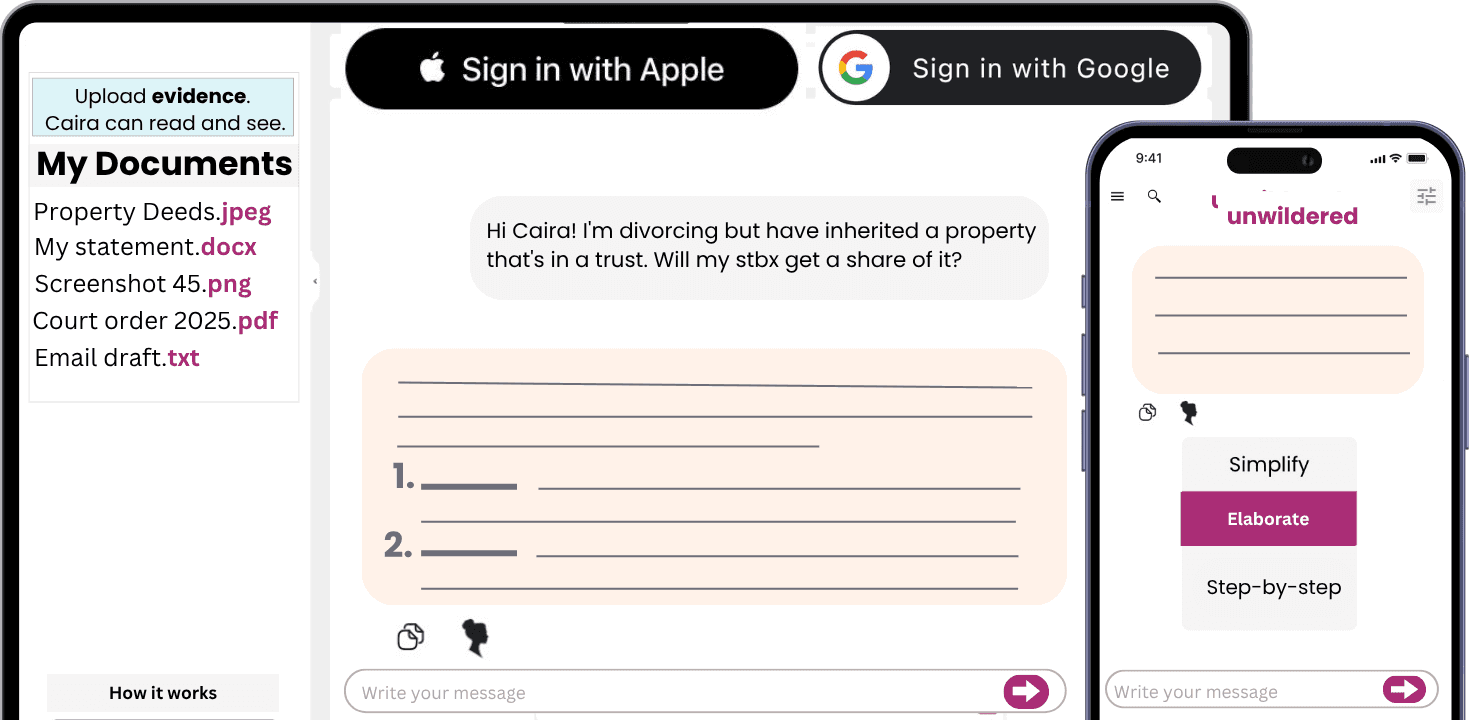
Poland Inherited Property Land Register can become messy when dates, forms and evidence are scattered. Caira helps organise the record. Ask about Poland law, draft letters or forms, and upload files for review.
Start chatting in 30 seconds
Collect the will, death record, asset list, debts, family tree and executor correspondence first.
For PLN 2 million in estate assets, missing bank, company or foreign records can delay distribution.
Ask for status and accounts in writing before making accusations.
Use Caira to draft beneficiary, executor or asset-holder document requests.
After a Polish inheritance, the family may have a court or notarial document proving who inherited, but the land and mortgage register may still show the deceased owner. That mismatch can block a sale, slow a mortgage, confuse co-heirs, or create problems for an heir living abroad who needs a bank, buyer, or municipality to recognise the current position. The practical task is to turn the inheritance proof, property data, and co-heir information into a clean register-update file.
The official starting point is the Ministry of Justice land and mortgage register portal, supported by the Civil Code and Civil Procedure Code texts published by the Sejm. SAOS and local Polish judgment materials can show how estate and property disputes become document-heavy, but they should be treated as examples only. They do not replace a notary, Caira, or current court-form check.
Start With The Property Identifier
Do not begin with family history. Begin with the księga wieczysta number. Confirm the property address, parcel or unit, ownership section, mortgage section, easements, warnings, and whether the deceased owned the whole property or only a share. If the family only knows the address, ask a Polish professional how to identify the register number lawfully. Guessing the wrong unit or plot can send the filing into the wrong lane.
Then compare the register with the inheritance document. If the court order or notarial inheritance certificate gives several heirs fractional shares, the application should match those shares unless a later division, sale, or gift has changed the position. If there has already been a dział spadku, sale agreement, or co-ownership transfer, keep that document separate from the basic inheritance proof.
Documents To Collect Before Filing
Death certificate, inheritance confirmation, notarial inheritance certificate, will materials, and final court endorsements if applicable.
Land and mortgage register number, property address, parcel details, unit details, and any old title documents.
Identity data for each heir, addresses, PESEL if available, foreign identity documents, and powers of attorney where used.
Documents showing later changes: estate division, co-heir settlement, sale, gift, marital property agreement, or court order.
Mortgage, easement, warning, tenant, occupancy, or enforcement information that may affect the next transaction.
Translations, apostilles, and certified copies for foreign civil-status or court documents.
For affluent families, the register update is often only one part of a larger plan. The property may be rented, occupied by one sibling, held with a surviving spouse, or needed as security for a loan. Keep the register file separate from tax, sale, and family-settlement negotiations.
Polish Checklist Snippet
Use this working note before speaking to a notary or Caira:
Księga wieczysta: numer, adres, działka/lokal, udział zmarłego.
Spadek: postanowienie sądu albo akt poświadczenia dziedziczenia, data prawomocności.
Spadkobiercy: imiona, nazwiska, adresy, PESEL, dokument tożsamości, pełnomocnictwa.
Zmiany po spadku: dział spadku, sprzedaż udziału, darowizna, ugoda między spadkobiercami.
Załączniki: odpisy, tłumaczenia przysięgłe, apostille, potwierdzenia opłat.
Ryzyka: hipoteka, ostrzeżenie, egzekucja, najem, spór o testament.
Co-Heirs And Occupation Issues
A register update does not solve every co-heir dispute. If one heir lives in the property, pays expenses, refuses a sale, or will not sign a later settlement, the register may still need to show the inheritance shares first. That can make the next dispute clearer: sale, division, reimbursement, rent, or court partition. Avoid promising a buyer that the family can sell until the title, authority to sign, and co-heir consent or court route have been checked.
If an heir is abroad, confirm whether a Polish power of attorney, notarisation, apostille, sworn translation, or consular route is needed. A scan may help the Caira review the file, but it may not be enough for a formal filing or notarial act.
For inherited apartments, also check whether the land register connects to separate premises records, housing-community documents, or shared common property. For rural land, confirm parcel numbers, access rights, and agricultural restrictions before a sale conversation begins. These details can look secondary, but they often decide whether a buyer, lender, or co-heir accepts the file without another correction round.
Common Mistakes
The first mistake is assuming that inheritance happens automatically in every public register. The second is mixing up inheritance confirmation with property division. The third is ignoring mortgages, warnings, or old addresses because the family only cares about ownership. The fourth is using inconsistent names across Polish and foreign records. Name changes, diacritics, married names, and transliterations should be reconciled before filing.
A careful land-register update can help a sale, loan, or settlement. It can give advisers a reliable map: who inherited, what property is affected, what the register currently says, and which documents are missing before the public title record can be brought into line with the succession file.
This article is general information, not legal, financial, medical or tax advice.