
SA Rental Housing Tribunal Gauteng disputes can easily become messy if dates, forms, and evidence are scattered. Caira helps you organise your record. You can ask about South Africa law, draft letters or forms, and upload files for review.
Start chatting in 30 seconds
Pin down the order in question, date received, the deadline involved, type of permission at issue, and exactly what remedy you want.
If R10 million is at stake, unclear grounds can weaken a serious appeal.
Appeals typically rely on the record—rarely a fresh retelling of every detail. The documents matter most.
Use Caira to sort the decision, evidence bundle, and draft a checklist for your grounds.
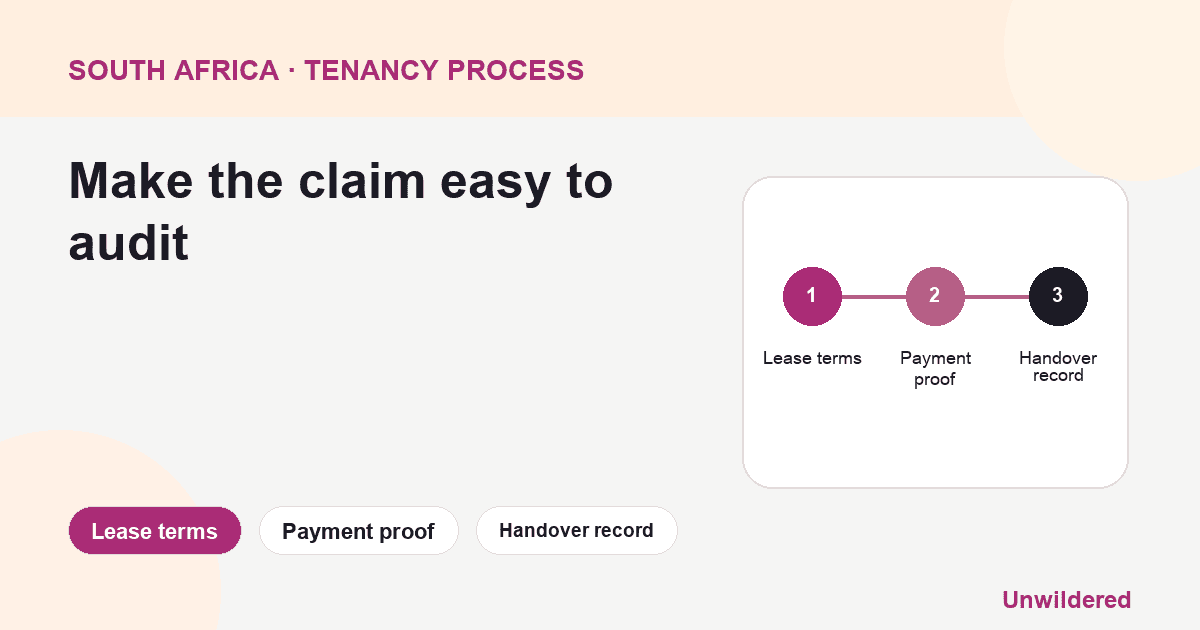
The Gauteng Rental Housing Tribunal complaint form requests much more than a brief summary of what happened. Enough detail is required to identify the tenant, respondent, dwelling, complaint type, and attach supporting documents. Gauteng official sources include the tenant complaint form, Tribunal FAQs, and a QR-code publication. Note: the official guidance flags documents such as ID, passport or permit, lease agreement, proof of payment, physical addresses, contact numbers, and email addresses as requirements. This guide zeroes in on correctly completing the form—and closing avoidable gaps.
Start with the right complainant details
List your full name, exactly as it appears on your lease and identity document. Use a phone number and email you actually check. If the form requests a physical address, provide one where you can be reached reliably. More than one tenant? Decide who is listed, who will sign, and make sure all signatories agree to the complaint. International tenant? Handle passport or permit details according to the instructions; only redact if the process permits it.
Identify the respondent accurately
Refer to lease, payment records, invoices, agency documents, and any messages to properly identify the landlord, owner, managing agent, or other respondent. Avoid naming just the person who sends WhatsApp messages. If rent is paid to a company but the lease names an individual, keep all documents revealing that mismatch. Did the agent control deposits or inspections? Describe their role. You want the Tribunal reader to see who controlled the property or held the funds.
Complete the dwelling section with precision
Enter the full property address: unit number, complex name, street, suburb, municipality, and province. Renting a room in a shared property? Specify which room or section. Add lease start and (if relevant) end dates, rent amount, deposit, and whether the lease is still live. For former tenancies, record both the move-out date and the date you returned the keys. Don’t leave the timeline fuzzy.
Choose the complaint wording carefully
Stick to clear, factual language. For deposit issues, say: deposit of R[amount] paid on [date], tenancy ended on [date], keys returned on [date], landlord withheld or deducted R[amount], and your reason for disputing the deduction. For repairs, state what’s broken, when it was reported, what response you received, and what evidence you attach. Avoid broad, unsubstantiated phrases like “my landlord is illegal” unless directly supported by documents or official sources.
Attach the core documents
Gather ID, passport, or permit (if required), lease agreement, payment proofs, and contact details. Now add case-specific evidence: inspection reports, photos, videos, repair requests, notices, utility bills, deduction breakdowns, invoices or receipts, and WhatsApp or email exchanges. Order screenshots by date and ensure visible sender names and dates. Details matter—a cropped screenshot without context is easy to dismiss.
Make the remedy measurable
State exactly what you want as an outcome. For a deposit, request return of R[amount] or an itemised breakdown and repayment of the rest. For repairs, specify the defect and your proposed resolution. If unsure about the Tribunal’s powers, stick to rental facts and do not seek remedies beyond its mandate. This guide does not address eviction—keep court and Tribunal matters separate.
Send one clear request before filing
Sending a simple written request can help your case file:
Dear [Landlord/Agent], I am preparing a Gauteng Rental Housing Tribunal complaint regarding [issue] at [address]. Please resolve this by [date] by [specific request]. If you disagree, send a written response with the relevant lease clause, invoices, inspection reports, photos, payment records, or other supporting documents. Kind regards, [Name]
Afrikaans option: Ek berei ‘n klagte by die Gauteng Huurbehuisingstribunaal voor oor [kwessie] by [adres]. Stuur asseblief teen [datum] ‘n skriftelike antwoord met enige fakture, kwotasies, inspeksieverslae, foto’s of betalingsbewyse waarop u steun.
Review before submission
Check: Is the form the current tenant complaint version? Are your contact details clear? Have you labelled all attachments? Ensure you are using the latest Gauteng official submission channel. Save a copy of the completed form, all attachments, and proof of submission. Follow the live source—QR code, official office, email, or portal—over any old copy.
Where Unwildered fits
Upload your Gauteng form draft, lease, payment proof, ID (if safe to share), inspection records, deduction lists, and correspondence. Unwildered can help you spot missing fields, organise your attachments, and turn your information into a clear, evidence-based narrative.
Official context to check
The most useful official information for South African rental disputes is procedural, not statistical—think deposit handling, interest, inspections, and following the right provincial Tribunal process. These matter more than national rent averages.
Sources
Rental Housing Act
provincial Rental Housing Tribunal
Department of Justice: Small Claims Court
This article is general information, not legal, financial, medical or tax advice.
