
If singapore employment claims tribunal is on your desk, start by uploading the notice, agreement, order or correspondence to Caira. Ask about Singapore law, draft letters or forms, and upload files for review.
Start chatting in 30 seconds
First, check these basics: dismissal date, deadlines, contract, warnings, pay records, and messages.
With SGD 2 million of salary, bonus, or severance at stake, a careful chronology can be crucial. It could shape the negotiation entirely.
Preserve only lawful evidence. Don’t access or copy confidential files you are not allowed to take.
Use Caira to construct a timeline and draft a response checklist. It saves time later.
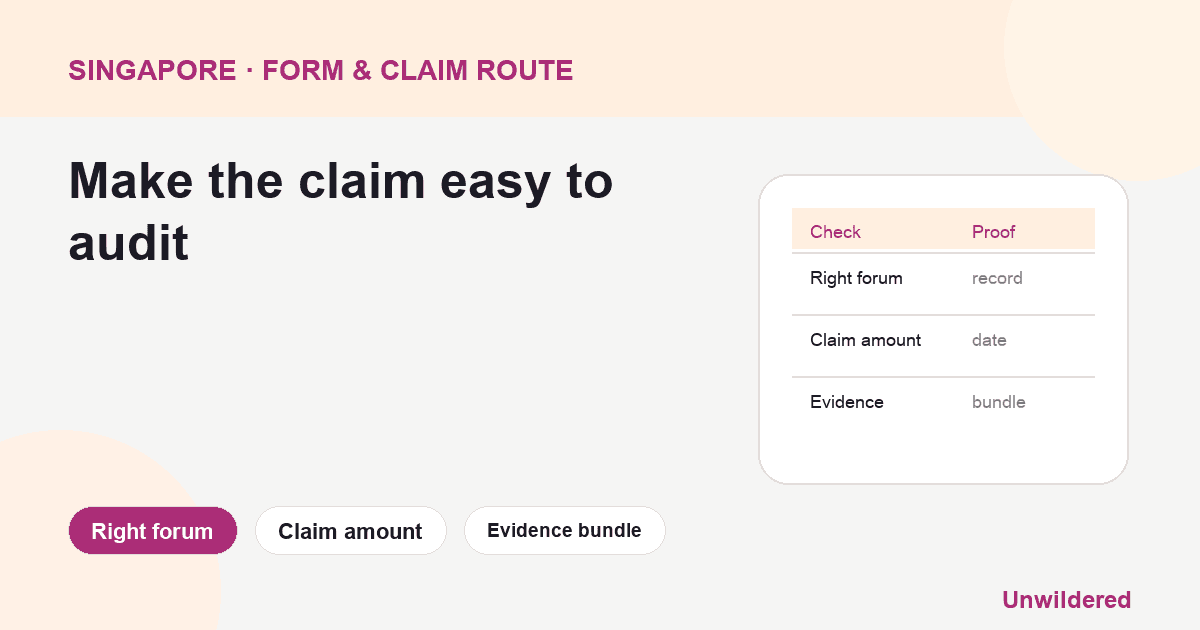
Singapore salary claims are rarely won by improvising at the hearing stage. Most are decided by careful work beforehand. The key is to turn your dispute into a clear, organised file: who employed you, what salary or allowance was due, when payment should have arrived, what you actually received, and what documents prove the gap. Everything rests on getting this straight.
The official sources for this guide are MOM’s employment-dispute guidance, TADM’s claim-filing route, and Singapore Courts’ Employment Claims Tribunals information.
Who this is for
This guide is for employees preparing an unpaid salary, short payment, final salary, commission, overtime, notice pay, or any salary-related claim in Singapore. It covers local or foreign employees, part-time staff, and workers with payslips, Key Employment Terms, rosters, or even WhatsApp records.
Not every workplace problem belongs here. Discrimination, injury, work pass issues, harassment, criminal conduct, insolvency, and non-employment contractor disputes may require different routes.
Understand the path before filing
Don’t start with a long complaint letter. Begin by checking the current MOM, TADM, and Singapore Courts pages for the right path. Many salary disputes go through TADM first. Unresolved issues may go to the Employment Claims Tribunals.
Check if your claim is covered. Confirm the deadline. Understand the mediation or claim-filing steps. Know whether you need to name an individual, company, sole proprietor, or another respondent.
The workflow can change. Always consult the official pages before you file.
Identify the employer
Many salary files fail because the respondent is unclear. So, record the employer’s legal name, UEN (if possible), registered and workplace addresses, HR contact, supervisor, and the name seen on your bank transfers.
Compare your contract, Key Employment Terms, payslips, CPF records, work pass details, emails, and payroll messages. If the business trades under a brand name that differs from the employing company, note it. Never guess.
Useful evidence labels: employment contract, Key Employment Terms, payslip, salary calculation, roster, timesheet, attendance record, bank transfer, CPF record, final salary, and notice pay.
If you’re Chinese-speaking, also use: 老板不发工资 (boss did not pay salary), 工资单 (payslip), 出勤记录 (attendance record), 雇主资料 (employer details).
Build a salary calculation table
Never submit only a total. Make a table: claim item, pay period, agreed rate, amount due, amount paid, balance claimed, and evidence.
List separately: basic salary, overtime, commission, allowance, public-holiday pay, deductions, reimbursement, final salary, and notice pay as relevant.
If your employer disputes hours worked, keep these: rosters, clock-in records, messages about shifts, delivery or job logs, and statements from colleagues if needed.
Claiming commission? Attach the commission plan, sales records, approval messages, and a history of payments.
Preserve messages and documents
Save these: employment contract, KETs, payslips, roster, leave records, resignation or termination notice, warning letters, bank and payroll records, and all messages about salary (promised, delayed, disputed, or partially paid).
Screenshot enough context—show sender, date, sequence. Export files before you lose access to company systems. Keep originals and working copies separate to maintain a tidy evidence file.
Send a final clarification request
Before filing, try a short message. It might resolve the dispute or at least provide a clear record:
Hi [Employer/HR name], I am writing about my salary for [period]. Based on my contract/KETs, payslips, roster, and payment records, I calculate the unpaid amount as S$[amount]. Please pay this by [date], or send your written salary calculation and the reason for any deduction or non-payment. Regards, [Name]
Keep your tone factual. Never threaten, insult, or make unsupported legal claims.
If you receive a different figure in response, politely request their calculation and supporting records.
Common mistakes
Don’t name the wrong employer. Don’t mix salary claims with every workplace grievance. Don’t forget to confirm prerequisites and timelines on the official route. Don’t rely only on oral promises. Don’t use screenshots with no dates or sender names.
Don’t claim commission or overtime without clear calculations. Don’t delete messages after resignation if they’re part of your evidence.
Where Unwildered fits
Upload: employment contract, KETs, payslips, rosters, bank records, CPF or payroll records, HR messages, and your salary calculation table.
Unwildered can help organise your claim: respondent identity, timeline, calculation, and evidence. This is best done before using TADM or Singapore Courts processes.
Sources
MOM: Key Employment Terms
MOM: Salary
Tripartite Alliance / Employment Claims route
This article is general information, not legal, financial, medical or tax advice.
