
For singapore estate accounting beneficiary, the strongest first move is usually a clear file. Caira can help build it from uploads. Ask about Singapore law, draft letters or forms, and upload files for review.
Start chatting in 30 seconds
Collect the will, death record, asset list, debts, family tree and executor correspondence first.
For SGD 2 million in estate assets, missing bank, company or foreign records can delay distribution.
Ask for status and accounts in writing before making accusations.
Use Caira to draft beneficiary, executor or asset-holder document requests.
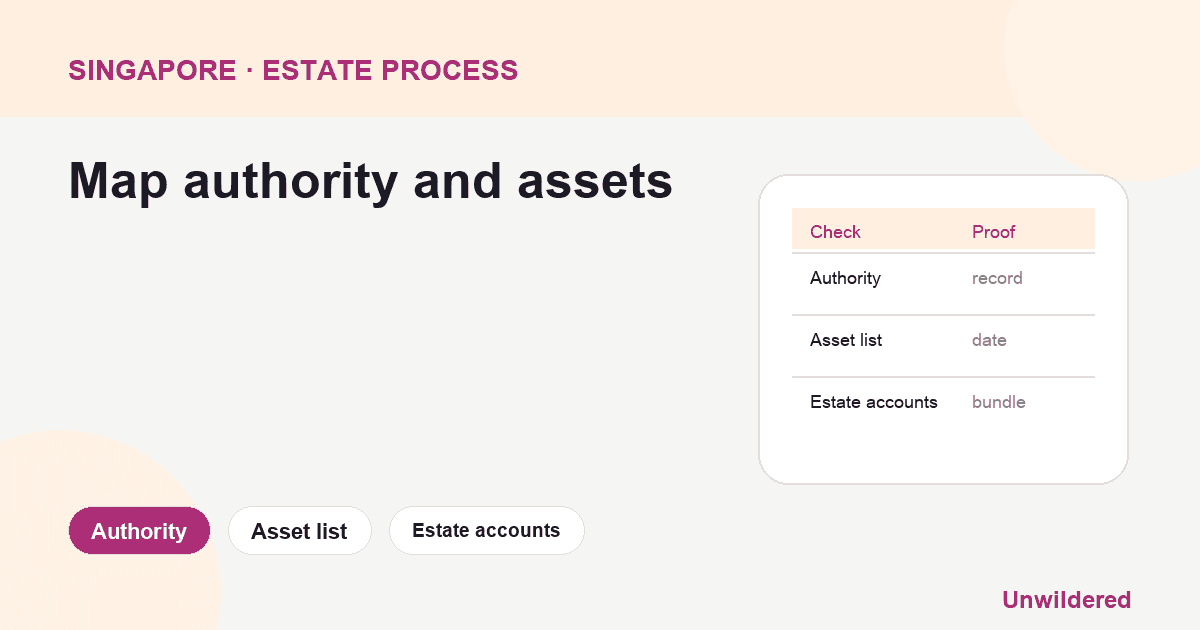
A Singapore beneficiary who suspects missing estate information often wants every bank statement immediately. That may be understandable, especially where the estate includes private banking accounts, CPF questions, rental property, a family company, or overseas assets. But the stronger first step is a measured request for an estate inventory, liabilities, administration status, and accounting timeline. The request should be specific enough for an executor to answer and careful enough not to assume automatic access to every private document.
The official sources are the Singapore Judiciary probate and administration guidance and the Probate and Administration Act. They frame the grant process and the authority of personal representatives. eLitigation judgment searches are useful for examples of estate-accounting disputes, but they do not replace advice on whether a beneficiary is entitled to a particular document in a particular estate.
Start With The Estate Map
Ask first for the map, not the fight. Identify the deceased, date of death, grant status, executor or administrator, will or intestacy position, and your relationship to the estate. Then request a high-level inventory: known assets, known liabilities, steps completed, steps outstanding, and expected timing for an interim or final distribution. If the executor has not obtained a grant, ask what documents remain outstanding and whether any urgent asset-preservation step has been taken.
For high-value estates, the inventory should be organised by asset class. Bank accounts, brokerage accounts, real property, company shares, insurance, CPF-related information, loans owed to or by the deceased, vehicles, jewellery, digital assets, and foreign assets should not be merged into one vague estate value. Liabilities should also be separated: funeral expenses, taxes, mortgages, credit cards, business debts, family loans, and professional fees.
Documents A Beneficiary May Ask About
Grant status: probate or administration documents, estate number, filing stage, and Caira or executor contact details.
Inventory: asset list, estimated values, ownership proof, and whether each item is collected, sold, transferred, or unresolved.
Liabilities: creditor claims, tax matters, mortgages, estate expenses, professional fees, and disputed debts.
Distributions: will clauses or intestacy basis, interim distributions, reserves, final distribution timing, and receipts.
Accounts: estate bank account, sale proceeds, rental income, expenses paid, executor reimbursement, and supporting summaries.
This list is not a demand for unrestricted inspection. Some documents may involve third-party privacy, company confidentiality, privilege, or ongoing disputes. A practical request asks for summaries first and supporting documents for specific entries where the explanation is unclear.
Red Flags To Record Carefully
Beneficiaries should keep a chronology when the executor gives no updates, refuses basic status information, changes explanations, mixes estate and personal payments, sells assets without explanation, ignores tax or property issues, or distributes selectively without an accounting. Record dates, messages, calls, and documents received. Do not take estate property, access the deceased’s accounts, pressure banks, or confront tenants as though you control the estate.
Delay alone does not prove wrongdoing. Estates can be slowed by missing documents, caveats, tax clearance, property sales, foreign assets, creditor claims, or disputes over the will. The chronology should distinguish normal administration obstacles from unexplained silence or inconsistent handling of estate assets.
It also helps to ask what is provisional. An executor may be able to provide an estimated estate value while tax, sale proceeds, or creditor claims remain unresolved. Labelling figures as estimated, confirmed, disputed, or reserved can prevent beneficiaries from treating an early update as a final account.
Simplified Chinese Checklist
Use this as a bilingual preparation note for a beneficiary request:
身份资料:逝者姓名、死亡日期、遗嘱、执行人或管理人、受益人关系。
资产清单:银行、投资、房产、公司股份、保险、CPF、海外资产。
债务费用:税务、贷款、信用卡、丧葬费、律师费、会计费。
进度:是否已取得遗嘱认证书或遗产管理书、下一步、预计时间。
分配:受益份额、预留金额、中期分配、最终账目和收据。
疑问:缺少的文件、不清楚的支出、需要解释的交易。
How To Send A Measured Request
Keep the first email short. State that you are a beneficiary, identify the estate, ask for a status update and inventory summary, and list the specific items you want clarified. Give a reasonable response date. If there has already been delay, attach the previous requests and answers in date order. Avoid alleging breach of duty in the first message unless you have advice and evidence.
If the response is incomplete, narrow the follow-up: for example, ask for the sale statement for one property, the basis for one professional fee, or confirmation of whether a company shareholding has been valued. A focused question is harder to ignore than a demand for everything.
Where the estate involves conflict, missing money, family-company control, or a proposed distribution you do not understand, get advice before signing receipts or releases. A beneficiary does not need to know every legal argument before asking for information. They do need a clear inventory checklist, a dated paper trail, and realistic expectations about what estate accounting can show at each stage.
Sources
Family Justice Courts
Singapore Statutes Online
Probate or Family Court guidance
This article is general information, not legal, financial, medical or tax advice.
