
Before you send the next message about singapore estate company shares acra, let Caira review the documents and identify the missing information. Ask about Singapore law, draft letters or forms, and upload files for review.
Start chatting in 30 seconds
A probate grant gives estate authority, but the company records still need their own transfer logic.
For a SGD 10 million private-company stake, transfer restrictions, director loans and family control issues can delay distribution.
Caira can compare the grant against the register, constitution and shareholder documents.
Do not sign transfer papers until restrictions, valuation and beneficiary instructions are clear.
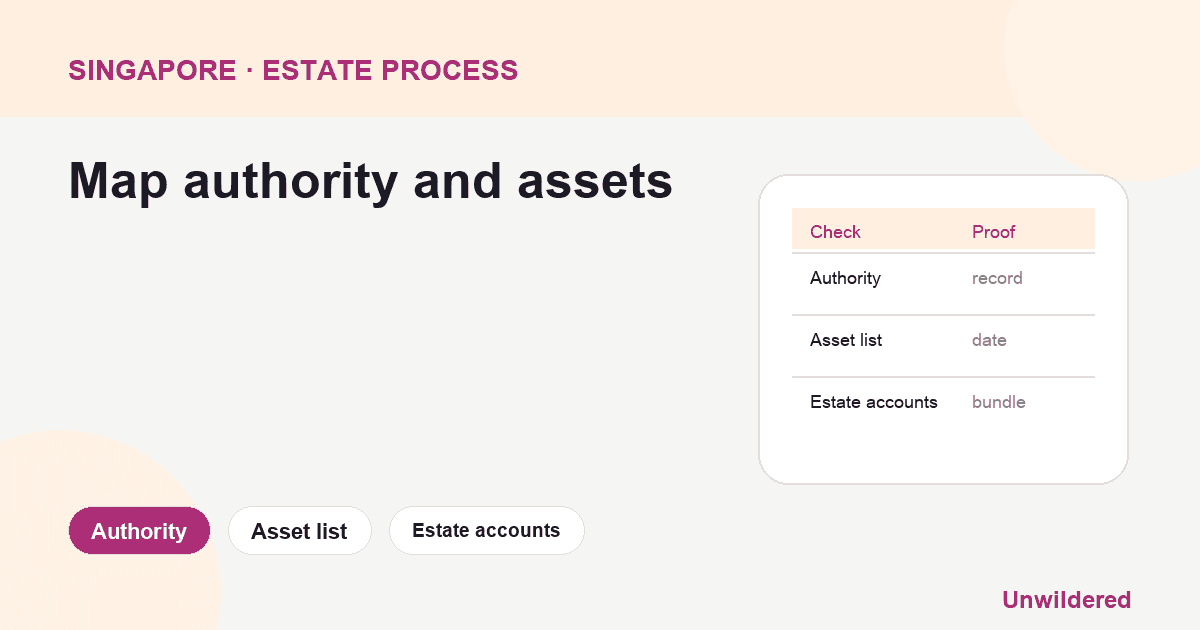
Private-company shares can be one of the hardest assets in a Singapore estate because they combine probate authority, company records, shareholder relationships, and sometimes family control. A grant of probate or letters of administration may identify who has authority to administer the estate, but it does not by itself answer every company question. The executor still needs to check the company constitution, shareholder agreement, register of members, share certificates, restrictions on transfer, and whether the deceased was also a director, guarantor, employee, or key decision-maker.
The official anchors are the Singapore Judiciary probate and administration guidance and ACRA company-share resources. They give the procedural frame: obtain authority for the estate, then deal with company records through the company law and filing environment. eLitigation judgment searches can help illustrate disputes over estate company shares, but they are practical examples only. A family company dispute is intensely fact-specific.
Confirm The Grant And The Shareholding
Start with authority. Keep a certified copy of the grant, the death certificate, the will if there is one, and identity documents for the executor or administrator. Then confirm the shareholding from the company’s records, not only from family memory. Ask for the latest business profile, register of members, share certificates if issued, constitution, shareholders agreement, and any board or member resolutions that mention the deceased.
Check whether the shares are ordinary shares, preference shares, partly paid shares, treasury-related records, or held through a nominee. If the deceased held shares as trustee or nominee for someone else, the estate file needs legal information and document review before treating them as beneficial estate assets. If the deceased owned shares through another company or trust, the asset may be the holding entity interest rather than the underlying shares.
Documents To Put In The Transfer File
Grant of probate or letters of administration, death certificate, will, and executor identity proof.
ACRA business profile, register of members, constitution, share certificates, and prior transfer records.
Shareholders agreement, buy-sell provisions, pre-emption notices, consent requirements, and valuation clauses.
Board papers, director resignation or replacement documents, company secretary correspondence, and meeting minutes.
Estate asset schedule, valuation basis, tax or accounting advice, and beneficiary instructions where appropriate.
Do not skip the constitution and shareholders agreement. Many private companies restrict transfers, require board approval, give existing shareholders a right of first refusal, or contain buyout mechanics on death. A beneficiary may be entitled under the will, but the company may still require steps before the register is updated. The company secretary should explain filing and record updates; legal information and document review should cover disputed entitlement and transfer restrictions.
Control And Conflict Questions
Company-share estates often become urgent because the deceased controlled bank mandates, signed contracts, held the only director role, or was one side of a family-business deadlock. Separate estate ownership from company governance. The executor’s role in the estate does not automatically make the executor the commercial decision-maker for the company. Director appointments, board quorum, bank mandates, and shareholder voting rights must be checked under the company documents.
If beneficiaries disagree about whether to sell, transfer, or hold the shares, preserve value first. Ask who is maintaining accounts, tax filings, insurance, key contracts, payroll, and access to company systems. Do not remove company property, freeze operations, or contact customers as leverage without advice. Those steps can damage the business and reduce the estate value.
Where there is a foreign beneficiary, minor beneficiary, bankrupt shareholder, or competing personal representative, pause before presenting the transfer as routine. The company secretary may be able to process ordinary record updates, but contested entitlement, capacity, and trust questions need legal review. Keep company correspondence neutral so it can be reused if the dispute escalates.
Simplified Chinese Document Checklist
This checklist can help bilingual families collect documents before speaking with the company secretary or Caira:
遗产授权文件:遗嘱认证书或遗产管理书、死亡证明、遗嘱、执行人身份证明。
公司资料:ACRA业务资料、成员登记册、公司章程、股份证书。
限制条款:股东协议、优先购买权、董事会同意、估值条款。
控制问题:董事身份、银行授权、签约权限、公司秘书联系方式。
遗产资料:受益人名单、资产清单、估值文件、税务或会计意见。
Before Asking For Registration
Before the company updates its register or any filing is made, ask three questions. Who is legally authorised to instruct the company? Are the shares transferable to the intended person under the constitution and shareholders agreement? Are there tax, valuation, stamp, accounting, or foreign-beneficiary issues that require separate advice? If the company refuses to register a transfer, ask for the reason in writing and identify the clause relied on.
The practical goal is to move from family assumption to verified company records. A grant is essential, but the transfer file must also answer company-law and governance questions. The cleaner the file, the easier it is for the executor, company secretary, beneficiaries, and advisers to decide the next step without turning a share transfer into a control dispute.
Company share checklist
Collect the grant, death certificate, ACRA profile, register of members, share certificates, constitution, shareholder agreement, board minutes, valuation evidence and beneficiary instructions.
Sources
Family Justice Courts
Singapore Statutes Online
Probate or Family Court guidance
This article is general information, not legal, financial, medical or tax advice.
