
For singapore family court appeal deadlines, the strongest first move is usually a clear file. Caira can help build it from uploads. Ask about Singapore law, draft letters or forms, and upload files for review.
Start chatting in 30 seconds
An appeal is usually record-based; it is not a full restart of the family dispute.
For a child-arrangements or ancillary order affecting SGD 3 million of assets, the exact order and deadline matter first.
Caira can turn the order, dates and documents into an appeal-readiness checklist.
Do not wait for negotiations or anger to settle before checking permission and filing windows.
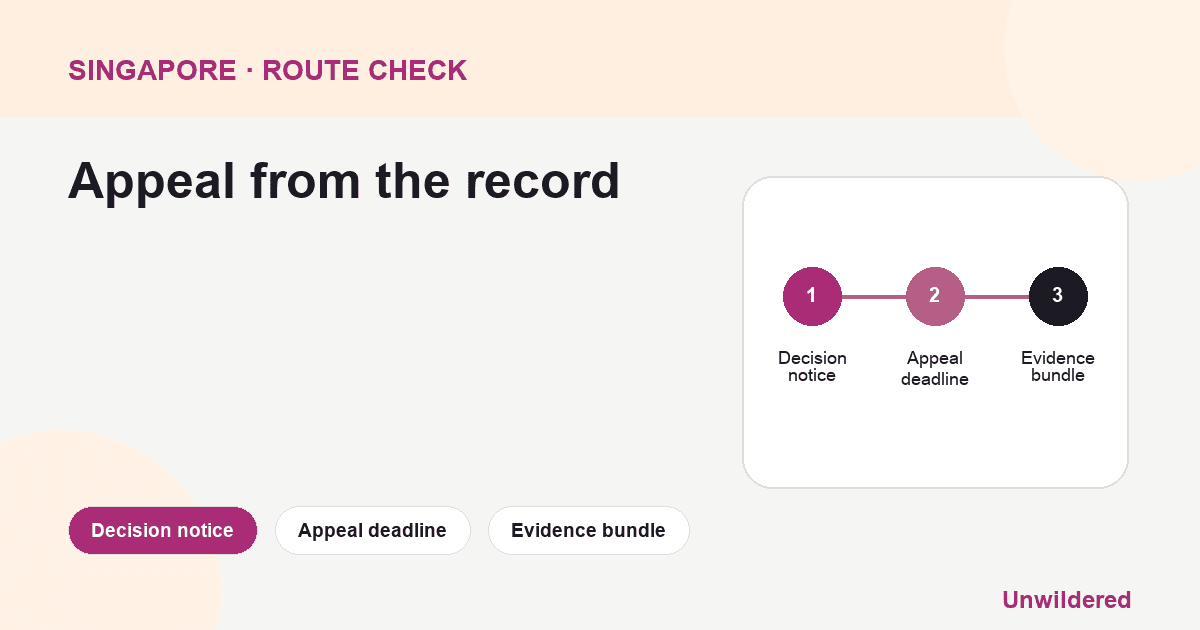
An appeal from a Singapore Family Justice Courts order does not offer a fresh start to tell the entire family story. It’s a record-based, deadline-driven step. The type of case—divorce, maintenance, probate, guardianship, or child-arrangements—matters less at the outset than the details of the order, the date it was made or extracted, whether permission is needed, and which documents will actually reach the appeal judge. Whether you found the decision fair or not comes after those basics.
The Family Justice Courts publish appeal procedure within their electronic practice directions, and their general family pages set out the usual court routes. Treat these official references as your starting point. Don’t use them just for background. If you wait for informal clarification, negotiate without watching your deadlines, or file a broad complaint instead of proper appeal paperwork, you may lose critical leverage before the court even looks at the merits.
Start with the order, not the grievance
Keep these documents together: the sealed order, judgment, minute sheet, and any written grounds. If the order was given orally, note: the date, the judge or registrar, which parties were present, the exact orders, and whether any reasons were stated. Do not guess or rely on memory when it comes to deadlines. Check the Family Justice Courts’ appeal practice directions. Also check any court notice accompanying the order. Be alert: different types of orders may have different appeal paths, and some require permission or leave before the appeal process properly begins.
Now separate dissatisfaction from clear appeal points. You might feel upset about access arrangements, maintenance decisions, or a probate ruling. That’s natural. But an appeal generally requires an identifiable legal, factual, or procedural error. Your file should make clear what the court saw, which part of the order is challenged, and why this specific point matters. New evidence isn’t assumed to be accepted on appeal—never treat it as automatic.
Documents to collect immediately
Sealed order, plus date of pronouncement and, if applicable, extraction.
Written grounds, certified transcript, notes of evidence, or a minute sheet (if available).
Originating summons, pleadings, affidavits, exhibits, and written submissions from the lower court.
Bundle index from the hearing with page references for key disputed documents.
Correspondence relating to clarification, costs, compliance, and service of the order.
Calendar noting all pending appeal, compliance, payment, handover, or filing dates.
High-conflict cases often create sprawling bundles of paperwork. Bigger is not better here. Instead, the strongest appeal file is the easiest to navigate. Build a document index with three columns: date, document, issue. For example, in a maintenance appeal, tag bank statements and payslips to income, needs, and arrears. For probate, you might tag the will, medical or caveat documents, and estate accounts. Child-arrangement appeals could tag welfare reports and school records—never make the child the go-between.
Appeal preparation checklist
Pinpoint the exact order to set aside, vary, or remit.
Record whether the challenge concerns legal error, factual finding, unfair process, or missing reasons.
Confirm if you need leave or permission before proceeding with the appeal proper.
Draft a clear chronology that is tightly limited to the events relevant to the challenged order.
Calculate filing and service dates from the official practice direction—not from online summaries.
If the case concerns children, property, estate assets, contempt, or urgent payments, get a Caira review as early as possible.
A concise one-page case summary covers six facts: order appealed, date, which court, who decided, main issues, and relief sought. Keep it neutral. Unless a Caira has reviewed your draft, drop adjectives like biased or corrupt. Focusing on personality distracts from the reasoning the appeal judge must tackle.
When settlement or compliance is still live
Appealing does not always pause your obligations. If the order demands payment, transfer, handover, disclosure, or child contact, seek advice on whether you need a stay or variation application. Do not assume that filing appeal papers automatically excuses non-compliance. At the same time, don’t ignore the possibility of settlement. Even if an appeal is under consideration, some family orders may be narrowed, clarified, or varied by consent if circumstances warrant it.
If you use Caira, send the order, a short chronology, and draft appeal points before uploading your whole bundle. This approach helps Caira check for urgent filing, whether leave or stay is needed, or if a different kind of family application should be considered first.
The safest approach is to work along two tracks for a short time. Protect your appeal deadline, but also build a solid file for review. Not every disappointing order needs to be appealed. The decision should be made with the order, relevant practice direction, the record, and the practical consequences in plain view. If your file cannot identify the appealable issue in clear language, pause and get legal review before risking more money on a path that might be wrong.
Appeal file index
Begin with: the order appealed, order date, date received, whether permission may be needed, documents filed below, transcript or notes, evidence relied on, alleged errors, and the remedy sought in practical terms.
This article is general information, not legal, financial, medical or tax advice.
