
Working on Singapore Rental Agent Fee Dispute? Upload the relevant files to Caira and turn the issue into a practical document checklist. Ask about Singapore law, draft letters or forms, and upload files for review.
Start chatting in 30 seconds
Keep the contract, deposit proof, inventory, photos, messages and payment records together.
For SGD 2 million in rent, repairs or risk of losing the deposit, small missing evidence can matter.
Separate what the agreement says from what actually happened.
Use Caira to draft a landlord, tenant or tribunal-ready document checklist.
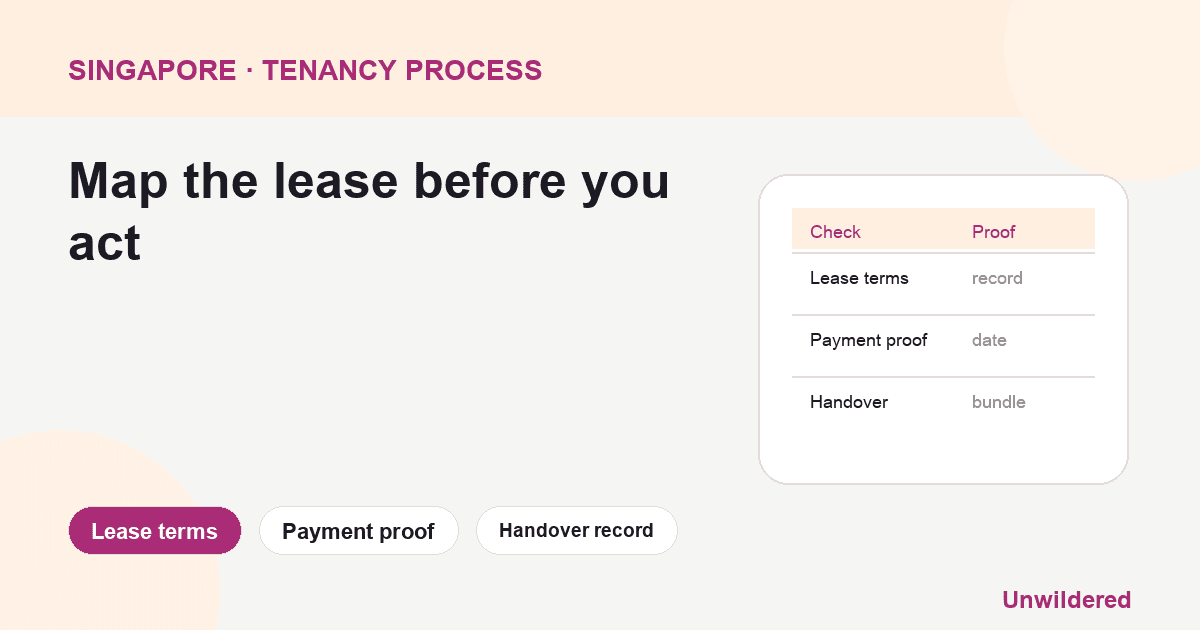
A rental agent fee dispute in Singapore usually turns on three practical questions: who engaged the agent, what fee was agreed in writing, and what evidence shows the agent’s role in the tenancy transaction. Before threatening a complaint or a claim, separate professional conduct issues from money recovery. The Council for Estate Agencies route may be relevant where the issue involves a registered salesperson or estate agent’s conduct.
A civil money claim, including possible Small Claims Tribunals eligibility, is a different question and depends on the facts and official rules.
Who this guide is for
This article is for tenants, landlords, and room renters dealing with commission, co-broking, viewing, renewal, or service-fee disagreements in a Singapore rental transaction. It is useful if someone says you must pay commission even though you did not engage them, if an agent refuses to explain a fee, or if a fee was deducted from money you expected to receive. It is not a general complaint page about every bad rental experience, and it does not decide whether a particular sum is recoverable without checking the agreement and evidence.
Check whether the person is registered
Start by identifying the salesperson and estate agent. Save the name, phone number, agency name, licence or registration details if available, listing screenshot, business card, messages, and appointment paperwork. If the person is not a registered salesperson or estate agent, the CEA complaint route may not fit in the same way, although you may still have a civil dispute or a platform complaint. If the person is registered, keep the evidence that connects that person to the transaction, not just a nickname in a chat group.
Find the fee agreement
Commission disputes become messy when the fee was discussed only verbally. Look for an estate agency agreement, commission clause, service agreement, signed acknowledgement, email, WhatsApp message, invoice, receipt, or tenancy clause. The key question is not whether agents in Singapore usually charge a certain side. The key question is who engaged this agent and what this person agreed to pay. A tenant who contacted a listing agent, a landlord who appointed an agent, and a co-broking arrangement can create different evidence trails.
Build a timeline
Write the facts in date order. Include the listing date, first contact, viewing, offer, letter of intent, payment of good-faith deposit or booking sum if any, tenancy agreement signing, handover, commission invoice, payment request, and any refusal or deduction. If the agent says the fee is due because a tenancy was successfully concluded, record what work the agent says they performed. If you say the fee was never agreed, point to the messages or missing agreement rather than relying on anger.
Ask for a written breakdown
Send a short request before escalating: Hi [Agent name], I am checking the rental transaction for [address]. Please send the written basis for the fee you are requesting, including the estate agency agreement or commission clause, the amount, who you say engaged you, the agency name, and the invoice or receipt. If you believe I agreed to pay this fee, please identify the message or document where that agreement was made. Regards, [Name].
If a Simplified Chinese label helps, keep it short: 中介费纠纷 for agent-fee dispute, 房产经纪 for property agent, 佣金 for commission, 租约 for tenancy agreement, 发票 for invoice, and 收据 for receipt. Use these as evidence labels, not as replacement wording for official forms.
When CEA may be relevant
The official CEA pages are the first place to check consumer guidance for rental transactions and the route for reporting a salesperson or estate agent. A complaint may be suitable where the concern is professional conduct, misleading behaviour, failure to explain agency relationships, or a salesperson issue. Keep the complaint focused and attach documents. Do not frame every fee disagreement as misconduct if the real issue is simply whether a contract debt is owed.
When a civil claim may be relevant
If the main issue is recovering money, refusing to pay an unsupported invoice, or disputing a deduction, check whether the claim fits the Singapore Courts Small Claims Tribunals rules or whether another civil route is needed. Eligibility can depend on the claim type, amount, parties, and timing. Prepare a clean amount table: fee requested, fee paid, amount disputed, amount refunded if any, and the legal or contractual basis you rely on. If the agent is only a messenger for the landlord, do not automatically sue the agent without checking who received the money and who promised what.
Common mistakes
Do not pay cash without a receipt. Do not delete listing screenshots after the property is removed. Do not assume the loudest person in the chat is the contracting party. Do not threaten CEA, police, and court all in one message unless each route has been checked. Do not ignore a signed commission agreement because you later regretted the deal. At the same time, do not accept an invoice as proof of agreement if the person cannot show why you owe it.
Where Unwildered fits
Upload the listing, estate agency agreement, tenancy agreement, invoice, receipts, and messages. Unwildered can help separate conduct issues from money-claim issues and turn the record into a CEA complaint outline, payment response, or Small Claims evidence checklist.
Official context to check
For HDB and rental pages, official datasets can add market context without turning the article into a valuation report. Singapore open-data HDB rental and resale datasets are useful for checking town, flat type and market background; the user’s own lease, receipt and messages still decide the dispute file.
Sources
Singapore Courts: Small Claims Tribunals
Singapore Statutes Online
This article is general information, not legal, financial, medical or tax advice.
