
For singapore small claims pre filing, the strongest first move is usually a clear file. Caira can help build it from uploads. Ask about Singapore law, draft letters or forms, and upload files for review.
Start chatting in 30 seconds
Read the official route before filling blanks. Simple mistakes often happen because of missing evidence.
If SGD 2 million is at stake, double-check your dates, signatures, and attachments.
Keep a copy of what you submit and every supporting document.
Use Caira to draft a checklist and spot missing information before filing.
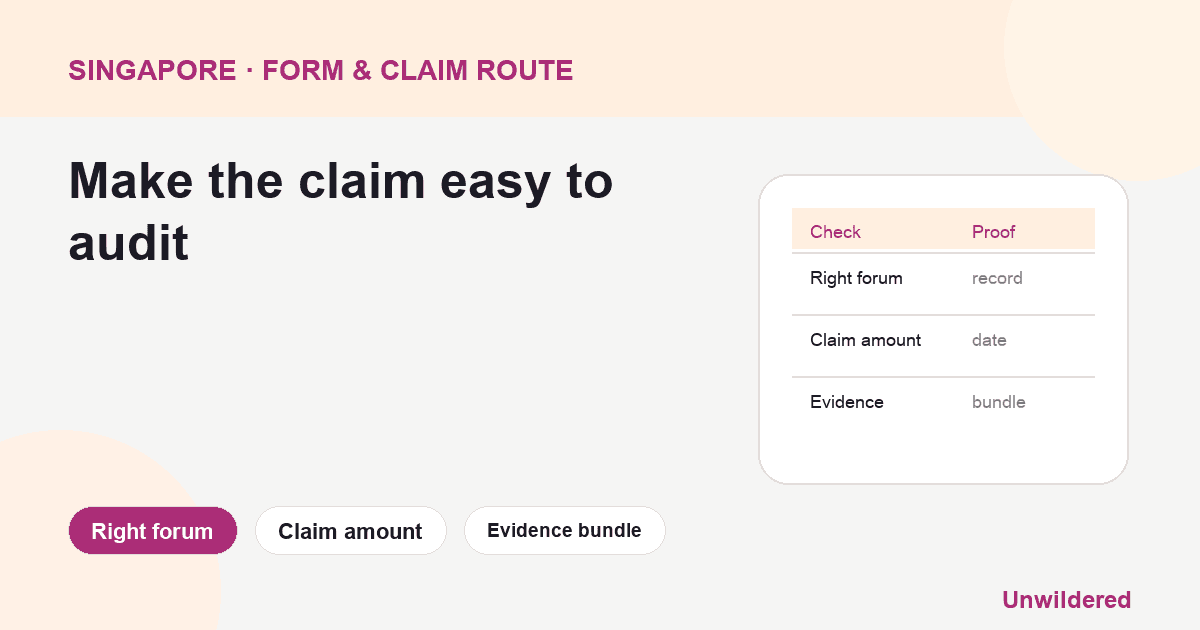
Preparing a Singapore Small Claims Tribunal file is easier when you start with two questions. First: does this type of matter belong in the Small Claims Tribunals route? Second: if it might, do your documents tell a clear story? This guide focuses mainly on the second question, but also reminds you to check the first against the official Singapore Courts pages.
The official Small Claims material covers the tribunal, eligible cases, and how to file and serve a claim. It points users toward the online filing system. This article is not a promise your claim will be accepted or that the tribunal has jurisdiction. Instead, it’s a practical pre-filing evidence checklist, especially useful for tenancy, consumer, service, and small contract disputes.
Check eligibility before evidence
First, read the official eligibility page before uploading any documents. Look at your claim type, value, time limits, party type, and whether a residential tenancy agreement fits the scope described in court materials. For tenancy disputes, check both the duration and the remedy you want. If your claim sits outside the official boundaries, a perfect evidence file won’t solve the route problem.
Write a short eligibility note for yourself: My claim concerns [goods / services / tenancy / other to verify], against [respondent name], for S$[amount], based on [contract / invoice / deposit / damage / non-delivery], and the key dates are [date range]. If you struggle to fill in those blanks, your filing will likely be unclear too.
Name the correct respondent
Many weak claims trip on this first step: naming the wrong party. Is your respondent a landlord, tenant, business, company, sole proprietor, contractor, seller, or service provider? Review the agreement, invoice, receipt, bank transfer name, messages, business registration entries if available, agent communications, and any letterhead. For a tenancy deposit claim, clarify whether it’s the landlord, agent, co-tenant, property owner, or payment recipient.
Gather solid contact details. Service address and a working phone help. A nickname, chat handle, or platform username may add context, but might not be enough to file or serve papers. If you see several names, make a table showing which document each name appears in.
Build the evidence folder
Start with the core document that set up the obligation: the tenancy agreement, quotation, invoice, order confirmation, service contract, receipt, or a complete message thread. Add supporting proof—payment records, delivery/non-delivery evidence, photos, repair or inspection reports, move-in and move-out documents, deduction invoices, and relevant communications where the dispute was discussed.
For tenancy disputes, try these labels: tenancy agreement, deposit receipt, rent payment, move-in photos, move-out photos, inventory list, key return, deduction list, landlord messages, agent messages, refund request. For consumer or service issues, use: order confirmation, invoice, payment slip, delivery note, defect photos, complaint, proposed remedy, refund request.
Turn screenshots into a timeline
A pile of screenshots in no order can cause confusion. Build a timeline: date, event, evidence file, and why it matters. Example: 1 March, deposit paid, bank transfer screenshot—proves the payment. 15 April, cleaning deduction raised via WhatsApp screenshot—shows reason for deduction. 20 April, refund requested by email—shows you tried to resolve.
Keep screenshots uncropped enough to display sender, date, and chat context. If you export chats, save both the original and any edited PDFs you prepare for easier review. For messages in Chinese or another language, create a simple English translation for your own use and keep the original version as well.
Clarify the remedy
Your claim should spell out what you want in plain terms. Ask yourself: do I want a deposit refund, money for defective goods, a refund for services not provided, or repair costs? Be specific. Prepare a table with the amount claimed, your calculation, and the supporting evidence. Avoid round figures that don’t match receipts.
If you claim more than one item, split them up. Don’t make the tribunal officer or respondent guess if S$1,200 means “deposit only”, “deposit plus cleaning”, or “deposit plus replacement cost”.
Service readiness
Filing isn’t the end. Read the official filing and service page to see how claims must be served and what proof is needed. Organise the respondent’s address, email, phone, business details, and prior communication method. Simply sending a screenshot to a chat group is almost never enough.
Common mistakes
Key mistakes include missing the eligibility page, naming an agent without confirming who the contract is with, stating amounts with no calculation, relying only on verbal promises, cutting off screenshots, losing payment evidence, or failing to show you made a refund request before filing. Don’t treat a checklist as a final legal answer. Evidence helps, but it doesn’t decide jurisdiction.
Where Unwildered fits
Upload your agreement, receipts, payment records, photos, deduction list, invoices, messages, respondent details, and a draft summary. Unwildered can help you produce a timeline, evidence index, amount table, and a checklist of what’s missing—before you use the official Singapore Courts and CJTS route.
This article is general information, not legal, financial, medical or tax advice.
