
If you are preparing for a South African CCMA arbitration, upload the dismissal letter, contract, warnings, payslips and messages to Caira. Caira can help build a focused evidence bundle.
Start chatting in 30 seconds
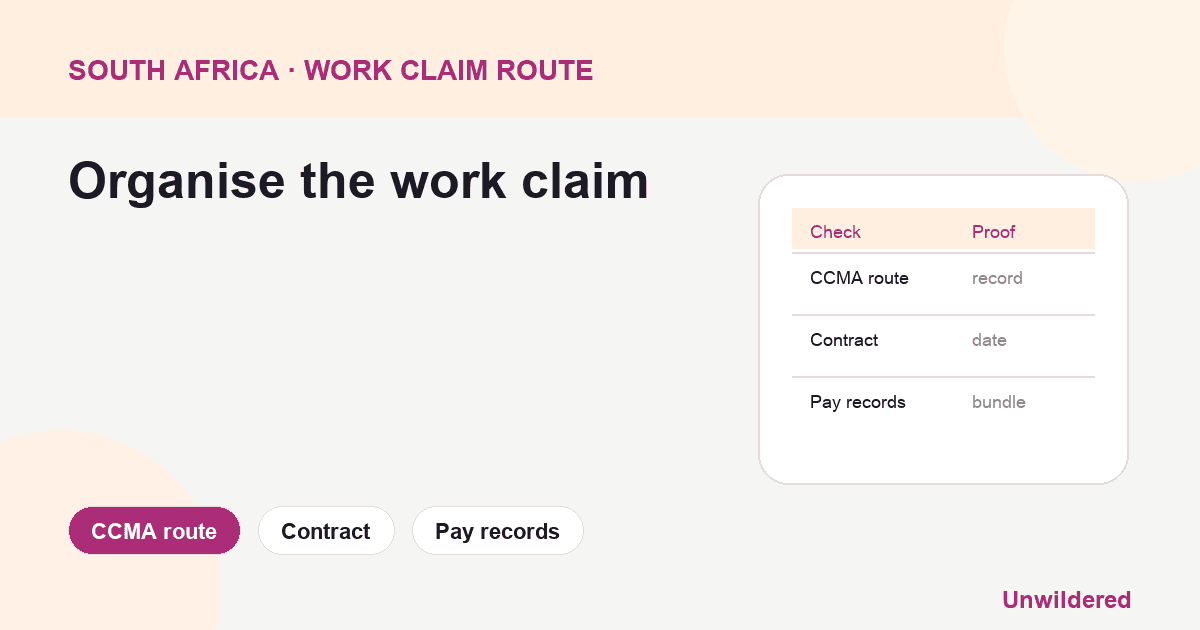
Check the dismissal date, referral history, contract, warnings, pay records and messages first.
Where salary, bonus or severance is significant, a careful chronology can change the negotiation.
Preserve lawful evidence, but avoid taking confidential files you should not access.
Use Caira to build a timeline, evidence index and response checklist.
2026 Update: Build The CCMA Bundle Around The Issue In Dispute
The CCMA publishes information sheets and arbitration guidance, and its arbitration process focuses on evidence and submissions about the challenged employer decision. Check the current CCMA information sheets and resources before preparing, because forms and guidance can change over time. A useful bundle is not every workplace grievance. It is the documents, witnesses and remedy evidence that answer the actual dismissal, unfair labour practice or wage issue.
Bundle section | Examples |
|---|---|
Decision under challenge | Dismissal letter, warning, charge sheet, outcome and appeal result. |
Employee evidence | Contract, payslips, roster, messages, medical notes and witness statements. |
Employer evidence to answer | Policy, investigation notes, CCTV stills, performance records or attendance data. |
Remedy evidence | Lost pay, alternative work search, mitigation and reinstatement concerns. |
When conciliation does not resolve a dismissal dispute, the case may move to arbitration. This is the stage where preparation becomes evidence. The CCMA process is less formal than ordinary court litigation, but that does not mean the commissioner decides by instinct. Documents, witnesses, timelines, and credibility still matter. A party who arrives with loose papers and no witness plan can make a strong dispute look uncertain.
The CCMA materials explain the arbitration route and the need to refer unresolved matters within the applicable timeframe. For many disputes, a party has 90 days to request arbitration after conciliation remains unresolved or the conciliation period expires. If that step is late, condonation may be needed. Check every notice from the CCMA and diary the date immediately.
Start With The Issues
Do not build the bundle by printing everything in your inbox. First identify the issues the commissioner must decide. In a misconduct dismissal, those may include the rule, knowledge of the rule, breach, consistency, investigation, hearing fairness, and sanction. In incapacity or poor performance, the issues may include standards, counselling, support, medical facts, or time to improve. In constructive dismissal, the issue may be whether continued employment was made intolerable and whether resignation was truly a last resort.
Employees and employers should prepare differently but with the same discipline. The employee usually needs to show why the dismissal was unfair, what documents support the version, and what remedy is sought. The employer usually needs to show the reason for dismissal and why the procedure and sanction were fair. Both sides need witnesses who actually know the facts.
Build A Numbered Bundle
A practical arbitration bundle should be paginated and indexed. Put the most important documents early, but keep the sequence logical. Typical sections include contract and policies, disciplinary documents, performance or investigation records, emails and messages, payroll and attendance records, medical or incapacity documents, settlement correspondence if admissible and relevant, and remedy documents.
Do not alter messages, crop screenshots in a misleading way, or remove context that changes meaning. If a WhatsApp thread is important, keep the full conversation, date, sender, and phone number visible where possible. If a translation is needed, label who translated it and keep the original.
Witnesses Matter More Than Volume
A document often needs a witness. A warning letter may need the manager who issued it. A CCTV screenshot may need someone who can explain the source. A performance target may need the person who set it. A payroll record may need HR or finance. If a witness cannot attend, ask early what procedure applies. Do not assume the commissioner will accept hearsay just because the document looks official.
Prepare each witness with facts, not a script. They should know the date, meeting, document, and event they can prove. They should also know the limits of their knowledge. A witness who tries to fill every gap can damage credibility.
Afrikaans Bundle Index Template
Use this as a simple arbitration index:
A. Diensverhouding: kontrak, posbeskrywing, beleid, salarisrekords.
B. Gebeurtenisse: tydlyn, klagtes, ondersoeknotas, e-posse, WhatsApps.
C. Dissipline: kennisgewing, klagstaat, notules, uitkoms, appel.
D. Bewyse: fotos, CCTV, mediese notas, prestasiestate, bywoning.
E. Getuies: naam, rol, kontakbesonderhede, watter feit bevestig word.
F. Remedie: herindiensneming, vergoeding, inkomste daarna, finale betaling.
Remedy Evidence
If reinstatement is sought, explain whether the employment relationship can continue and whether the post still exists. If compensation is sought, bring proof of earnings, final pay, job search, new income, unemployment period, and any mitigation steps. Employers should bring evidence about operational impact, trust breakdown, replacement, or why reinstatement is not workable if they rely on those arguments.
Keep remedy evidence separate from liability evidence. A commissioner may first need to decide whether the dismissal was unfair, then what remedy is appropriate. Mixing everything into one emotional story can obscure both questions.
Ethical Preparation
Do not coach false evidence, threaten witnesses, manufacture documents, or hide damaging records that the other side is entitled to see. Arbitration is about testing evidence. If there is a weak fact, address it honestly and explain context. A candid concession can be stronger than an implausible denial.
SAFLII dismissal arbitration cases can help you see how evidence is weighed, but the value of your case depends on your own file. The commissioner needs a clear chronology, reliable documents, and witnesses with personal knowledge. Arbitration rewards organized proof far more than confident accusation.
Before the hearing, prepare three things: a one-page issue list, a paginated bundle, and a witness plan. If you can explain those calmly, you are much closer to being ready, whichever side of the dismissal dispute you are on.
Sources
CCMA
Department of Employment and Labour
Labour Relations Act materials
Department of Justice court guidance
court rules and forms
This article is general information, not legal, financial, medical or tax advice.
