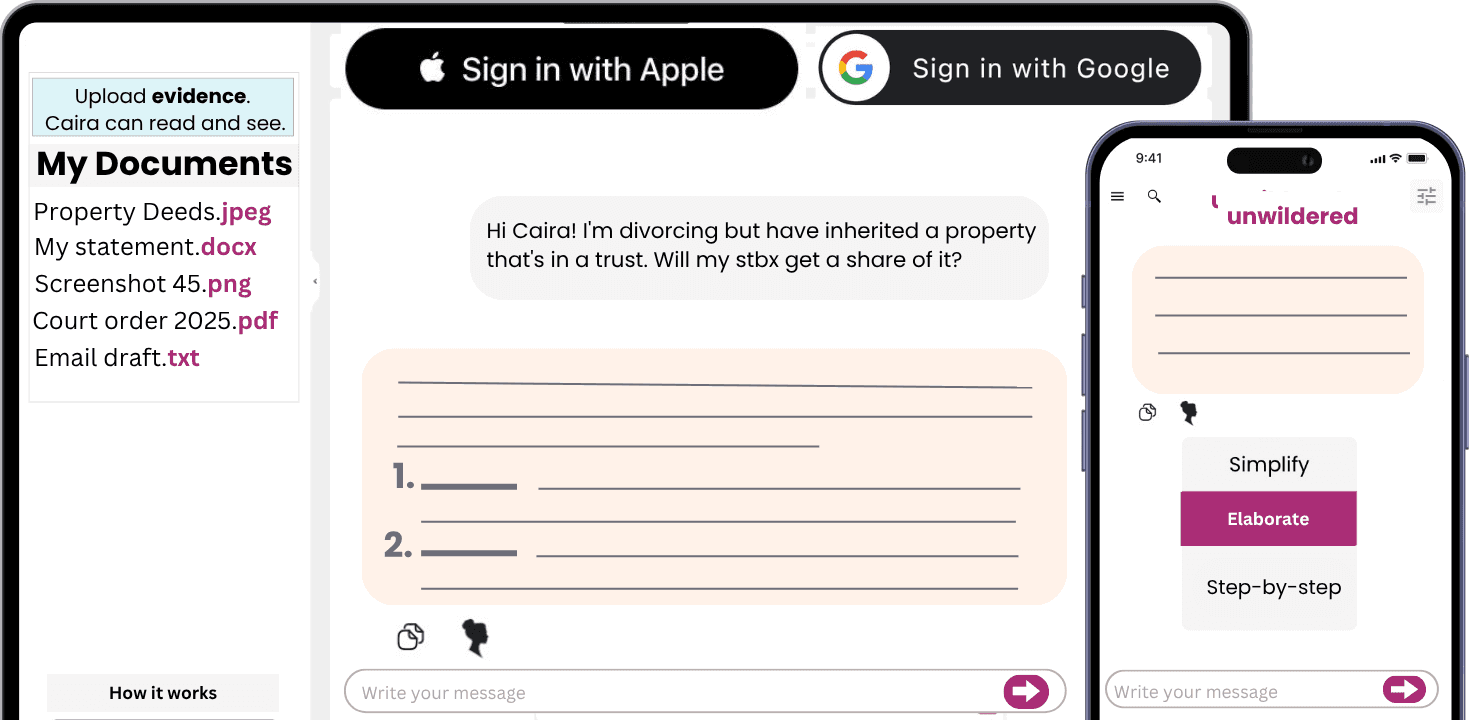
South Africa CCMA Condonation Form can become messy when dates, forms and evidence are scattered. Caira helps organise the record. Ask about South Africa law, draft letters or forms, and upload files for review.
Start chatting in 30 seconds
Start your process by building a disclosure map. List assets, income, debts, companies, property, and children’s costs together for clarity.
If there’s R10 million or more in family wealth, make sure your lifestyle evidence is directly linked to supporting documents.
Separate out what’s agreed, what’s disputed, and what records are missing.
Let Caira draft evidence requests and organise your uploaded financial files. It saves time and avoids confusion.
A CCMA condonation application comes into play if you refer a dispute or take a step too late, and need the CCMA to accept it despite the delay. It does not bypass the rules about the underlying dispute. You still need the correct dispute type, referral form, or case details. Proof of service might also be required. Always give a clear reason for being late. Before submitting, check the official CCMA condonation page and online system; processes can change.
Start with the late step
Figure out exactly which action is late. Is it a referral for unfair dismissal? Unfair labour practice? Discrimination? Arbitration? Another procedure? Don’t be vague. A good condonation application spells out what was missed, the deadline, when you took the action, and how many days passed since.
Draw up a date table. Include the dismissal or dispute date, when you found out about it, the referral deadline, your actual submission date, how many days late, and any other key dates. Not sure about the cut-off? Say so, and seek advice. Guessing the deadline can create ongoing problems in your case.
Explain the delay with evidence
Your reason must be specific and backed by evidence wherever you can. Examples: illness, lack of documents, internal appeals, ongoing settlement talks, wrong forum, employer assurances, travel, access issues, or simple misunderstanding. Don’t just say what happened—attach documents. This could be medical evidence, emails, appeal paperwork, settlement communications, failed delivery proofs, or written advice from others. Show you tried to act earlier, if possible.
A weak reason—“I was stressed and didn’t know the rules”—is rarely accepted. A stronger application gives details: the date of dismissal, when you requested written reasons, when the employer replied, who you contacted, and every relevant date. Then specify how many days you were late, and attach all proof to support that timeline.
Address prospects without arguing the whole case
Condonation applications usually need you to say why the main dispute has merit. Keep it concise. For dismissals, outline why you believe it was unfair—no hearing, no clear reason, inconsistent discipline, dismissal during probation without the right process, retrenchment issues, or other case-related facts. For wage or labour-practice issues, list the contract, payslips, messages, or any records showing your claim.
Don’t just attach a stack of papers and expect the commissioner to sift through them. State a brief summary and list core evidence. You’ll have the chance to argue fully if condonation is granted.
Deal with prejudice honestly
Prejudice means practical disadvantage. Say what happens to you if condonation is refused; if the delay is short, show your calculation and be transparent about it. For longer delays, don’t try to bury the fact. Instead, explain why relevant documents and witnesses are still around, how the employer already knew about the dispute, or the steps you took to reduce delays.
You build trust by giving a balanced view—don’t ignore the employer’s position.
Check service requirements
Many CCMA processes require you to serve documents on the other party and keep proof. Read the latest CCMA instructions for your specific form or online process. If you must serve, keep the delivery email, fax receipt, registered mail slip, hand-delivery proof, or any accepted confirmation. Where you use the online system, save the reference number and confirmation pages.
Avoid surprises at the hearing. Make sure proof of service is in your file from the start. Don’t rely on memory.
Common mistakes
People often use the wrong dispute category, miscalculate deadlines, skip the explanation, or forget to attach documents. Other pitfalls: arguing only about the dispute itself and not the delay, missing proof of service, wrong employer details, and omitting the case or referral reference. Blaming the CCMA, your employer, union, or adviser must be backed up with specific dates and documents.
What to attach
Gather the dismissal letter or dispute notice, your employment contract, payslips, employer’s legal name, referral form, late filing proof, your reasons and evidence for being late, appeal or grievance outcomes, settlement records, medical documents if relevant, proof of service, and a one-page timeline or chronology. If your employer has multiple trading names, include proof of the true legal entity—usually from contracts or payslips.
Where Unwildered fits
Upload your condonation draft, referral, dismissal letter, contract, payslips, timeline, delay evidence, and proof of service. Unwildered can check that your explanation, prospects, prejudice arguments, and attachments tell a logical procedural story before filing.
Sources
CCMA
Department of Employment and Labour
Labour Relations Act materials
Department of Justice court guidance
court rules and forms
This article is general information, not legal, financial, medical or tax advice.