
If south africa companies tribunal director is on your desk, start by uploading the notice, agreement, order or correspondence to Caira. You can ask about South Africa law, draft letters or forms, and upload files for review as needed.
Start chatting in 30 seconds
The Companies Tribunal isn’t a fix-all for every company-control dispute; ensure your remedy matches the record.
If there’s a disputed director change or share issue in a R30 million company, you’ll need minutes, notices, registers, and proof of beneficial ownership.
Caira helps you organise the company chronology and separate Tribunal, CIPC, and internal-company issues.
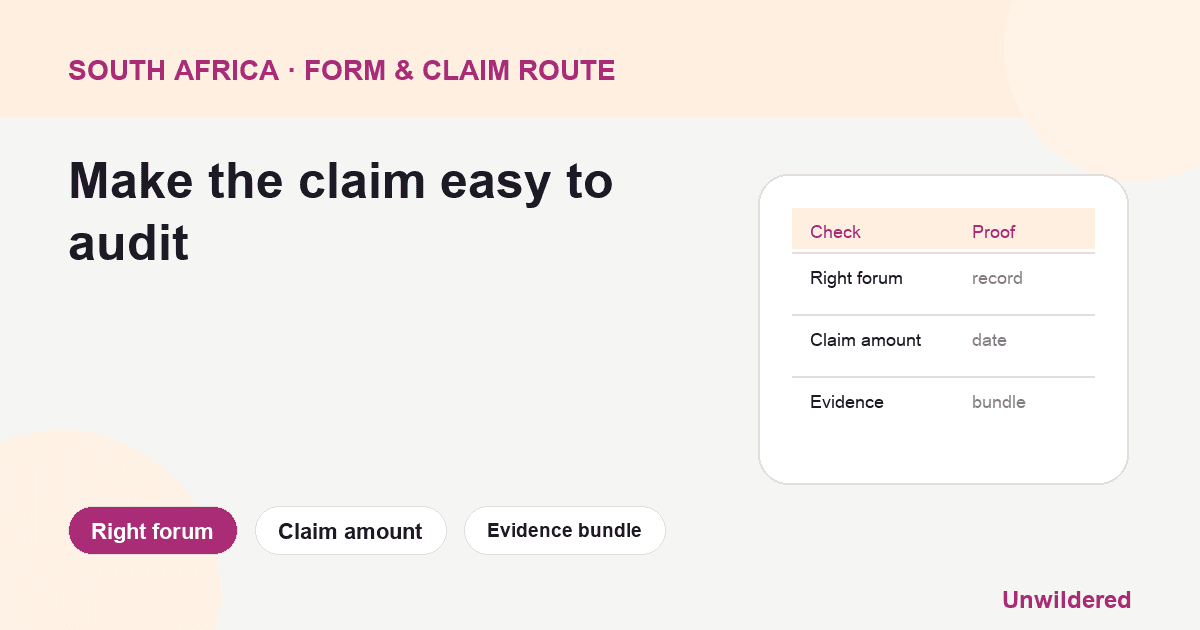
Don’t file a form before you know which decision, record, or statutory route is being challenged.
Many South African shareholder or director disputes begin with a practical issue. Perhaps someone has been removed from CIPC records, or a share issue is disputed. Sometimes, board minutes are missing, a director appointment is challenged, or beneficial ownership information doesn’t match the family’s or an investor’s understanding. The Companies Tribunal can assist with certain Companies Act applications. But it isn’t a universal court for every company-control fight.
Start with the company record. That’s the safest first step. Only then decide whether the Tribunal, CIPC correction, an internal procedure, arbitration, or court is right for your dispute.
The main sources for this checklist are the Companies Tribunal information library and CIPC guidance. South African case databases such as SAFLII can show you how company disputes become document-heavy. Still, don’t treat reported cases as templates—jurisdiction matters.
If the company is owner-managed, clarify who controls bank access, accounting software, statutory records, and company email. Control of records isn’t the same as ownership, but it often explains the urgency behind a dispute.
Check The Forum Before Drafting
Don’t reach for a form just because a search result names the Tribunal. First, pinpoint the decision or record you want changed. Is this a company name objection, director record dispute, refusal to share company documents, issue with the shareholder register, beneficial ownership filing, board authority problem, or breach of a shareholders’ agreement? The answer counts. The Tribunal’s statutory powers are specific, so what appears one dispute may need several legal routes.
Write a short forum note with four headings: official record, internal company record, contract record, and the outcome you want. The official record covers CIPC documents and filed director or beneficial ownership info. Internal company records mean the securities register, minutes, resolutions, notices, and the memorandum of incorporation. The contract record holds any subscription, shareholder, loan agreements, restraint clauses, and settlement terms. State what outcome you’re after—correction, document access, a declaration, compliance step, or urgent protection.
Core Evidence Bundle
Your adviser needs a bundle that tells the story of authority and ownership without guesswork. Put documents in date order; keep each source distinct. Never annotate the only signed copy—make a working copy for notes.
CIPC materials: company registration docs, current disclosure, director history, securities-register filings (if available), and beneficial ownership records.
Constitutional documents: memorandum of incorporation (MOI), rules, shareholder agreements, subscription terms, amendments.
Share evidence: share certificates, allotment and transfer forms, payment proofs, cancelled certificates, registers, cap tables.
Director evidence: appointment or resignation letters, board resolutions, meeting notices, minutes, written consents, email records.
Transaction evidence: bank payments, loan accounts, dividend records, buy-sell terms, sale agreements, valuation correspondence.
Communication trail: formal demands, access requests, refusal letters, WhatsApp exports, email chains, delivery proof.
Afrikaans Evidence Checklist
Use this as a preparation note, not for pleadings:
Maatskappybesonderhede: naam, registrasienommer, direkteure, aandeelhouers.
Aandele: aandeelsertifikate, oordragvorms, betalingsbewyse, sekuriteitsregister.
Besluite: kennisgewings, notules, direksiebesluite, skriftelike toestemming.
CIPC: huidige rekords, direkteursveranderings, voordelige eienaarskap, indieningsbewyse.
Kontrakte: MOI, aandeelhouersooreenkoms, koop-verkoop- of leningsooreenkoms.
Geskilpunt: watter rekord is verkeerd, watter besluit word betwis, watter regstelling word verlang?
Draft The Facts, Not The Drama
Clean, factual sequence works best for Companies Tribunal papers. Start by identifying yourself, your company role, which record or decision is challenged, what the official and internal records reveal, and why your request fits this forum. If you’re using a Companies Regulations form, always check the latest version and filing instructions from the Tribunal before signing.
Stay measured in allegations. Heavy terms—fraud, oppression, forgery—aren’t for emphasis. If you dispute a signature, name the document, date, and your supporting evidence. If a director meeting’s validity is in question, explain the notice problem, quorum, voting record, or conflict. Challenging an unauthorised share transfer? Track the certificate, register, consideration, CIPC or internal update.
When CIPC Records Matter
CIPC records matter, especially since beneficial ownership and securities-register filings became routine compliance. But a CIPC printout isn’t the whole picture. It shows filings. The MOI, shareholders’ agreement, board minutes, and registers reveal if the filing is complete or disputed. Keep both perspectives in your bundle.
Before you submit papers, check for proof of service, a clear mandate to act, a complete document index, and a concise outcome request. Shareholder-director disputes aren’t won by document volume. They’re clarified by matching the forum to the Companies Act issue and presenting records so the decision-maker isn’t forced to reconstruct events from a jumble of messages.
Afrikaans company-record request
Stuur asseblief die jongste CIPC-uitslae, direkteursbesluite, kennisgewings van vergaderings, notules, aandeelregister, voordelige-eienaarskap inligting en enige dokumente oor die betwiste aanstelling, verwydering of aandeletransaksie.
Sources
Department of Justice court guidance
court rules and forms
This article is general information, not legal, financial, medical or tax advice.
