
Before you send the next message about south africa deceased estate reporting, let Caira review the documents and identify the missing information. Ask about South Africa law, draft letters or forms, and upload files for review.
Start chatting in 30 seconds
Collect the will, death record, asset list, debts, family tree and executor correspondence first.
For R10 million in estate assets, missing bank, company or foreign records can delay distribution.
Ask for status and accounts in writing before making accusations.
Use Caira to draft beneficiary, executor or asset-holder document requests.
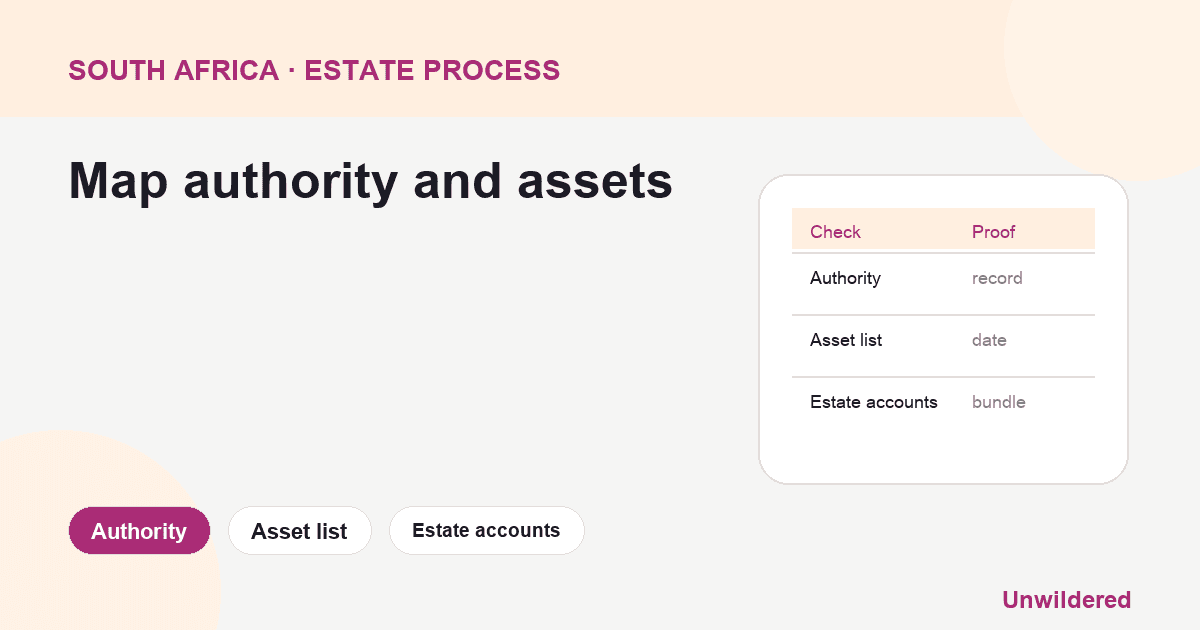
Reporting a deceased estate in South Africa is less about finding one perfect form and more about matching the right forms to the estate. The official Master of the High Court materials point families to a set of reporting documents, including the Death Notice, next-of-kin information, inventory, executor or representative acceptance forms, and supporting documents such as the death certificate, will, marriage records, and asset details.
The most common mistake is assuming that every estate needs the same pack. In practice, the forms depend on the value of the estate, whether there is a will, the marital position, who is nominated to act, and which Master’s Office has jurisdiction.
Start with the reporting route
The official public-service guidance says a deceased estate should be reported to the Master of the High Court within 14 days of death. Treat that as the planning baseline, but do not rush into sending incomplete forms. First identify the deceased person’s last ordinary place of residence, because that points you toward the relevant Master’s Office. Then separate the estate facts into a simple note: date of death, surviving spouse or partner, children, known heirs, whether an original will exists, main assets, debts, bank accounts, vehicles, immovable property, and funeral or urgent expenses.
If the person died without a will, say that plainly. If there is a will but you only have a copy, record where the original may be. If family members disagree about who should act, do not paper over the dispute in the forms. A clean, factual submission is safer than a confident but inaccurate one.
Forms you may see
The official materials name several Master forms that commonly appear in deceased-estate reporting: J294 Death Notice, J192 Next-of-Kin Affidavit, J243 Inventory or CB47, J190 Acceptance of Trust as Executor, and J155 where applicable. Not all of these apply in every case. For example, an estate with a nominated executor and a will is not the same as a small estate where a representative may need authority to act. A married person’s estate may require more documents than an unmarried person’s estate, especially where community of property or customary-marriage questions affect the asset picture.
Document checklist before you fill anything in
Gather the death certificate, deceased person’s ID, surviving spouse ID if relevant, marriage certificate or divorce order if relevant, the original will and codicils if they exist, names and contact details for heirs and next of kin, a list of assets, a list of debts, bank details, title-deed or property information, vehicle papers, insurance or pension correspondence, and funeral-account details. If a document is missing, write down what you have done to find it. That note can help later when someone asks why a form is incomplete or why a copy was supplied.
Common mistakes
Do not guess estate values. Use best available records and mark uncertain amounts carefully. Do not leave next-of-kin details vague because family structure feels complicated. Do not submit an inventory that lists only bank accounts while ignoring vehicles, furniture, insurance claims, or debts. Do not say there is no will until you have checked obvious places: home files, the nominated executor, bank safe custody, family members, and the deceased person’s email or document records where accessible. Do not treat the person who paid for the funeral as automatically entitled to control the estate.
A short family information request
Where relatives need to cooperate, keep the request neutral:
Subject: Documents needed to report the deceased estate
Dear [Name], I am helping collect documents to report the estate of [deceased name] to the Master. Please send any information you have about the original will, marriage documents, children or dependants, bank accounts, property, vehicles, debts, policies, and funeral expenses by [date]. If you are unsure, please say what you know and where further documents may be found. Regards, [Name]
For Afrikaans-speaking family members, a short line may be useful: Stuur asseblief enige dokumente of inligting oor die testament, bates, skulde, erfgename en begrafniskoste van [naam] teen [datum].
Before submission
Check that names match IDs, dates are consistent, the will is described accurately, the inventory balances with the documents you have, and every person signing understands the role they are accepting. Keep copies of everything submitted and record the Master’s Office, submission date, reference number, and the name of any official who responds.
Where Unwildered fits
Upload the draft forms, death certificate, will, family details, inventory, bank statements, and correspondence. Unwildered can help turn the documents into a clear checklist and flag gaps before you contact the Master’s Office or an adviser.
Sources
Master of the High Court
Department of Justice
Administration of Estates Act materials
This article is general information, not legal, financial, medical or tax advice.
