
South Africa Letter Authority Vs Letters can become messy when dates, forms and evidence are scattered. Caira helps organise the record. Ask about South Africa law, draft letters or forms, and upload files for review.
Start chatting in 30 seconds
The route usually turns on estate value, asset type, risk and what the Master requires, not family preference.
For a R2.5 million estate, choosing the wrong authority can block banks, property transfers and beneficiary payments.
Caira can compare the asset list against the documents normally needed for each route.
Do not let a small-estate shortcut hide a real company, property or debt problem.
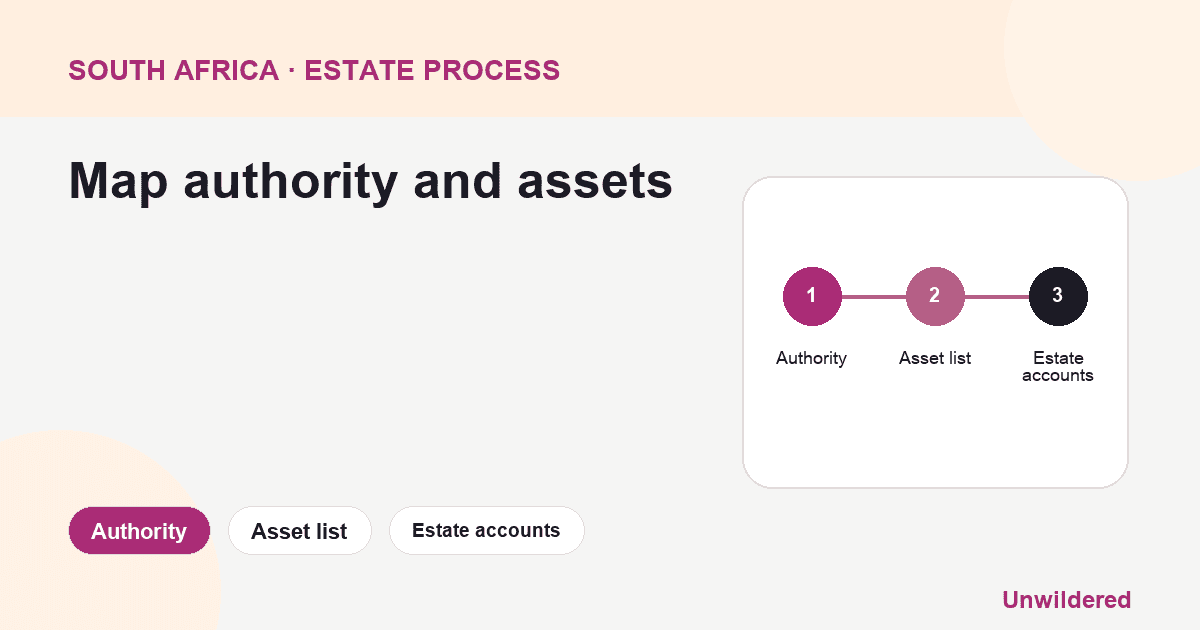
When a South African family member dies, the first urgent question is often practical rather than emotional: who is allowed to deal with the bank, car, house, funeral account, or refund owed to the estate? The answer usually starts with the Master of the High Court. A person cannot simply take control because they are the surviving spouse, adult child, nominated executor, or the person who paid the funeral bill. The estate must be reported where required, and the Master must issue the right appointment document.
The official Master guidance separates two common routes. If the estate value exceeds R250,000, letters of executorship must be issued and the full Administration of Estates Act process is followed. If the estate is below that level, the Master may dispense with letters of executorship and issue letters of authority under section 18(3). That difference is important, but it is not a shortcut for hiding assets or guessing values.
The Master can require documents, and the representative must work within the appointment actually granted.
What Each Document Does
Letters of executorship appoint an executor for the full deceased-estate administration process. They are more likely where there is immovable property, a larger bank balance, business interests, investments, tax complexity, creditors, or a will requiring formal administration. The executor gathers assets, pays debts, deals with claims, prepares accounts where required, and distributes according to the will or intestate succession position.
A letter of authority appoints a Master’s representative for a smaller estate. It is usually simpler, but it is still an official appointment. The representative is expected to administer only the assets disclosed and to follow the Master’s directions. The Justice forms page notes that the letter of authority and letter of executorship themselves must be obtained from the Master’s office. The J155 undertaking also matters: the representative undertakes to pay debts and distribute the balance according to the Master’s directions, and to report if later-known assets push the value above R250,000.
Do Not Start With The Label
Start with an inventory. List every asset, estimated value, debt, document, and uncertainty. Include bank accounts, policies, vehicles, furniture, refunds, salary owing, funeral benefits, shares, member loans, business stock, firearms, tax refunds, and immovable property. If the deceased was married in community of property, remember that the joint estate may be affected. If there is a will, keep the original safe and report it with the estate file.
Death documents: death notice, death certificate, ID documents, marriage documents, and will or note that no will is known.
Asset proof: bank statements, vehicle papers, property title details, policy schedules, payslips, invoices, and valuations.
Debt proof: funeral invoice, bond statement, credit agreements, municipal accounts, tax, medical bills, and creditor letters.
Family proof: next-of-kin affidavit, spouse details, children details, and nominations to act where required.
Master file: reporting date, office or service point, online reference, queries raised, and appointment document issued.
Common Mistakes At The Threshold
The R250,000 threshold is not a planning target. Families sometimes undervalue a car, ignore a refund, omit a small investment, or leave out household goods because they want a quicker letter of authority. That can backfire if a bank, insurer, creditor, heir, or the Master later asks for proof. It is better to disclose uncertain assets as uncertain than to treat them as invisible.
The opposite mistake is assuming a small estate always stays simple. A low-value estate can still be difficult if heirs disagree, a will is disputed, a creditor appears, a bank refuses incomplete documents, or there is a foreign asset. A letter of authority may be enough for one estate and insufficient for another with the same rough value. The Master’s instruction and the asset file are what matter.
Afrikaans Glossary For The Family File
Use this short glossary when collecting documents or briefing relatives:
Brief van gesag: letter of authority for a smaller estate.
Eksekuteursbrief: letters of executorship for full estate administration.
Meester van die Hooggeregshof: Master of the High Court.
Boedelinventaris: list of estate assets and estimated values.
Skulde: debts or claims against the estate.
Erfgename: heirs or beneficiaries.
Testament: will; keep the original document safe.
When To Get Help
Get advice early if the estate includes immovable property, a business, a trust, foreign beneficiaries, a disputed will, unpaid tax, a surviving spouse’s claim, or conflict between siblings. SAFLII and High Court materials can show how estate disputes become litigation, but the first practical step is usually not a dramatic court application. It is a correct report to the Master, a complete inventory, and a realistic explanation of what document is needed.
The safest approach is modest and document-led. Report the estate, disclose the assets, keep proof of value, and do not use estate money until the Master’s authority is clear. A letter of authority can be efficient for a genuinely small estate. Letters of executorship are the right route where the estate needs full administration.
Document wording to adapt
Stuur asseblief die bate-lys, skuldlys, testament, sterftesertifikaat, begunstigdes se besonderhede en enige bank- of eiendomsdokumente sodat die boedelroete bepaal kan word.
This article is general information, not legal, financial, medical or tax advice.
