
For south africa probation dismissal con, the strongest first move is usually a clear file. Caira can help build it from uploads. Ask about South Africa law, draft letters or forms, and upload files for review.
Start chatting in 30 seconds
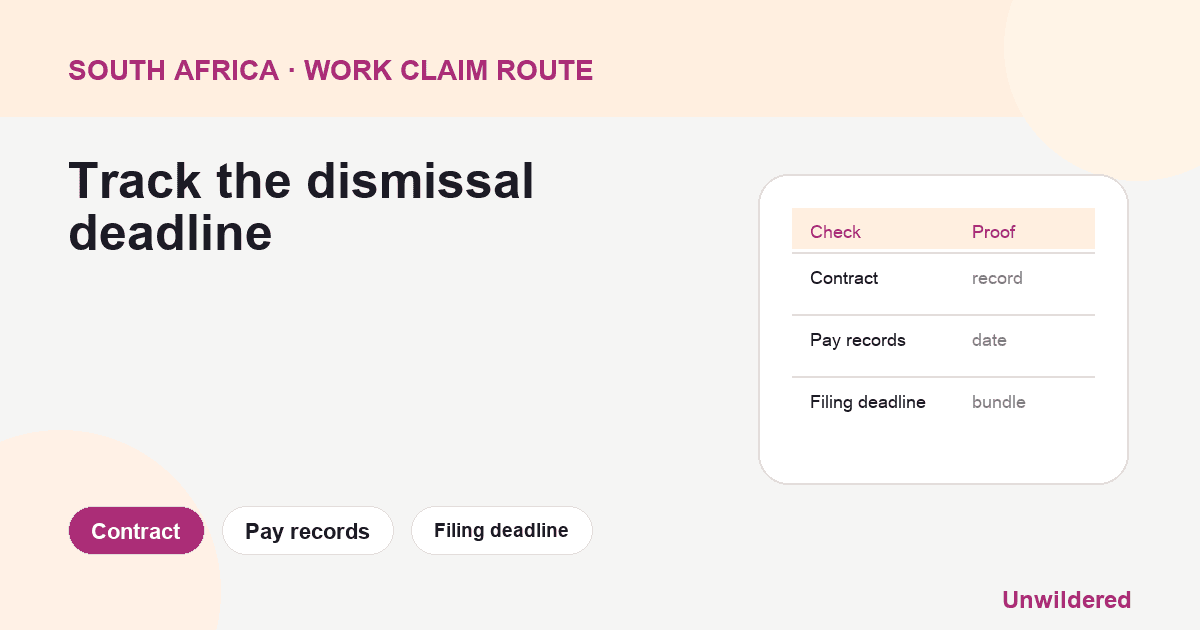
Check the dismissal date, deadline, contract, warnings, pay records and messages first.
For R10 million of salary, bonus or severance, a careful chronology can change the negotiation.
Preserve lawful evidence, but avoid taking confidential files you should not access.
Use Caira to build a timeline and draft a response checklist.
Dismissal during probation is often misunderstood by both sides. A probation clause does not give an employer automatic permission to dismiss for any reason, and it does not make every dismissal automatically unfair. The practical question is whether the employer used probation for its proper purpose, dealt with performance or suitability fairly, and followed a process that can be explained at the CCMA.
Probation disputes can move quickly because they may be handled through con-arb: conciliation first, and if unresolved, arbitration may follow in the same sitting or close sequence depending on the notice and applicable rules. That means a dismissed probationary employee should arrive ready not only to discuss settlement but also to prove the case if the matter continues.
Identify The Real Reason For Dismissal
Start by separating performance, misconduct, incapacity, operational requirements, and personality conflict. Probation usually focuses on whether the employee can perform the role to the required standard after a reasonable assessment period. If the dismissal was really for misconduct, such as dishonesty or insubordination, the evidence and fairness questions may be different. If the employer says poor fit, ask what measurable standard was not met.
For employees, the useful documents include the offer letter, probation clause, job description, targets, induction records, training notes, manager feedback, performance emails, warnings, meeting invitations, extension letters, dismissal letter, and examples of work delivered. For employers, the file should show expectations, feedback, support, warnings where appropriate, time to improve, and why continued employment was not reasonable.
What Fairness Often Turns On
A probation case often becomes a chronology. What did the employer expect on day one? When did the employee first learn there was a problem? Was training promised? Were targets realistic? Was the employee given a chance to respond? Was probation extended, and if so, why? Were other new employees treated similarly? Did the dismissal letter match the earlier complaints?
Employees should avoid arguing only that probation was not finished. A dismissal before the end of probation may still be challenged, but the better argument is tied to fairness: no standards, no evaluation, no guidance, inconsistent reasons, no chance to respond, or a dismissal based on something unrelated to probation. Employers should avoid assuming that a short service period removes the need for evidence. The CCMA can still ask what happened and why.
Prepare For Con-Arb
At conciliation, know what outcome is realistic: reinstatement, compensation, certificate to proceed, correction of record, reference wording, or settlement. If arbitration follows, you need witnesses and documents. A manager who gave the feedback is usually more useful than an HR representative who only processed the dismissal. An employee should be ready to explain performance, training gaps, responses to criticism, and any evidence of unfair motive.
Do not create documents after the fact and pretend they were contemporaneous. If a note was made later, label it as a later note. False evidence can damage the case and create bigger problems than the original dismissal.
Afrikaans Evidence Checklist
Use this checklist to organize a probation file before the CCMA date:
Proeftydperk-klousule: kontrak, duur, verlengingsvoorwaardes.
Werkstandaarde: posbeskrywing, teikens, opleidingsplan, induksie.
Terugvoer: e-posse, vergaderingnotas, waarskuwings, prestasiegesprekke.
Ondersteuning: opleiding, mentorskap, hulpbronne, redelike tyd om te verbeter.
Afdanking: kennisgewing, redes, datum, finale betaling, appeldokumente.
Getuies: bestuurder, spanleier, kollegas, HR, kliënte waar toepaslik.
Settlement Without Giving Up The Facts
Probation cases sometimes settle because the cost and stress of a hearing outweigh the value of the dispute. Settlement can include money, a neutral reference, withdrawal of allegations, corrected service certificate, or confidentiality terms. Be careful with broad settlement wording. An employee should understand whether tax, UIF, restraint, confidentiality, or future claims are affected. An employer should avoid settlement terms that look punitive or impossible to perform.
Use SAFLII and Labour Court or CCMA-related judgments as practical examples of how tribunals examine evidence, but do not assume another probation case decides yours. A sales executive with written targets, weekly coaching, and missed numbers is not the same as an administrator dismissed after two vague complaints.
Final Readiness Check
Before the hearing, prepare a one-page chronology, a numbered bundle, a witness list, and a short statement of the remedy sought. Employees should bring proof of job search and income after dismissal if compensation is relevant. Employers should bring proof of the process and the business reason for the decision.
Probation lowers neither the need for fairness nor the need for proof. The party with the clearer timeline, the better documents, and the more honest explanation will usually be easier for the commissioner to understand. That does not promise a result, but it does turn a probation dispute from a shouting match into a file that can be assessed.
Sources
CCMA
Department of Employment and Labour
Labour Relations Act materials
This article is general information, not legal, financial, medical or tax advice.
