How likely are you to win a DLA appeal?
The latest Tribunal Statistics Quarterly records that 59% of DLA appeals cleared at a hearing between April and June 2026 resulted in the original decision being changed in the claimant’s favour.
It is not a 59% promise for every challenge. The figure concerns appeals that reached a hearing; others end earlier because a decision changes, an appeal is withdrawn or it cannot proceed. The issue is the extra help needed compared with a non-disabled child of the same age, not diagnosis alone.
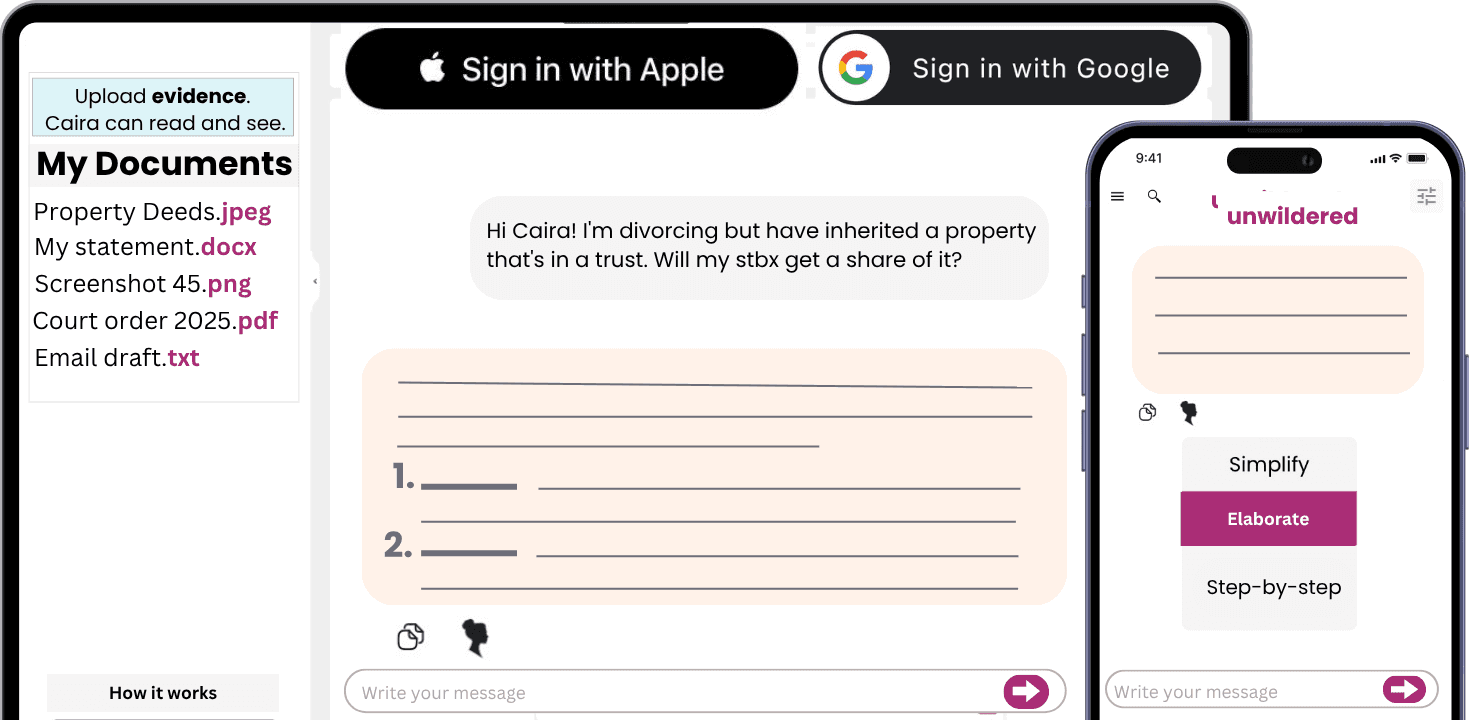
If the decision letter feels like a wall of unfamiliar phrases, Caira is an AI-powered tool based on legal materials for England and Wales. It can help you read the decision alongside the claim form and turn the reasons given into questions to check. It does not decide entitlement, predict or guarantee a tribunal result.
What the DLA tribunal is deciding
DLA remains relevant to children and to a smaller legacy adult group. For a child, needing an adult close by is not enough on its own. Show the extra care or supervision, why it is needed, how often and what could happen without it.
“I cannot leave him alone” is a start. “He needs an adult within sight in the bath because of seizures; this happens every time” lets the tribunal apply the test.
Common DLA issue | Helpful evidence | Why it helps | Common limitation |
|---|---|---|---|
Autism, ADHD or learning disability | EHCP, SENCO notes, safety log and prompting examples | Shows the extra supervision in ordinary settings | Diagnosis letter with no extra-help detail |
Epilepsy or diabetes | Seizure/hypo log, rescue plan, night-care record | Gives frequency and active care required | Medication list alone |
Cerebral palsy, pain or sensory impairment | OT record, equipment, walking/guidance diary | Connects mobility to practical help | “Poor mobility” without distance or frequency |
Sleep and night supervision | Dated active-care or safety record | Separates active help from parental worry | A parent being awake or worried |
Autism, ADHD, epilepsy, cerebral palsy, sensory impairment, diabetes and learning disabilities can all be relevant. None automatically produces an award. The useful evidence describes the functional consequence: night-time monitoring after seizures, prompting because of a danger the child does not recognise, help with communication, falls, pain, exhaustion, or the supervision required outside familiar routines.
The route, and the outcomes that can sound confusing
Start with the decision notice: it identifies the decision, date and time limit. Usually you then ask the DWP for mandatory reconsideration, followed by the First-tier Tribunal. It can allow or dismiss. A DWP revision can make it lapse; withdrawal ends it; strike-out is normally procedural. An allowed appeal can still be partial, so check the component, rate and start date.
The Upper Tribunal is not another fact hearing. It considers an arguable legal error, such as the wrong test, inadequate reasons or an unfair hearing, then may remake or return the case.
Evidence that carries the most weight
There is no fixed league table: weight turns on detail, timing, consistency and who knows the need. School material can be strong on supervision and transitions; an OT can explain equipment. A seven-day care log can show active night-time help better than “nights are hard”.
Caira can help you organise copies of the decision, care diary, school plan, medical report, photos or screenshots into a chronology and list of points to check. Remove unnecessary third-party personal information and check drafts before using them.
Mistakes that make a good case harder to see
Listing diagnoses without describing what changes in the child’s day.
Giving only the best day, or only the worst day, when the pattern sits between them.
Assuming a school knows everything that happens at home, or a clinician knows what happens in school.
Replying only that the assessor was wrong, without saying what happened instead and when.
Missing a deadline without explaining it. Late appeals can sometimes be accepted, but it is better to give the reason in writing promptly.
It can be exhausting to write about a child’s hardest moments. Calm, concrete records are enough.
Questions people are often embarrassed to ask
Does it matter if my child can behave well at school but falls apart at home?
It can. Explain the structure, masking, recovery and adult support that make settings different.
Can I appeal if I did not attend the original assessment?
Yes. Explain why and focus on the decision and evidence now available.
What if the DWP changes the award just before the hearing?
Check the component, rate and start date. A revision can make the appeal lapse.
Caira can also help you draft a structured reconsideration request or appeal statement in your own words, and make a hearing checklist. There is a free trial with no credit card required; paid access is £15 a month after the trial.
This article is general information, not legal, financial, medical or tax advice.