How likely are you to win a ESA appeal?
The latest Tribunal Statistics Quarterly records that 46% of ESA appeals cleared at a hearing between April and June 2026 resulted in the original decision being changed in the claimant’s favour.
This is a hearing-only rate, not an answer to every ESA decision. ESA cases include fit-for-work, group and procedural disputes. New Style and legacy ESA decisions can still reach tribunal; linked UC work-capability letters can be confusing.
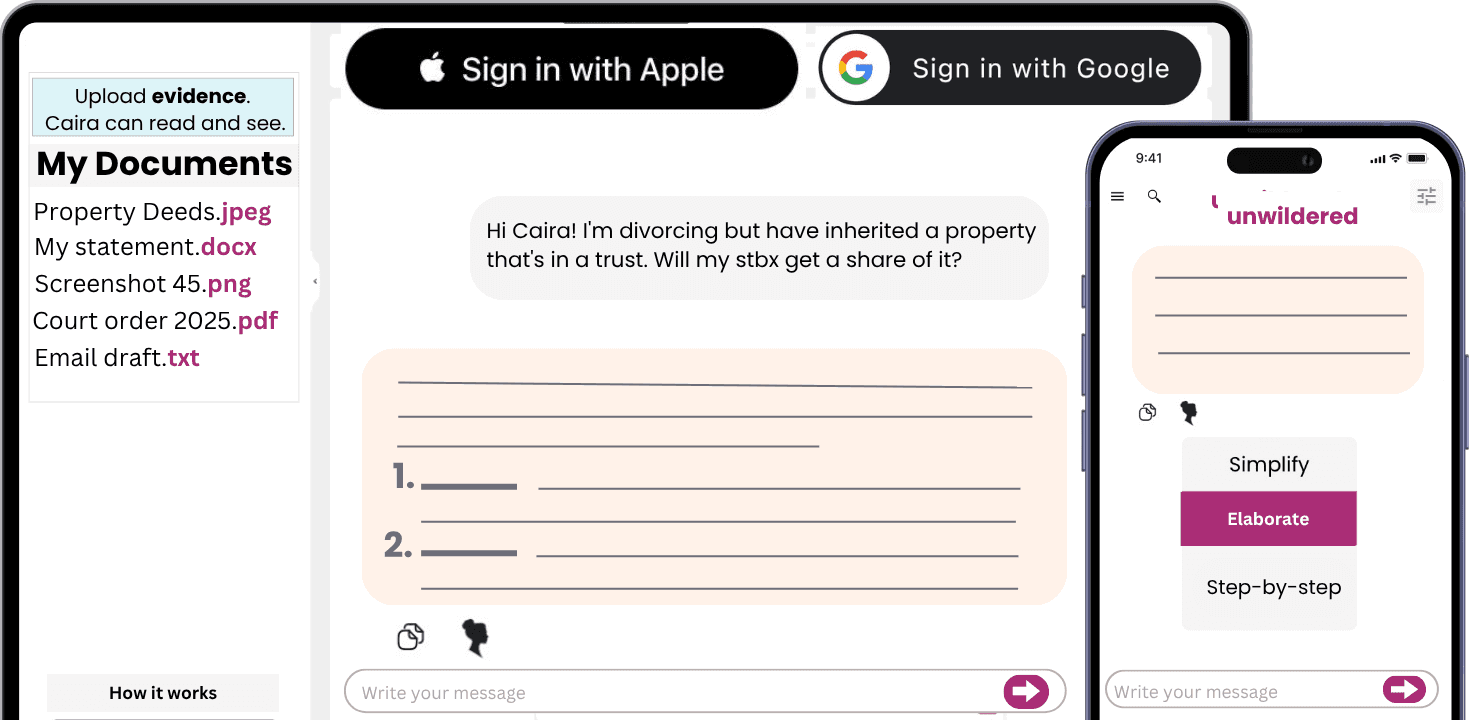
Caira is an AI-powered tool based on legal materials for England and Wales. It can help you compare an ESA decision, work-capability assessment report and questionnaire, then prepare questions or a checklist in plain English. It does not decide entitlement, promise a result or substitute the tribunal’s decision.
What ESA appeals are usually about
The core question is functional capability. The Employment and Support Allowance Regulations 2008 put limited-capability-for-work activities in Schedule 2 and the higher group in Schedule 3; substantial-risk rules also exist. Explain what happens, how often, what help is needed and the after-effects.
Depression, PTSD, autism, learning disability, arthritis, pain, ME/CFS, migraine, epilepsy and MS can matter. Link each to an activity: panic at an unfamiliar appointment, unsafe travel after seizures, or fatigue preventing repetition.
Type of ESA dispute | Helpful evidence | Why it helps | Common limitation |
|---|---|---|---|
Found fit for work | Questionnaire, report corrections, functional records and diary | Links condition to the ESA activity | Diagnosis or fit note alone |
Wrong group | Dated activity examples or specific risk evidence | Explains the particular descriptor or risk | “Work would harm me” without why |
Did not return form/attend | Notices, access problem, hospital evidence and timeline | Tests whether participation was realistically possible | A later account with no detail |
Sanction/participation | Requirement, notice and contemporaneous record | Keeps the appeal on the decision actually made | “The rule was unfair” alone |
The tribunal route and the outcome words
Start with the decision notice: it identifies the decision, date and time limit. Most challenges start with mandatory reconsideration, then go to the First-tier Tribunal. Some ESA fit-for-work routes have technical exceptions, so follow your notice. The tribunal can allow or dismiss; a DWP revision can make the appeal lapse; withdrawal ends it; strike-out is commonly procedural. An allowed appeal can still change only the group or dates.
The Upper Tribunal does not re-run medical evidence simply because someone disagrees. It considers an arguable legal error: a wrong test, inadequate reasons or unfair hearing. In SB v Secretary of State for Work and Pensions [2024] UKUT 372 (AAC), the tribunal had not properly addressed whether the assessment-participation notice was clear enough. Procedure can matter, but it is not a shortcut around the facts.
Make the activities visible
A tribunal panel sees the DWP bundle before the hearing. Do not assume it will notice the sentence you mean in a 40-page report. Use a short index: page 12 explains falls after walking; page 18 shows the medication change; pages 23–25 explain why someone must prompt you to engage with correspondence. If your ability varies, give the ordinary pattern and the consequences of pushing through a better day.
Caira can help you organise authorised copies of the ESA50, decision, assessment report, medical letters, diary, screenshots or photos into a timeline and activity-by-activity checklist. It can make a long record easier to review, but make sure the examples and wording are genuinely yours and are checked before submission.
Common mistakes
Telling the tribunal your diagnosis but not what happens during the listed activity.
Calling every difficult day “typical” instead of explaining the genuine weekly pattern.
Forgetting safety, prompting, supervision, time taken or recovery.
Assuming a missed appointment has ended the issue without recording why it was missed.
Treating the Upper Tribunal as another hearing about the same facts.
Clear, accurate examples are enough; you do not need a dramatic statement.
Questions people are often embarrassed to ask
Can I be found capable of work even if I have a lot of medical evidence?
The tribunal considers medical evidence, but it must still apply the ESA activities and risk rules. Explain what the evidence means in day-to-day functional terms.
What if I managed to attend the assessment but could not really take part?
Say exactly what happened: communication difficulty, panic, pain, confusion, fatigue or missing adjustments. Attendance and meaningful participation are not necessarily the same thing.
If I have moved to Universal Credit, does my ESA appeal still matter?
It can. The decision under appeal, dates and any linked entitlement should be checked carefully; do not assume the move resolves the earlier decision.
Caira can help you draft a concise reconsideration request or appeal statement and create a hearing checklist in your own words. There is a free trial with no credit card required; paid access is £15 a month after the trial.
This article is general information, not legal, financial, medical or tax advice.