How likely are you to win a Universal Credit appeal?
The latest Tribunal Statistics Quarterly shows that 45% of Universal Credit appeals cleared at a hearing between April and June 2026 resulted in the original decision being changed in the claimant’s favour.
This is a broad figure: UC appeals include work capability, sanctions, housing, earnings, capital and overpayments. It does not predict one dispute or count cases ending before hearing. Name the exact decision first.
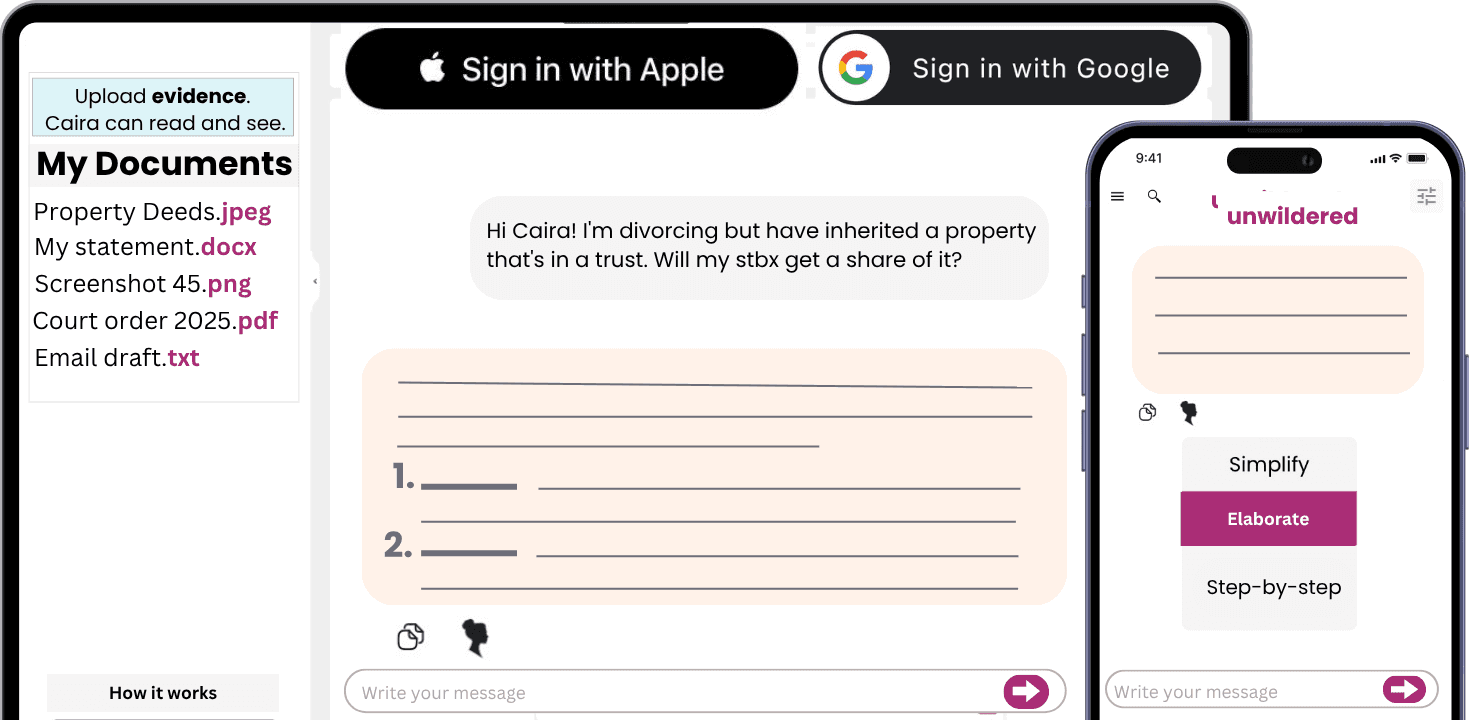
If a journal message, calculation or work-capability report seems impossible to untangle, Caira is an AI-powered tool based on legal materials for England and Wales. It can help you read the decision with your evidence and prepare clear questions to check. It does not decide entitlement, predict the outcome or make the tribunal’s decision.
Start by naming the type of decision
The same appeal form is used for very different arguments. The evidence should answer the actual issue, rather than becoming a large pile of documents with no obvious connection to the decision.
Decision under appeal | Helpful evidence | Why it helps | Common limitation |
|---|---|---|---|
Work capability / LCWRA | WCA50, report corrections, diary and functional clinical evidence | Links health to the relevant activity | Diagnosis letter alone |
Sanction | Dated journal screenshots, appointment evidence and a clear barrier | Shows the requirement and what prevented it | Later explanation ignoring the requirement |
Housing costs, earnings or capital | Tenancy, rent account, payslips, bank entries and journal | Connects a figure to its date and purpose | Unexplained balance or undated screenshot |
Overpayment | Calculation, reports made, letters and payment history | Tests what DWP knew and how it calculated | “The figure looks wrong” |
For health cases, diagnosis is not the finish line. Anxiety may affect engagement; MS, long Covid, arthritis or pain may affect repetition and recovery; autism, ADHD or learning disability may make prompting central. The legal test still has to be met.
What the First-tier Tribunal can do
Start with your notice: it identifies the decision and time limit. You normally request mandatory reconsideration, then appeal to the First-tier Tribunal. It can allow or dismiss. A DWP revision before hearing can make it lapse; withdrawal ends it; strike-out is procedural, not a ruling that the decision was right. An allowed appeal may change only the amount, period or disputed issue.
The tribunal looks at circumstances on the decision date. Later evidence can shed light on then, but diagnosis or deterioration later is not automatic proof of earlier error.
For work capability, the Universal Credit Regulations 2013 put limited-capability-for-work activities in Schedule 6 and the higher group in Schedule 7; substantial-risk rules are separate. In Michael Monaghan v Secretary of State for Work and Pensions [2026] UKUT 325 (AAC), the tribunal had not adequately examined risk and possible work activity. Explain the actual activity and risk, not just the word “risk”.
Build a record the tribunal can follow
Put the decision notice first, then a dated timeline: report, DWP request, evidence, decision and disputed point. Label screenshots with date and meaning. A clinician letter is stronger when it explains function; a diary shows frequency.
Caira can help you organise authorised journal screenshots, letters, bank records, medical reports, photos and a diary into a dated outline or a topic-by-topic checklist. Review it carefully before relying on it, and avoid uploading material that you are not authorised to share.
Common mistakes
Appealing the whole history instead of identifying the exact decision and reason.
Sending bank statements or clinical notes without pointing to the relevant entries.
Treating a later change as proof of an earlier error without explaining the connection.
Missing a deadline and saying nothing. A late appeal may be accepted, but give the reason promptly and in writing.
Confusing a journal instruction with the legal question the tribunal has to decide.
The paperwork can feel relentless. A short, ordered account makes the issue easier to see.
Questions people are often embarrassed to ask
Can I appeal a sanction if I completed the task later?
Possibly. The tribunal will look at the requirement, timing, notification and your explanation for what happened at the time. Completing it later does not answer every question either way.
Will a tribunal look at my entire bank account?
It can consider material relevant to the disputed calculation or capital decision. Identify the transactions you say matter rather than assuming every entry proves the point.
The DWP has changed the decision before my hearing. Is the appeal over?
It may lapse if the revised decision gives what was sought, but read the revision closely. The dates, amount and issue decided still matter.
Caira can help you draft a focused reconsideration request or appeal statement in your own words and make a hearing checklist. There is a free trial with no credit card required; paid access is £15 a month after the trial.
This article is general information, not legal, financial, medical or tax advice.