How likely are you to win a PIP appeal?
The latest Tribunal Statistics Quarterly shows that 67% of PIP appeals cleared at a hearing between April and June 2026 resulted in the original decision being changed in the claimant’s favour.
That is for cases that reached a hearing, not every assessment or appeal. A PIP report is not the final word, but the statistic cannot predict your result.
PIP tests daily-living and mobility activities, not diagnosis alone. Chronic pain, MS, epilepsy, visual impairment, autism, ADHD, PTSD, anxiety, depression and cognitive impairment may matter only through their functional effect.
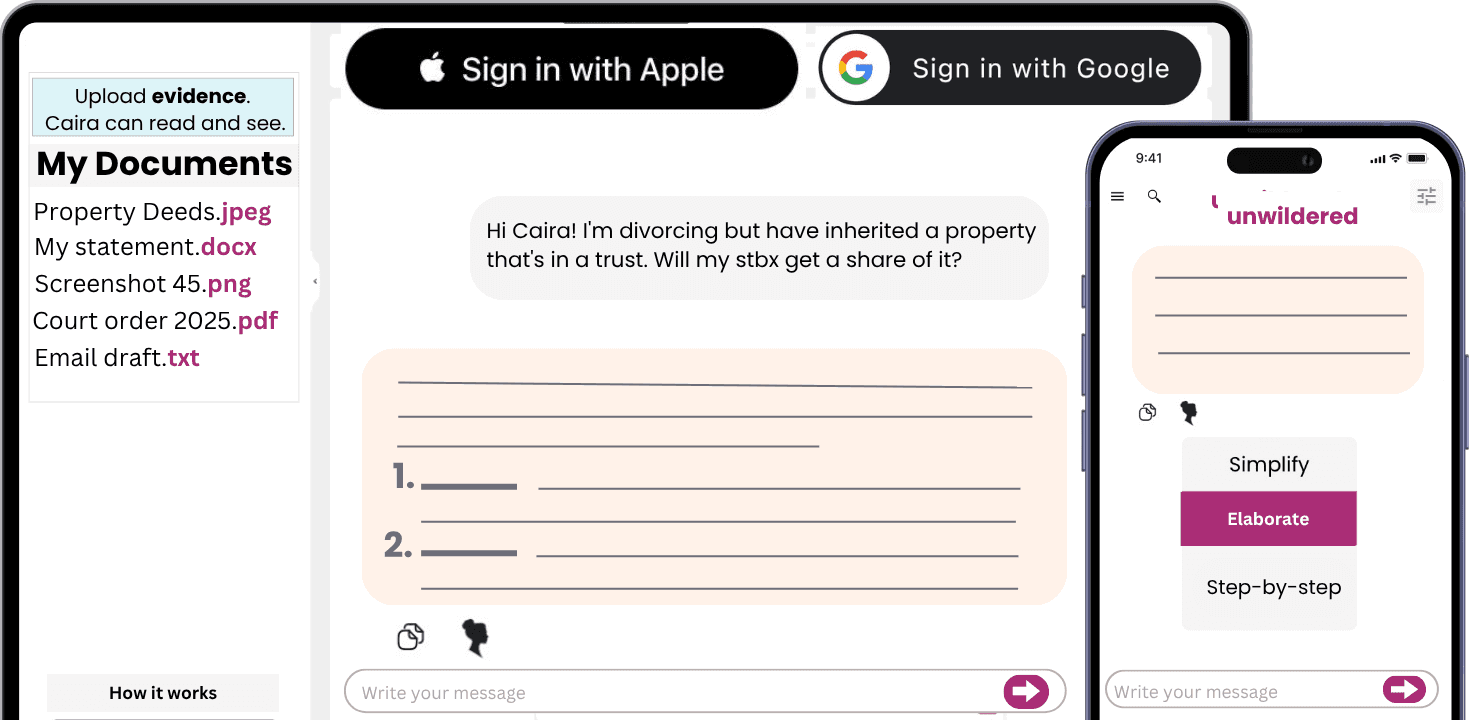
If the decision feels internally contradictory, Caira is an AI-powered tool based on legal materials for England and Wales. It can help you compare the decision letter, assessment report and your form, then prepare a list of questions or points to check. It does not decide entitlement, tell you that you will win or replace the tribunal’s judgment.
The rule that is often missed: reliability
An activity must be done safely, to an acceptable standard, repeatedly and in a reasonable time. The tribunal also considers whether a difficulty affects you on more than half the days.
“I walked to the shop” may omit a stick, rest, help with route, pain afterwards or the fact the trip ended the day. That detail is the legal test.
Common issue or condition | Helpful evidence | Why it helps | Common limitation |
|---|---|---|---|
Pain, arthritis, MS or fatigue | OT notes, adaptations, help and recovery record | Links symptoms to an activity and repeatability | Scan result with no activity link |
Epilepsy or cognitive impairment | Care plan, prompting diary, seizure record | Shows the need for supervision or prompting | Prescription list alone |
Autism, ADHD, anxiety, PTSD or depression | Examples of prompting, distress, support or consequences | Explains the descriptor in real life | Diagnosis label alone |
Visual impairment or journey anxiety | Travel diary, clinic evidence, route help | Shows the route, support and risk | “Travel is hard” with no route or risk |
What happens after the decision
Start with the decision notice: it identifies the decision, date and time limit. You normally request mandatory reconsideration first, then go to the First-tier Tribunal. It can allow or dismiss. A DWP revision before hearing can make it lapse; withdrawal ends it; strike-out is procedural, not a ruling that the assessor was right. An allowed appeal can still alter only some points, dates or components.
The First-tier Tribunal decides facts. The Upper Tribunal only considers an arguable legal error, such as a wrong test, inadequate reasons or unfair procedure, and may return the case for a fresh hearing.
In TM v Secretary of State for Work and Pensions [2026] UKUT 266 (AAC), the Upper Tribunal found inadequate reasons and too much reliance on work and driving. It shows why the context of an activity matters.
Put the evidence beside the descriptor
Join each disputed activity to a real example. Instead of 80 unmapped pages, add a note saying what each relevant page shows.
Caira can help you organise authorised screenshots, photos, medical reports, a symptom diary and the decision into a chronology or descriptor-by-descriptor checklist. It may help make a dense bundle easier to navigate, but you should check the wording and keep the examples accurate in your own voice.
At a hearing, qualify “sometimes” with how often, what happens on other days and what help makes the task possible.
Common mistakes
Arguing that a diagnosis should automatically score points.
Focusing on whether the assessor was rude rather than the findings that are wrong.
Giving a symptom list without explaining its effect on a PIP activity.
Forgetting recovery time, aids, prompting, supervision or the risk involved.
Assuming an award on one component means the other component has been considered correctly.
Specific, honest examples are usually the clearest way through the legal shorthand.
Questions people are often embarrassed to ask
Will working rule me out of PIP?
No. Work can be relevant evidence, but it is not an automatic answer. Explain adjustments, support, reduced hours, what happens afterwards and whether the tasks are actually comparable.
The report says I looked fine. Is that all the tribunal will see?
No. The report is part of the evidence. You can explain why an appointment snapshot did not show pain, fatigue, distress, communication difficulty or the support used before and after it.
If the DWP makes a better offer before the hearing, must I accept it?
Read what has changed: component, rate and start date. A revised award can end the current appeal, so make sure it addresses the point you raised.
Caira can help you draft a focused mandatory-reconsideration request or appeal statement and prepare a plain hearing checklist. There is a free trial with no credit card required; paid access is £15 a month after the trial.
This article is general information, not legal, financial, medical or tax advice.