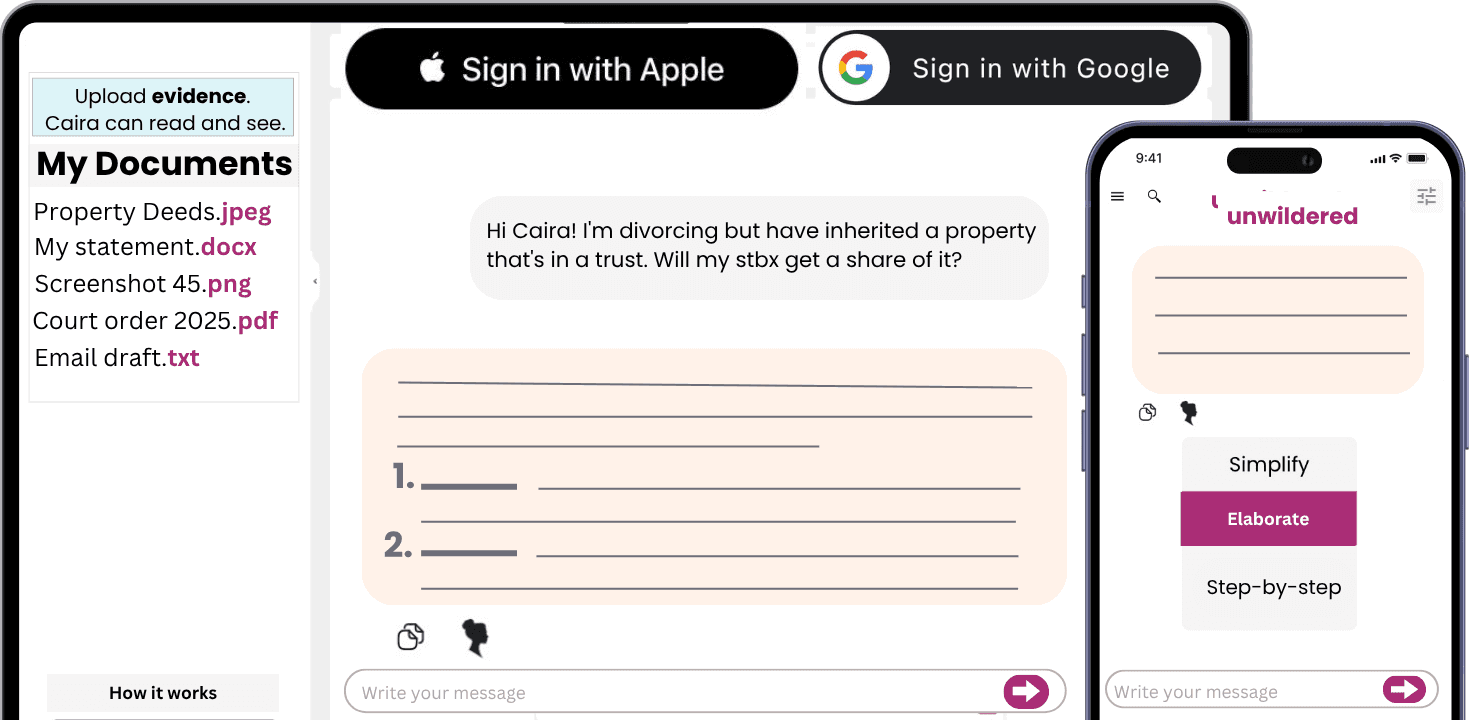
A University of Southampton study looks at how people use Caira, Grapple Law and other specialist tools to prepare for court and tribunal cases.
Key takeaways
People turned to AI early. In the Southampton pilot study, 25 of 28 self-represented participants used AI to work out whether they might have a claim.
Sixteen used more than one tool. Two reported using Caira by Unwildered. One used it alongside ChatGPT for help with legal documents and terminology.
Much happened before the hearing. People used AI to draft documents, sort evidence and think through what the other side might say. Court staff described the extra work when submissions were long or cited made-up cases.
A litigant in person is someone who represents themselves in court or at a tribunal. The study focused mainly on tribunals in England and Wales. More than half the participants described employment cases, and others brought experiences of housing, family and debt disputes. This small group volunteered to take part. Their accounts show where AI fitted into their cases. Measuring how common those habits are or how they affect case outcomes would take a larger study.
Some people used both types of AI. A general-purpose chatbot could explain something in plain English, while a specialist tool helped them work through the details of a claim.
Five ways people used AI to prepare for court
1. Finding out if they might have a claim
Could they bring a legal claim? People asked AI which rules or past decisions might apply to their situation. One participant used Claude to get their bearings in plain English, then turned to Remedy Legal to research the issues specific to their claim.
Cost came up again and again. One interviewee said they would have dropped their case without that help. “I went to AI because it was my only option.”
2. Making sense of court and tribunal procedure
The process has its own vocabulary. Participants asked chatbots to explain the steps in a case, the forms they would need and unfamiliar terms in tribunal documents. One person used Gemini to understand the family court process. Another used ChatGPT and Gemini to work out how a debt claim proceeds in the County Court.
3. Drafting and editing letters, forms and statements
The first draft was often theirs. Participants used AI to edit letters to employers, claim forms and schedules of loss, which set out the money they were claiming. They also reported using it for witness statements. One person drafted with ChatGPT, made their own edits and then used Grapple Law to help shape the text into a legal claim.
4. Organising evidence and building a timeline
One employment claimant used AI to match employment and payment records to the points they wanted to make. Another treated their chat history like a diary, going back through earlier conversations to see what they had said around particular dates. Some kept a dedicated chat for the case. That gave them one place to return to as new questions came up. How to handle workplace messages as evidence
5. Testing what the other side might say
What might the other side say? A few participants asked chatbots to take the opposing party’s position and look for holes in their argument. One set up a separate workspace in Claude for that purpose. Another used Valla’s human coaching to prepare for a preliminary hearing and asked Valla to check what Grapple Law had produced.
Which specialist legal AI tools did the report feature?
Caira by Unwildered was one of six legal apps in the study. The researchers interviewed four of the providers’ CEOs, including Unwildered’s. One participant who used Caira told the researchers, “I use that alongside ChatGPT.” They used ChatGPT to talk through their questions in plain English and Caira for help with legal documents, wording and terminology.

Legal app | Uses described in the report |
|---|---|
Caira by Unwildered | Legal information, help with documents and evidence, and drafting support |
Grapple Law | Employment disputes, tribunal preparation and settlement support |
Remedy Legal | Housing and tenancy problems, including help gathering evidence |
Valla | Employment tribunal preparation, case organisation and human legal coaching |
Garfield AI | Small business debt and unpaid invoice claims |
Contend Legal | Everyday disputes, including housing, employment and consumer issues |
What court staff saw
The paperwork could pile up. Judges and court officials described long submissions that took extra time to read and buried the points that mattered. One official likened it to reading “War and Peace, Gemini edition”. Interviewees also reported seeing invented case citations and arguments based on the wrong law.
Can you use AI to prepare court documents?
In Hancox v Sutherland, the Employment Appeal Tribunal said people representing themselves can use AI responsibly for tasks such as drafting written arguments. You’re responsible for what you submit. Check the facts against your records, read any judgment you intend to cite and follow the directions for your own case. Even genuine cases can be misread. Read the Employment Appeal Tribunal judgment
Who was behind the research?
Uta Kohl, Helen Carr, Laura M Binger, Nora Belkhiter and Maya Daniel wrote A Report on the Use of AI by Litigants-in-Person at Southampton Law School. Professors Kohl and Carr led the project. The Higher Education Innovation Fund (HEIF) funded the research.
What Unwildered offers
Caira answers legal questions in seconds. You can upload relevant documents for answers that take them into account.
AI Contract Review flags clauses that need a closer look and suggests edits to your contract.
AI Auction Pack Review analyses property auction legal packs and flags potential risks before you bid.
Source
Read the full 100-page report on the University of Southampton website (external link)