
Quick take: Mixed-use properties—retail units with residential flats above—are a classic investment, offering both steady commercial yield and residential upside. They often qualify for favorable Stamp Duty Land Tax (SDLT) rates, sidestepping the 3% residential surcharge. But these deals are regularly seen at auction because mainstream lenders struggle with them, and the legal risks are substantial.
Make decisions faster. Free trial, review auction/conveyancing packs in 10min. Thereafter just £30 per review. Start your review now
The Appeal of the “Shop and Upper”
Picture buying a shop with two flats above. The commercial lease promises income, and the flats could be rented or sold for capital gain. But beneath the surface, mixed-use properties are loaded with legal and conveyancing traps that can turn your investment into a liability.
1. The “Right of First Refusal” Trap
The Landlord and Tenant Act 1987 makes it a criminal offense to sell a building with two or more flats to a third party without first offering it to the qualifying tenants. If the seller hasn’t served valid Section 5 Notices, the sale is voidable. The tenants can force you to sell the freehold to them at the price you paid—even after you’ve spent thousands on renovations. The legal pack must show evidence that Section 5 Notices were served and declined, or you risk losing your investment.
Nuance: Section 5 Notices must be served correctly and within strict timelines. If the legal pack is missing correspondence or the notices are invalid, your liability is real and immediate.
2. Financing Headaches
High Street lenders rarely finance mixed-use properties. You’ll need a commercial or semi-commercial mortgage, which means a larger deposit—typically 30–40%. If you bid expecting a standard Buy-to-Let mortgage at 75% LTV, you’ll likely fail to complete and lose your deposit. Always review the legal pack with a broker and secure a Decision in Principle from a specialist lender before bidding.
Caveat: Commercial mortgages come with higher rates and stricter terms. If the shop is vacant, lenders may reduce the loan amount or refuse altogether.
3. SDLT: The Tax Advantage (and Risk)
Mixed-use property is taxed at non-residential rates, saving thousands compared to residential SDLT. But HMRC is cracking down on “mixed-use” claims. The commercial element must be genuine—an empty shop or token home office won’t qualify. If HMRC decides the property is wholly residential, you could face a hefty tax bill and penalties.
Completeness: Always check the legal pack for evidence of current commercial use, lease terms, and business rates liability. If the shop is derelict, your SDLT claim may be challenged.
How Unwildered Secures Your Investment
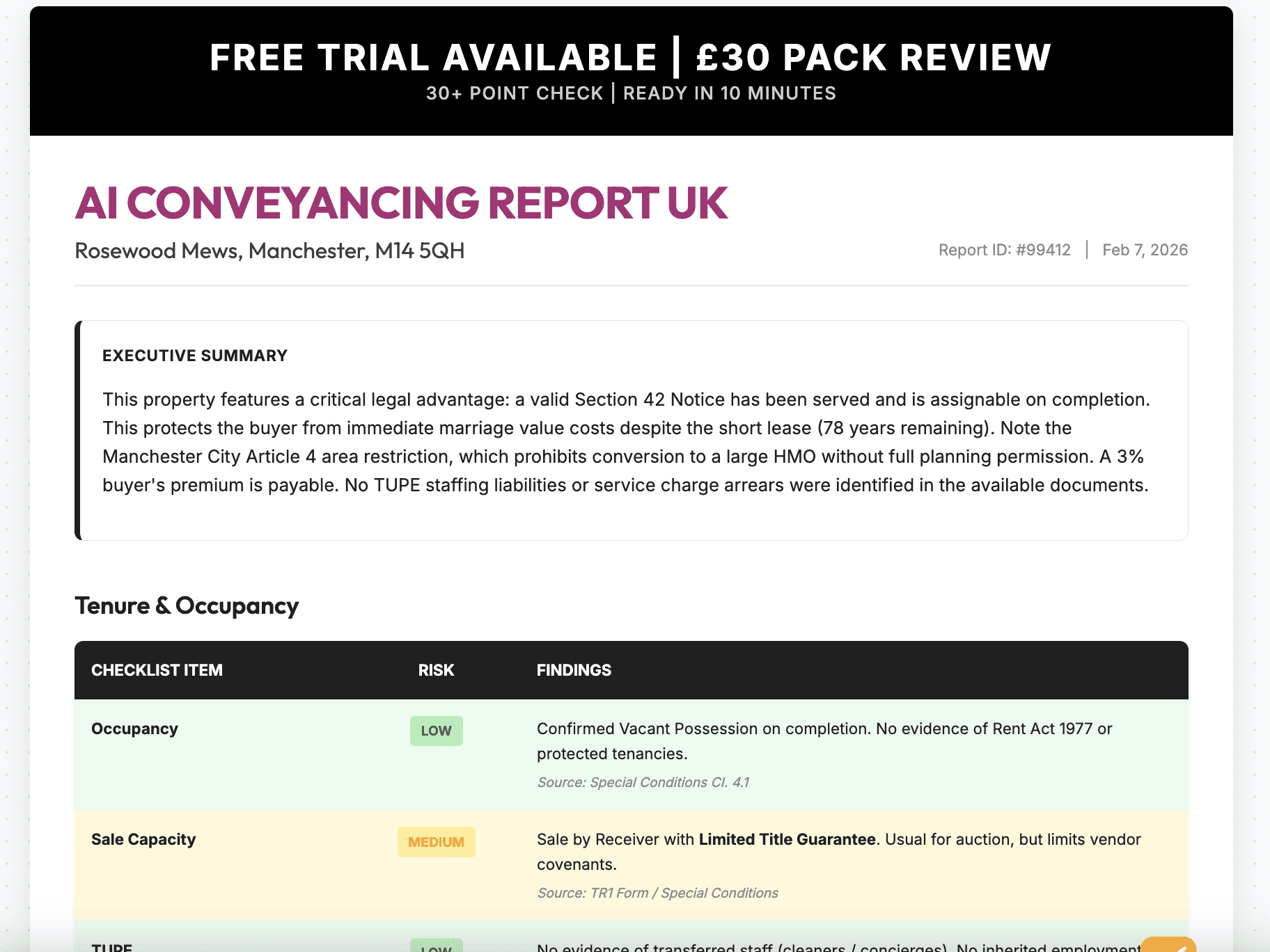
Unwildered’s AI engine navigates the overlap between residential and commercial risks using a 30+ point analysis:
Section 5 Check: We scan the legal pack for correspondence relating to the Landlord and Tenant Act 1987 and Right of First Refusal.
Commercial Viability: We verify commercial lease terms (FRI vs IRI) and check business rates liability for vacant parts.
SDLT Assessment: We highlight the current use class from the local search to support your mixed-use tax status claim.
Unwildered provides a preliminary data check, helping you avoid invalid sales and costly mistakes before you engage a solicitor.
FAQ
Can I separate the shop and flats later?
Yes, “title splitting” is a common strategy. You can create new 999-year leases for the flats and sell them individually, but check the freehold title for restrictions on sub-division.
What if the shop is empty?
You’re liable for empty business rates after three months. Unlike Council Tax, exemptions for long-term empty commercial property are rare. Factor this holding cost into your bid.
What about ChatGPT?
Standard chatbots don’t understand the interplay between the Landlord and Tenant Act 1987 and auction deadlines. They treat property law as generic text. Unwildered is built on specialist conveyancing logic, specifically flagging the criminal liability of Section 5 notices—something general AI often misses.
How do I prove mixed-use status for SDLT?
Check the legal pack for evidence of commercial leases, business rates, and current use class. Unwildered’s report will highlight these, supporting your SDLT claim and helping you avoid HMRC challenges.
Disclaimer: This article is general information, not financial, tax, or legal advice.
