
Quick take: Restrictive covenants are the invisible strings attached to property ownership. They’re binding promises written into the Title Deeds, running with the land forever—no matter who owns it. Auction properties, especially land, churches, and large plots, are notorious for these hidden legal rules that can limit your plans and expose you to liability.
Make decisions faster. Free trial, review auction/conveyancing packs in 10min. Thereafter just £30 per review. Start your review now
Why Restrictive Covenants Matter in Auction Deals
Imagine you buy a spacious house at auction, planning to convert it into a care home or HMO. The Title Register contains a covenant from 1925: “Not to use the premises for any purpose other than as a private dwellinghouse.” Suddenly, your business plan is illegal. The beneficiaries—often neighbors—can take you to court to enforce the restriction. Even running an Airbnb can breach this covenant, leaving you exposed to legal action and financial risk.
1. “No Trade or Business”
These covenants are common in older properties and can completely derail your investment strategy. If your plan involves any commercial activity, always check the legal pack for business bans. Conveyancing searches alone won’t reveal the full impact—liability is real and enforceable.
2. The Anti-Development Shield
Covenants like “No structure to be erected” or “Only one dwellinghouse” are designed to prevent garden grabbing and overdevelopment. Even if you have full planning permission, restrictive covenants can legally bar you from building. Planning approval from the council does not override these private legal restrictions. Neighbors can enforce them, and you could be forced to halt construction or even demolish new works.
Nuance: Some covenants are decades old, written in archaic legal English. Their meaning and enforceability can be tricky to interpret, but they remain binding unless formally discharged by the Land Tribunal—a process that’s expensive and rarely successful.
3. The Indemnity Trap
Restrictive Covenant Indemnity Insurance can sometimes protect you, but there’s a catch: you must not alert the beneficiaries. If you approach a neighbor to ask permission, you make the property uninsurable. The legal pack should be checked for evidence of past disputes or insurance policies already in place.
Completeness: Insurance is only available for covenants that have been breached for years without complaint. If you’ve just bought the property and want to build, insurance may not be an option.
How Unwildered Decodes the Deeds
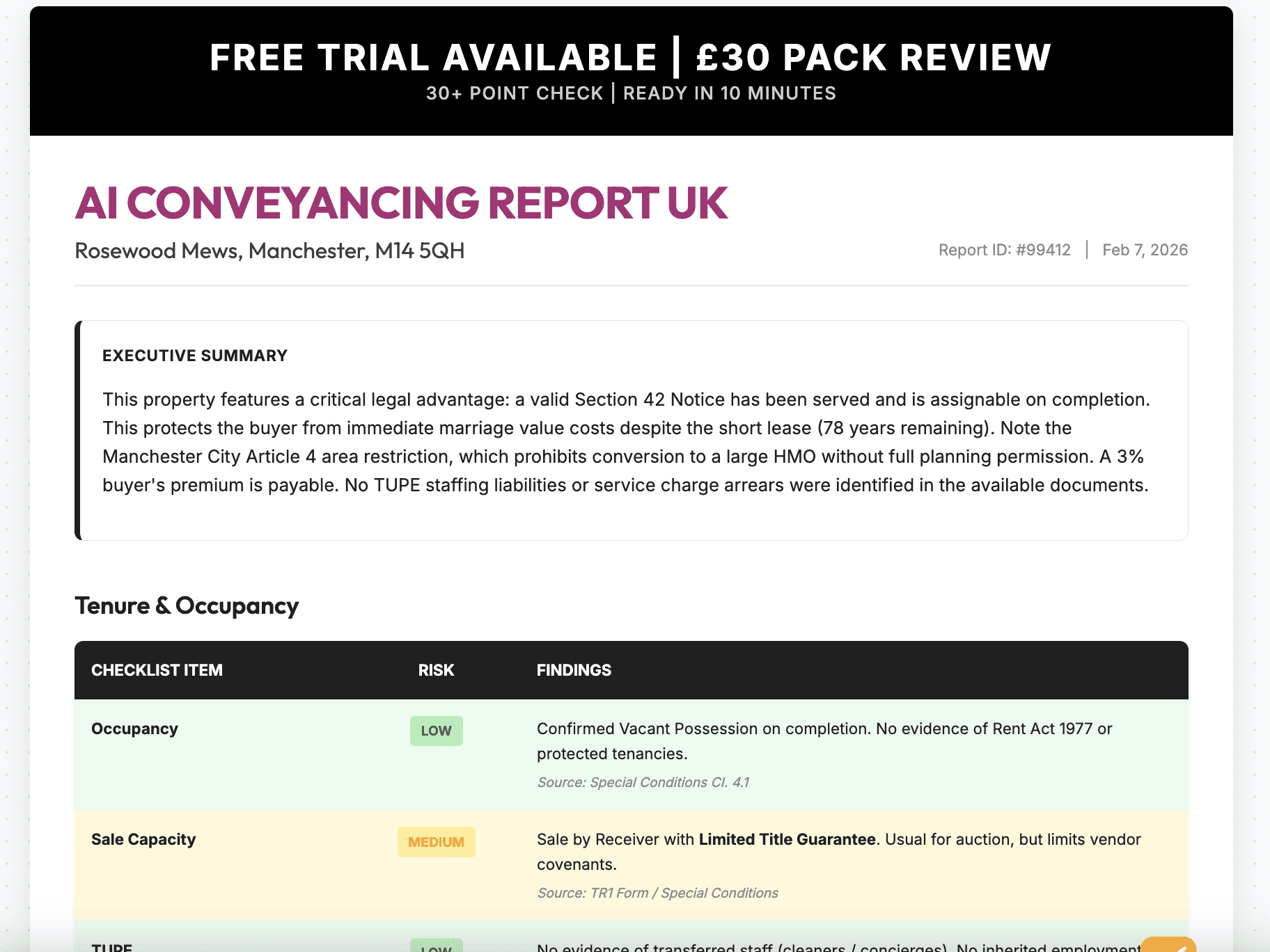
Unwildered’s AI reads the Charges Register like a lawyer, checking 30+ data points to support your conveyancing due diligence:
Covenant Extraction: We pull out every “Restriction,” “Stipulation,” and “Covenant” from OCR-scanned deeds, so nothing is missed.
Plain English Translation: We flag key risks—“Business Ban,” “Building Ban,” “Nuisance Clauses”—and explain their impact in simple terms.
Insurance Check: We verify if the seller has already purchased an indemnity policy, and highlight any evidence of past disputes.
Unwildered helps you translate complex deeds and understand the risk profile before you engage a law firm, saving you time and money.
FAQ
Do covenants expire?
No. A covenant from 1850 is just as valid as one from 2020. Unless the Land Tribunal discharges it (which is rare and costly), it remains enforceable.
Who enforces them?
The “Beneficiary”—usually the owner of the land that originally sold your plot. In a housing estate, it might be all your neighbors.
What about ChatGPT?
ChatGPT can read text, but it struggles with the archaic legal English of 19th-century Transfer Deeds. It often misses the significance of phrases like “benefit of the remainder of the estate.” Unwildered is trained on historic property deeds to catch these specific, timeless restrictions and contextualize them for you.
How do I know if insurance is possible?
Check the legal pack for an existing indemnity policy and review any evidence of past breaches or disputes. Unwildered’s report will flag these for you, so you can make an informed decision.
Disclaimer: This article is general information, not financial, tax, or legal advice.
