Section 59 and loud cars: can police seize your car for revving?
You are driving a car that sounds different from most of the traffic around it. Perhaps it is a naturally aspirated V12, a high-revving V10, or a Mercedes-AMG V8. You slow down, the gearbox changes down, and the exhaust becomes more noticeable. An officer says you were revving or driving antisocially.
If you believe that is wrong, “the car comes like this” may be part of your explanation. But you need to separate three questions: what the vehicle is equipped with, how you were using it, and which legal power the officer is relying on.
A distinctive exhaust note does not answer those questions. Nor does the fact that you were below the speed limit.
First, the warning rule changed in 2026
Older guides describe a section 59 warning followed by possible seizure for further conduct within 12 months. Do not assume you are entitled to that warning today.
The current section 59 of the Police Reform Act 2002 records that subsections (4) and (5), containing the warning requirement and exceptions, were removed on 29 June 2026. Its annotations identify section 8 of the Crime and Policing Act 2026 and regulation 2(1)(c) of the commencement instrument, SI 2026/689. For an earlier incident, check the version in force on the incident date.
Does noise alone satisfy section 59?
The statutory test has two parts. A constable in uniform needs reasonable grounds to believe the vehicle is being, or has been, used in a way that:
Contravenes section 3 or section 34 of the Road Traffic Act 1988; and
Causes, or is likely to cause, alarm, distress or annoyance to members of the public.
Section 3 concerns careless or inconsiderate driving; section 34 concerns specified unlawful off-road driving. A noise complaint does not automatically establish the first part. Section 59 permits seizure on reasonable grounds; it does not require a prior criminal conviction. Section 59(1)–(3).
A focused question is: “What driving conduct is alleged, and which section 3 or section 34 contravention is being relied on?”
Four different issues that are easily confused
Issue | What it concerns | What to check |
|---|---|---|
Section 59 seizure | The two-part vehicle-use test above | The alleged driving, location, observations and grounds |
Careless or inconsiderate driving | The standard of driving and, for inconsiderate driving, inconvenience to others | What was actually observed, rather than assumptions from the sound |
Excessive avoidable noise | How a vehicle is used on a road, including whether reasonable care could have avoided excessive noise | Gear selection, revs, duration, surroundings and the reason for the manoeuvre |
Exhaust condition or alteration | The silencer, its maintenance and alterations increasing exhaust noise | Manufacturer specification, fitted parts and inspection evidence |
The latter two rules appear in regulation 97 and regulation 54 of the Road Vehicles (Construction and Use) Regulations 1986. A separate noise or exhaust offence is not automatically proof of every section 59 requirement.
What if your V12, V10 or AMG V8 is factory-standard?
Do not assume wrongdoing simply because a car has an unusual or prominent sound. Equally, do not assume that a badge proves the exhaust is original, correctly maintained or being used considerately.
“Naturally aspirated” describes an engine without a turbocharger or supercharger; it is not a legal exemption. Mercedes-AMG V8s include naturally aspirated, turbocharged and supercharged engines, depending on model and year. For example, the W211 E 55 AMG used a supercharged V8. The relevant distinction is between the car’s original specification and any subsequent changes, not simply whether it has forced induction.
Useful evidence might include the VIN-linked build specification, exhaust part numbers, service records and an independent inspection identifying modifications, faults or valve operation. An MOT pass is relevant background, but it does not resolve how you drove on a later occasion.
The MOT inspection manual compares exhaust noise with what would be expected from a similar vehicle with a standard silencer in average condition. That is a more meaningful comparison than expecting a performance car to sound like an unrelated small hatchback.
What about normal downshifts, burbles and crackles?
Some performance cars can produce burbles, pops, bangs, crackles or a brief change in exhaust note when you lift off the accelerator or change down while slowing. That can be part of the factory configuration, including on some Mercedes-AMG, Ferrari and Aston Martin models. It is not a feature of every model, and the sound may depend on the engine, exhaust option, driving mode and software calibration.
Here, “normal for this car” is more precise than “naturally aspirated”. A turbocharged or supercharged car can also have a distinctive exhaust note. A brief sound as you lift off does not, by itself, establish that you pressed the accelerator to make noise or fitted an aftermarket “pops and bangs” tune. Equally, describing it as a factory burble does not establish that the vehicle’s use was lawful.
If a downshift is disputed, record why it happened: approaching a junction, slowing for traffic, negotiating a gradient or another ordinary driving reason. Preserve footage showing the approach and what followed, not just the loudest second.
For a technical explanation, identify whether the gearbox was automatic or manual, the selected mode, and any available record of speed or engine revs. Do not guess precise figures. If a system automatically matches engine speed during a gear change, manufacturer documentation for your model may help explain it. Keep that separate from exhaust crackles on lift-off: they are not necessarily the same event or mechanism. Ask a suitably qualified technician to explain the behaviour of your particular car rather than relying on a general claim about the brand.
That explanation still needs to address whether the noise was excessive and avoidable through reasonable care. A factory feature is not blanket permission to use it in every setting. Likewise, a short rise in engine speed should not simply be labelled deliberate nuisance without examining the circumstances.
Under regulation 97, the question is excessive noise from use on a road that reasonable driver care could have avoided. The provision does not specify a single roadside decibel number. Being under a speed limit does not decide that separate question.
The technical point: careless and inconsiderate are different
Section 3ZA of the Road Traffic Act 1988 explains that careless driving falls below the standard expected of a competent and careful driver. For driving without reasonable consideration, subsection (4) requires other persons to be inconvenienced by the driving.
That matters if the allegation is specifically inconsiderate driving: ask what inconvenience is said to have occurred and what evidence supports it. The separate section 59 alarm/distress/annoyance limb includes likely effects; do not collapse those different tests into one.
Neither provision makes speed the sole measure of driving quality. Keep the discussion tied to the actual manoeuvre and its effects.
What to keep if you believe you were wrongly targeted
Evidence | What it may help establish | Limit to remember |
|---|---|---|
Original dashcam footage | Route, manoeuvres, traffic and the whole encounter | Microphones can distort sound; footage does not necessarily measure noise accurately |
Time, location and a contemporaneous note | What happened and what the officer said | Separate recollection from assumptions |
Seizure notice and reference numbers | The power used and recovery instructions | Other powers have different tests and procedures |
Specification and inspection records | Original equipment, faults or modifications | They do not establish how the car was driven |
Independent witness details | What someone actually saw or heard | Do not provide witnesses with a script |
Prompt preservation request | Potential body-worn video, in-car video and relevant police records | A preservation request is not automatic entitlement to disclosure |
A phone decibel app or an unrelated online video is unlikely to settle a disputed technical measurement by itself. If noise levels are central, ask about the measurement method, equipment and conditions, and consider a properly documented specialist assessment.
A practical request for clarification
“Please confirm the legal power used, the conduct alleged and the grounds relied on. If this was section 59, please identify the section 3 or section 34 contravention and the basis for the alarm, distress or annoyance limb. I dispute the description of the incident because [brief factual explanation]. Please preserve relevant body-worn video, in-car footage and incident records while this is reviewed. Please also confirm the vehicle recovery requirements and deadlines.”
This is a starting point for your own factual request. It does not suspend enforcement or replace a response to a prosecution or other formal notice.
If the car has already been seized
Deal with recovery immediately while pursuing any challenge separately. Follow the notice, contact the named recovery office and confirm the documents, charges and deadline. Do not assume a complaint pauses storage charges or disposal arrangements. Police recovery guidance includes short time limits, and the procedure depends on the power used.
Keep receipts and state clearly if you dispute the seizure. If you want recovery costs repaid, identify that as a requested remedy rather than assuming it follows automatically.
How can you challenge what happened?
You can make a police complaint yourself. Explain the disputed facts, attach relevant evidence and say what you want reviewed or corrected. The force’s outcome letter should explain any review rights. Where available, a complaint review normally has a 28-calendar-day deadline, starting the day after the outcome letter date; follow the letter’s instructions and named review body. This is explained in the IOPC’s complaint review guidance.
A complaint is different from a court challenge to the lawfulness of a decision. Judicial review may be relevant in an appropriate case, but it must be brought promptly and ordinarily no later than three months after the grounds arose. Complaints do not stop that clock. Obtain specialist advice promptly if considering litigation, especially where the vehicle is still detained. The Civil Procedure Rules and judicial review pre-action protocol explain the court procedure.
How Caira Can Help
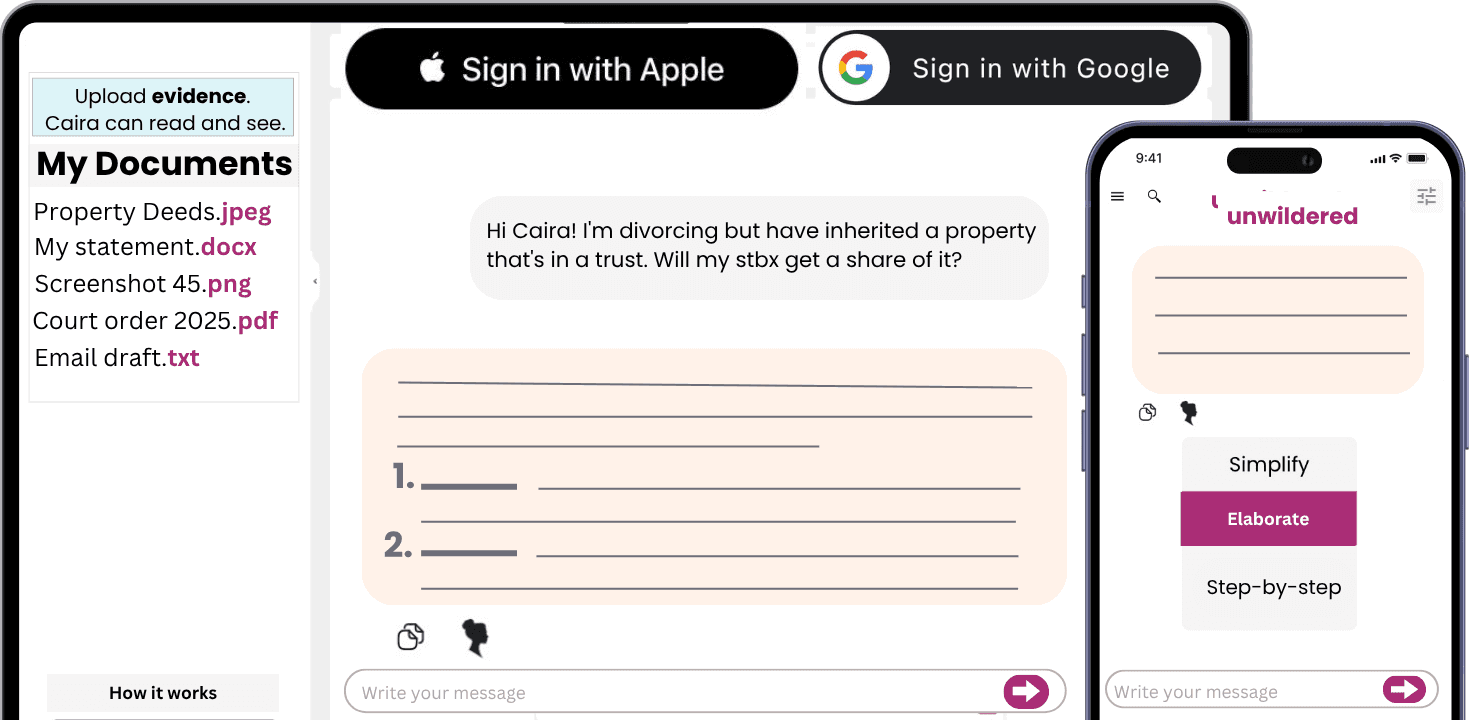
Caira can help you put the incident into date order, identify which legal power a notice refers to and draft a clear request for clarification. Ask her to separate what the records establish from what remains disputed, and check references against the original legislation and documents.
Disclaimer: This blog post provides general information for educational purposes only. It is not legal advice. Outcomes can vary based on your personal circumstances.