
A non-standard construction property can be good value, but only if you know what it is. The same street can contain homes lenders like, homes lenders dislike, and homes that need specialist proof before anyone feels comfortable.
How Unwildered helps: upload the legal pack, title, searches, lease or auction documents to AI conveyancing review by Unwildered. The 40-point review takes about 5 minutes and is designed to help you feel calmer and more confident before you spend more money. Your first report is free, then GBP 30 per review or GBP 100 for 5 reports.
What This Means In Practice
“Non-standard construction” usually means the main walls, frame or roof are not conventional brick, block or stone with a typical pitched roof. It can include concrete, steel frame, timber frame, PRC, prefab, flat-roof and mixed systems.
The risk is uncertainty. A house can look ordinary after render or external insulation, while the structure underneath is the thing a lender, insurer or next buyer cares about.
Legal Risk
For non-standard construction, the risk sits between survey evidence, building-control history and lender appetite. Building Regulations may matter for later works, but mortgageability often turns on the exact construction system, the surveyor’s comments and whether recognised repair evidence exists.
The Main Risks
concrete, steel frame, timber, prefab or unusual wall systems can limit lender choice
historic defects may be hidden behind cladding or insulation
repairs may need recognised schemes or certificates
future buyers may face the same mortgage problem
None of those points automatically means walk away. They mean the decision deserves a slower, calmer check. With a non-standard construction property, the risk is often hidden in documents rather than visible in the viewing. A fresh kitchen can distract from a title defect. A nice river view can distract from an insurance problem. A cheap flat can distract from an annual bill that rises faster than the rent.
What To Check Before You Offer
Document or check | Why it matters |
construction type confirmation, not just estate agent wording | This is the first place the real risk usually appears. |
RICS Level 3 survey by a surveyor who knows the system | It tests whether the seller story matches the paperwork. |
lender acceptance before spending heavily on fees | It protects the financing, insurance or resale assumption. |
repair certificates, guarantees and evidence of structural alteration | It turns a vague worry into a costed decision. |
If you are buying at auction, run the legal pack through Unwildered AI conveyancing analysis before bidding. The process is built to be simple: upload the pack, choose the 40-point review, and read the report. In a typical case it takes under 5 minutes, so you can spot the questions to ask before the auction clock makes everything feel urgent. Auction contracts can become binding quickly, so this does not replace a solicitor; it helps you notice red flags earlier. If you are buying privately, the same 3-click check can help before you make an offer or spend more on searches, surveys and legal fees.
Why Someone Might Still Buy
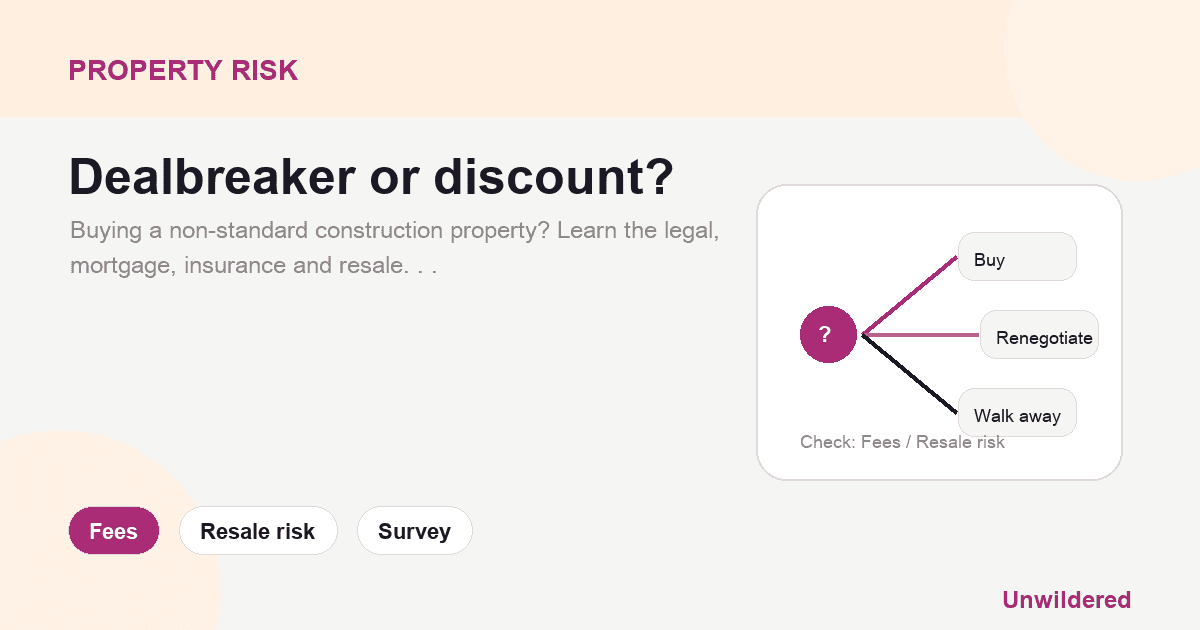
A properly repaired and well-documented non-standard home can offer space and yield at a lower entry price than conventional stock.
The bargain is only real if you can finance, insure, maintain and resell it. Cash buyers still need an exit plan.
A prepared buyer is not fearless. They are specific. They know which risk they are accepting, which risk they have priced, and which risk would make them walk away.
Before You Decide
If you are still interested after the first checks, that is fine. The aim is not to frighten you away from unusual property. It is to make the risk visible before you commit. A 5-minute Unwildered review can help you organise the documents, spot the questions to ask and decide whether you need a solicitor, surveyor, broker or specialist report before moving forward.
A Practical Rule
If the answer to “what is wrong with it?” is vague, pause and ask for the document that proves the answer. With a non-standard construction property, vague is expensive. Ask for documents, get the legal position checked, price the worst credible case, and keep enough margin for delay.
Ask the surveyor to name the construction system, not merely describe it as unusual. Lender appetite can change dramatically between repaired PRC, unrepaired PRC, steel frame, timber frame and mixed construction hidden behind render.
FAQ
How do I find out what the house is actually made of?
Ask the surveyor to identify the construction system and whether it is known to lenders. Council housing records, old repair documents and building control records may also help.
If a lender says yes now, is the resale risk solved?
Not entirely. Lender appetite can vary by lender and over time. A better solution is to keep survey reports, repair evidence and guarantees so the next buyer can understand the property.
When does non-standard construction become a value-add?
It may become attractive where the structure is sound, accepted by lenders and priced below conventional stock. The value-add is often proving what the property is, not just redecorating it.
This article is general information, not legal, financial, investment or medical advice.
