
Если вы готовите иск в Singapore Small Claims Tribunals, загрузите в Caira договор, счёт, подтверждение оплаты, сообщения и доказательства. Caira поможет превратить спор в понятное краткое изложение иска.
Начните чат за 30 секунд
Сначала проверьте право на подачу, личность ответчика, сумму иска, дату события и желаемый результат.
Держите вместе договор, счёт, квитанцию, скриншоты, фотографии и переписку.
Отделяйте правовой вопрос от истории о том, что пошло не так.
Используйте Caira, чтобы составить хронологию и список доказательств, готовые для иска.
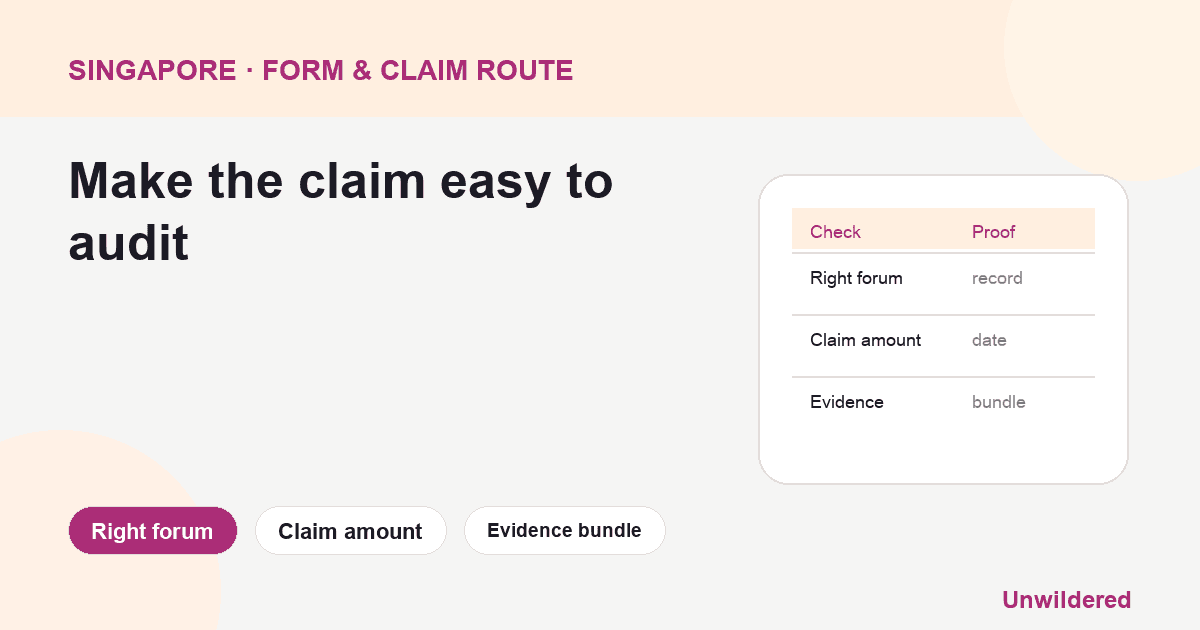
Обновление 2026: проверьте право на Small Claims до составления истории
Споры по аренде и споры с потребителями в Сингапуре часто зависят от того, может ли Small Claims Tribunals вообще рассматривать иск. На странице Singapore Courts о small claims указано, что к small claims относятся договоры аренды жилья сроком не более 2 лет. Обычный предел иска, как правило, составляет S$20,000, либо S$30,000, если обе стороны подписали Memorandum of Consent. Перед подачей проверьте сумму иска, срок аренды, дату события, данные ответчика и действительно ли доступен более высокий предел.
Проверка | Доказательства |
|---|---|
Сумма иска | Депозит, счёт за ремонт, невыплаченная аренда или расчёт возврата. |
Срок аренды | Подписанный договор аренды и документы о продлении. |
Дата спора | Дата выезда, сообщение об отказе, счёт или дата нарушения. |
Личность ответчика | Данные арендодателя, агента или компании и адрес для вручения. |
Small Claims Tribunals могут быть практичным вариантом для некоторых малозначительных споров в Сингапуре, но процесс — это не просто заполнение формы. Прежде чем начать в CJTS, проверьте, соответствует ли спор официальным правилам допуска, правильно ли вы указали ответчика и подтверждают ли ваши доказательства требуемое вами средство защиты. Аккуратно оформленный иск с неверной стороной или неподтверждённой суммой всё равно может столкнуться с проблемами.
Для кого это руководство
Эта статья для тех, кто готовит иск в Singapore small claim, связанный с потребительским договором, спором о услугах или спором по аренде жилья, включая вопросы возврата депозита, если аренда подпадает под официальный охват Small Claims Tribunals. Это не обещание, что каждый спор с арендодателем, работодателем, фрилансером, подрядчиком или соседом относится к SCT. Споры о заработной плате по трудовым отношениям, уголовные жалобы, вопросы домогательств и более крупные или сложные гражданские иски могут требовать другого пути.
Начните со страниц Singapore Courts о small claims, допустимых делах и о том, как подать и вручить иск.
Шаг 1: подтвердите право на подачу до составления
Сделайте это до того, как тратить время на улучшение объяснения. Проверьте тип иска, сумму, сроки и любое требование к длительности аренды жилья на официальной странице Courts. В официальных материалах указаны обычный предел иска S$20,000 и маршрут на S$30,000 при наличии Memorandum of Consent, а также договоры аренды жилья, не превышающие соответствующий порог по сроку. Это не декоративные детали. От них зависит, может ли tribunal вообще рассматривать иск.
Шаг 2: определите правильного истца и ответчика
Используйте юридические наименования, которые совпадают с договором, счётом, договором аренды, квитанцией или деловой записью. В споре о возврате депозита самым громким человеком в WhatsApp-группе может быть агент, сосед по квартире или управляющий недвижимостью, а не арендодатель, получивший депозит. В потребительском споре торговое название в квитанции может отличаться от зарегистрированного лица. Сохраняйте заметки о том, как вы установили личность ответчика. Если вы не можете вручить документы ответчику из-за неверного имени или адреса, иск может застопориться, даже если факты кажутся убедительными.
Шаг 3: сформулируйте требование простыми цифрами
Чётко укажите, чего вы хотите. Если вы требуете деньги, покажите расчёт: внесённый депозит, возвращённая сумма, оспариваемые удержания, оставшийся баланс, пошлина за подачу, если применимо, или неоплаченная сумма по счёту. Если часть удержания вы признаёте, скажите об этом. Иск на всё подряд из-за злости слабее, чем сфокусированный иск на конкретный баланс, который вы можете доказать. Если вы просите замену, ремонт, возврат денег или другое средство защиты, проверьте официальные правила и опишите нужное вам практическое распоряжение прямо и ясно.
Шаг 4: организуйте доказательства до использования CJTS
Создайте короткую папку с доказательствами до подачи. Для споров по аренде включите договор аренды, квитанцию о депозите, банковский перевод, stamp certificate, если он есть, фотографии при заселении и выезде, опись имущества, подтверждение возврата ключей, счета за коммунальные услуги, разбивку удержаний, счета и сообщения. Для споров о товарах или услугах включите предложение, счёт, подтверждение оплаты, запись о доставке, фотографии, гарантийные условия, сообщения об отмене и попытки урегулировать вопрос. Называйте файлы по дате и теме. Файл с названием 2026-04-20 move-out photos полезнее, чем IMG_4837.
Шаг 5: напишите краткое изложение иска так, чтобы его понял незнакомый человек
Изложение не должно читаться как длинная перепалка. Используйте простую последовательность: кто стороны, какое соглашение было заключено, что было оплачено, что пошло не так, что вы просили сделать другую сторону, какой ответ получили и какое распоряжение вы просите вынести. Избегайте оскорблений и неподтверждённых правовых выводов. Вместо фразы ответчик меня обманул напишите, что ответчик получил S$[amount] [date], не поставил [item/service] и не вернул платёж, несмотря на ваше письменное требование от [date].
Шаг 6: уделите внимание вручению
Подача — это не конец. Официальный процесс Courts включает этапы вручения, и ответчик должен получить надлежащее уведомление. Сохраняйте подтверждение вручения и всю переписку после него. Если ответчик предлагает урегулирование, чётко зафиксируйте условия: сумму, срок оплаты, способ оплаты, будет ли иск отозван только после зачисления средств и что произойдёт при просрочке. Не удаляйте сообщения после подачи, потому что дальнейшие шаги могут зависеть от того, что было сказано.
Полезные двуязычные обозначения
Если в ваших документах есть стороны, говорящие по-китайски, подписи могут помочь вам сортировать доказательства, не превращая статью в китайский шаблон: 小额索赔 для small claim, 申索人 для claimant, 答辩人 для respondent, 租赁协议 для tenancy agreement, 押金 для deposit, 证据 для evidence и 送达 для service. Используйте официальные английские термины при заполнении англоязычного процесса, если система не требует иного.
Распространённые ошибки
Не подавайте иск, не проверив право на подачу. Не указывайте автоматически агента. Не заявляйте баланс депозита без подтверждения платежа депозита и записи о выезде. Не загружайте одну огромную коллаж-скриншот, когда отдельные файлы с датами были бы понятнее. Не смешивайте денежное требование с просьбами, которые tribunal не может удовлетворить. Не думайте, что выигранное решение обеспечит мгновенную оплату; принудительное исполнение может быть отдельным практическим вопросом, если другая сторона не исполнит решение.
Как может помочь Caira
Загрузите договор, квитанции, фотографии, сообщения, счёт, список удержаний и черновик краткого изложения иска. Caira поможет превратить разрозненные доказательства в хронологию, список сторон, таблицу сумм и чек-лист перед подачей, прежде чем вы воспользуетесь официальным процессом CJTS.
Эта статья носит общий информационный характер и не является юридической, финансовой, медицинской или налоговой консультацией.
