Where can I watch Unauthorised Absence?
Viewing option | Details |
|---|---|
Film premiere | Free YouTube Premiere: Tuesday 10 November 2026, at 3:30pm GMT (UK time). Watch Unauthorised Absence on YouTube via Directors Notes and MIMESIC Films. |
Live discussion | Separate live discussion: a free Zoom conversation with the filmmaking team and guests starts at 7:30pm GMT on Tuesday 10 November. Watch the film beforehand if you want to join. Register for the discussion. |
Do I have to watch at 3:30pm, or can I watch later? You can watch later that evening using the same link. This is a scheduled YouTube Premiere, and YouTube explains that Premieres stay on the channel as regular videos afterwards. You do not have to join at the start. The filmmakers have not announced a removal date. Check the official viewing announcement for any changes.
Spoiler-free: this article discusses themes and practical rights without naming characters or revealing scenes or the ending. Viewing advice: the filmmakers list a BBFC 12A rating, with distressing scenes, threat and self-harm.
What is the Unauthorised Absence movie about?
A child is distressed about school. A parent asks for help. The conversation becomes about attendance percentages, medical proof and responsibility. For families already trying to manage anxiety, disability or unmet needs, that change of focus can feel overwhelming.
Unauthorised Absence brings attention to the contentious use of fines and prosecution where children are struggling to attend. Its wider questions concern whose account is believed, whether support arrives soon enough, and what happens when parents and institutions understand the same absence differently. The filmmakers describe its focus on the impact of attendance enforcement.
The guidance below concerns England, with a Wales note near the end. It also considers social-care questions that families can encounter in real life; those sections are wider context, not a description of the film’s plot. Law and release information checked on 9 November 2026.
When a child cannot attend, what should the school do?
Autism, ADHD, dyslexia and behaviour at school
SEND means special educational needs and disabilities. Families may recognise these issues when a child is autistic, has ADHD, dyslexia or another learning difficulty, or is waiting for an assessment. These are different conditions; children have individual strengths and may need different support.
What gets described as a “behaviour problem” may involve sensory overload in a noisy classroom, difficulty concentrating or following instructions, struggles with reading and writing, or distress when routines change. Some children mask difficulties at school and become overwhelmed at home. Labels such as “school refusal”, emotionally based school avoidance (EBSA) or “not trying” do not explain the cause on their own.
These experiences do not by themselves establish a diagnosis. Anxiety, bullying, poor sleep or physical illness can also affect behaviour and attendance. Ask the SENCO to record what happens, when and where, listen to the child, and agree practical support while assessment is pending. Speak to a GP about health or developmental concerns. Read the NHS guides to supporting an autistic child, ADHD in children and dyslexia.
The Department for Education’s mental-health attendance guidance addresses support even where a pupil has no diagnosed disorder. Parents can request a meeting with the special educational needs coordinator (SENCO) and attendance lead, bringing a short account of the child’s difficulties and views.
Ask for a written plan with named responsibilities and a review date. Depending on the child, requests might include a trusted adult, quieter arrival, adjustments to sensory demands, a response to bullying or a supported return. Keep the child’s health and access to learning central, alongside attendance.
Disabled pupils also have reasonable-adjustment rights under the Equality Act 2010. Disability depends on the statutory effects of an impairment, not simply having a diagnostic label. Anxiety does not automatically meet that definition, but support should not be put on hold while a family waits for assessment.
Does every illness absence need a GP letter?
No. The July 2026 attendance guidance recognises physical and mental illness. Schools should not routinely demand medical evidence for every illness absence. Where there are genuine doubts, or prolonged or repeated illness, reasonable evidence may be requested; schools should be flexible about its form.
If an absence is disputed, ask which sessions have been recorded as unauthorised, why, and what evidence would resolve the concern. Supply relevant appointment records, clinical advice and dated explanations. A useful medical report explains how the condition affects attendance and learning, what the child can currently manage and what support is recommended. A letter naming a condition may leave those practical questions unanswered.
Keep original reports intact. Where professionals disagree, ask them to identify the specific point of disagreement and the evidence needed to assess it.
What if my child is missing education while waiting for help?
Attendance support and access to education need to be considered together. Under section 19 of the Education Act 1996, councils must arrange suitable education for compulsory-school-age children who would otherwise go without it because of illness or other relevant reasons.
The health-needs education guidance covers mental as well as physical health. Once it is clear that health-related absence will reach 15 days, consecutively or cumulatively, suitable alternative provision should be arranged. Fifteen days is not a legal waiting period before anyone can act. Education should normally be full-time unless the child’s health makes part-time provision appropriate.
Write directly to the council describing the education currently being missed. Ask for its section 19 decision, reasons and interim arrangements. A place on a school roll does not by itself answer whether the child can access suitable education.
When should parents ask for an EHCP assessment?
If ordinary SEN support may be insufficient, a parent can request an education, health and care (EHC) needs assessment directly from the council. You do not have to wait for the school to make the request. Explain the needs, support already tried and what remains inaccessible.
The usual decision deadline on whether to assess is six weeks. Where a plan is issued, the usual overall deadline is 20 weeks from the assessment request, subject to statutory exceptions. Refusals and relevant plan contents can be appealed. See the government’s EHC plan guide and the SEND Regulations.
If a plan exists but needs or provision have changed, ask for a review and identify which support is missing. Our EHCP evidence guide can help you organise the documents.
Can parents still face attendance fines?
Yes. SEND or an anxiety diagnosis does not create a blanket exemption from attendance law. Equally, an unauthorised mark does not settle every question about illness, support or the suitability of enforcement.
The national threshold of 10 unauthorised sessions within 10 school weeks triggers consideration of a penalty notice, rather than an automatic fine. Decisions must take account of individual circumstances and the relevant guidance. Current statutory attendance guidance.
In England, a first notice is £80 if paid within 21 days, rising to £160. A second notice for the same parent and child within three years is £160; further offending may lead to prosecution instead. Government enforcement guidance.
Illness or unavoidable cause can be legally relevant under section 444, but the facts and evidence matter. If a notice arrives, record its deadline, ask the issuing council to review any errors and obtain advice promptly. A complaint or review request does not automatically suspend enforcement deadlines.
What if school concerns lead to social services involvement?
A safeguarding referral is not a finding that a parent has harmed a child. Schools have safeguarding responsibilities, and social care must decide what response the information requires. Parents can ask what precise concern has been raised and what assessment is proposed.
Section 17 of the Children Act 1989 concerns help for children in need, including disabled children. Section 47 enquiries have a different threshold: reasonable cause to suspect that a child is suffering, or likely to suffer, significant harm. An enquiry itself does not establish an allegation.
Working Together 2026 describes family help combining targeted early help and section 17 support. Ask what practical help is being offered, how medical and educational evidence will be considered, and how the child’s views will be heard. Request written plans and correct factual errors calmly, with documents attached. If an opinion remains disputed, ask for your disagreement and supporting evidence to be recorded.
If you receive a letter before proceedings, a proposed accommodation agreement or a care application, contact a specialist children-law solicitor promptly. Voluntary accommodation and a care order have different legal effects; do not assume a meeting or referral means removal is inevitable.
What is changing in 2027?
The Children’s Wellbeing and Schools Act 2026 is enacted, but its provisions start at different times. For England, commencement regulations made on 4 November 2026 set these dates:
Start date | Change in England |
|---|---|
31 January 2027 | inclusion of designated education and childcare agencies in local safeguarding arrangements. |
1 April 2027 | duties for multi-agency child protection teams supporting councils’ section 47 work. |
1 September 2027 | a council duty to appoint someone to promote educational achievement for children with a social worker and children in kinship care. |
An earlier change already matters: from 15 July 2026, councils in England must generally offer family group decision-making before applying for a care or supervision order, with an exception where this would not be in the child’s best interests. Act, section 1.
These changes do not automatically alter an individual child’s attendance coding or remove existing SEND rights. The government’s SEND reform proposals envisage a later transition, with no changes to support received through EHCPs before at least September 2030. Current duties continue until new legislation takes effect. Families should pursue support now.
The Act also contains children-not-in-school registers and additional home-education withdrawal checks. The commencement instruments checked do not bring those provisions fully into operation. Do not assume a blanket September 2027 start date or make a withdrawal decision on that basis.
A practical starting point for parents
Make one chronology. Record symptoms, missed education, requests for help and responses. Include the child’s own words where appropriate, without repeatedly questioning them.
Ask for a clear decision. Identify whether you need a coding review, support plan, section 19 provision, EHC assessment or social-care help.
Keep decisions and deadlines together. Save original letters and reports, meeting notes, who will act and the review date.
Use the right escalation route. A school complaint, council complaint, tribunal appeal and urgent legal challenge serve different purposes. Ask IPSEA or your local SEND information, advice and support service for help identifying the route.
If you are in Wales, use the ALN and individual development plan framework. Welsh attendance enforcement and social-care arrangements differ; the English fine amounts, EHCP process and commencement dates above should not be applied automatically.
How Caira can help with letters and medical reports
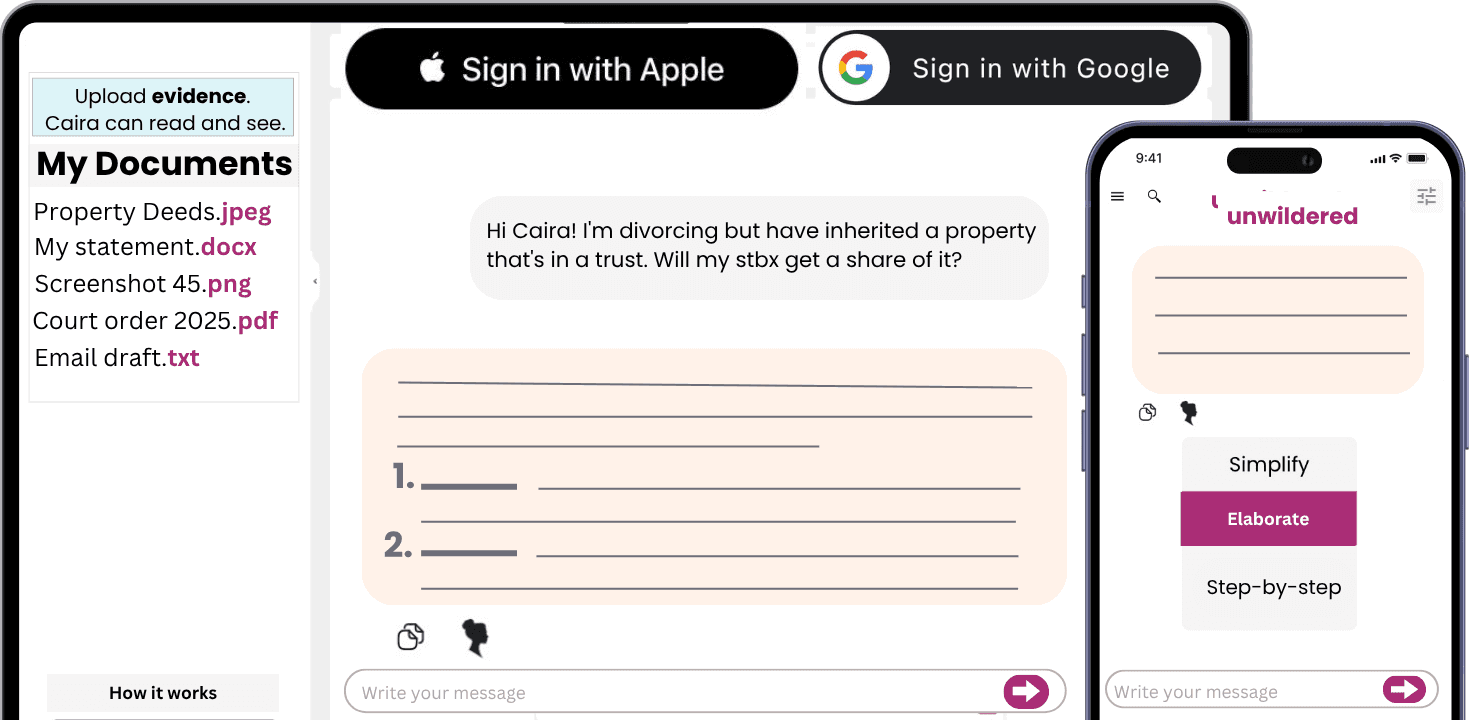
Caira, Unwildered’s chat AI, can help you make sense of the paperwork and prepare a response. With relevant documents you are entitled to share, you can ask for a plain-English explanation of a school letter, a dated chronology, a summary of a medical report’s recommendations or a draft request for support.
For example:
“Compare this attendance letter with the medical report. Separate confirmed facts, professional recommendations and disputed points. Give page references, flag missing information and draft a calm email asking for a support meeting and a review of the absence coding.”
Or ask Caira to turn meeting notes into a list of agreed actions, responsible people and deadlines. Check every quotation, date and reference against the originals before sending anything.
Caira can help you prepare; it cannot diagnose a child, determine whether an allegation is true or replace a solicitor in urgent proceedings. Share only necessary information and check confidentiality restrictions before uploading sensitive records. Start a chat with Caira.
Film credits
Unauthorised Absence is directed by Georgia Parris, written by Jo Clayton and produced by Natalie Lauren, with production company MIMESIC Ltd. Lead performers include Emily Bruni and Beatrice Flaherty, with Cathy Tyson among the cast. Executive producers are Alix Wilton Regan, Jennifer English, Hugh Viney and Anna Maxwell Martin. Official film information.
This is general information, not individual legal or medical advice. Release arrangements and law may change; check the linked official sources and seek advice about your circumstances.